AI Data Provenance: Trace Where Your AI Training Data Comes From
When you use an AI tool, you’re trusting it with decisions—but do you know where its knowledge came from? AI data provenance, the ability to trace the origin, movement, and transformation of data used to train artificial intelligence systems. Also known as data lineage, it’s not just a tech buzzword—it’s the backbone of trustworthy AI. Without it, you could be using models trained on stolen data, biased samples, or even illegal scrapes from private websites. That’s not just risky—it’s unethical.
Think of it like a food label for AI. If a company claims its AI was trained on public data, can you prove it? Blockchain for AI, a growing method to log data sources and modifications on an immutable ledger is one solution. It doesn’t stop bad data from entering the system, but it makes it impossible to hide where it came from. This matters for banks, hospitals, and even everyday users who rely on AI for loans, diagnoses, or job applications. If the data is flawed, the outcome is flawed—and someone has to be held accountable.
Regulators are starting to require proof of data origin. The EU’s AI Act and similar rules in the U.S. don’t just ask for transparency—they demand verifiable records. That’s why companies are now using AI transparency, the practice of openly documenting data sources, cleaning methods, and model training steps to stay compliant. And if you’re using AI tools yourself—whether for work or personal projects—you need to know if the data behind them is clean, legal, and fair. Otherwise, you’re building on quicksand.
The posts below cover real cases where data provenance made or broke AI systems. You’ll find deep dives into how tokens like AgentLayer and NeurochainAI track data contributions, how blockchain helps secure AI training pipelines, and why some "AI-powered" projects are just smoke and mirrors with no traceable data. Some tools claim to make AI better—but without provenance, you’re flying blind. Here’s what actually works, what’s a scam, and how to tell the difference before you invest time or money.
How Blockchain Ensures AI Data Integrity in Real-World Applications
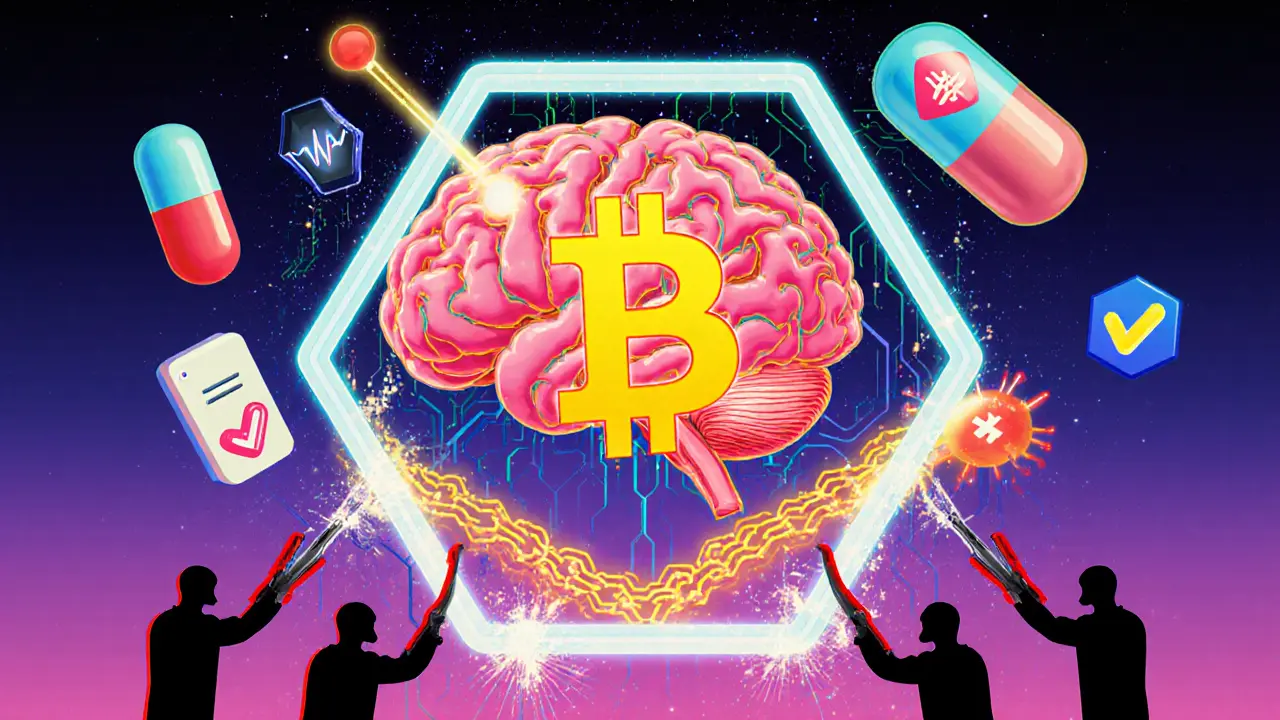
Blockchain ensures AI data integrity by creating tamper-proof records of training data provenance. Used by pharmaceutical, financial, and tech firms, it builds trust in AI decisions through verifiable, immutable audit trails - critical for compliance and safety.