
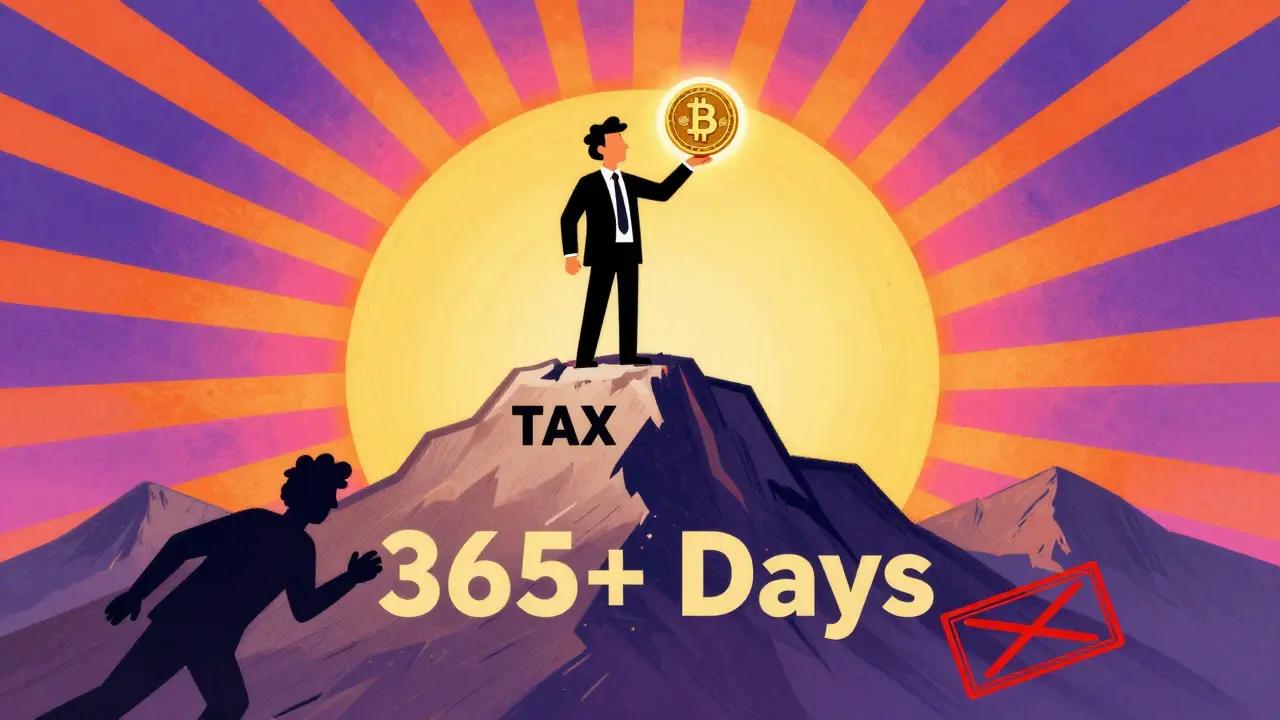
Portugal has quietly become one of the most attractive places in Europe for Bitcoin investors-not because it’s loud about it, but because it lets your money grow without taking a cut. If you’re holding Bitcoin long-term, you could pay zero in capital gains tax. That’s not a loophole. It’s the law. And as of 2026, this system is still standing strong.
How Portugal’s Crypto Tax System Works
Portugal doesn’t treat Bitcoin like stock or real estate. Instead, it splits crypto activity into three clear buckets under its Personal Income Tax Code (PIT Code). Each has its own rules, and knowing which one applies to you makes all the difference.The first category is Capital Gains (Category G). This covers selling Bitcoin for euros or other fiat currency. Here’s the kicker: if you hold your Bitcoin for more than 365 days, you pay nothing when you sell. No tax. No paperwork. Just profit. But if you sell within a year, you’re taxed at a flat 28%. That’s it. No progressive rates. No hidden fees. Just one clear number.
The second category is Capital Income (Category E). This includes anything you earn from Bitcoin without selling it-staking rewards, lending interest, airdrops, even mining payouts if you’re not running it as a business. All of it gets taxed at 28%. Again, flat. No matter how much you make. And unlike some countries, Portugal doesn’t withhold tax at the source. You report it yourself when you file annually.
The third category is Self-Employment Income (Category B). This is for people who treat crypto like a job. If you’re mining at scale, running a trading bot full-time, or validating transactions as a professional service, the taxman sees you as a business owner. Your profits get taxed at Portugal’s progressive income rates: starting at 14.5% and climbing up to 53% if your total income crosses the highest bracket. This part is strict-but it only affects a small group.
Why Portugal Beats Other European Countries
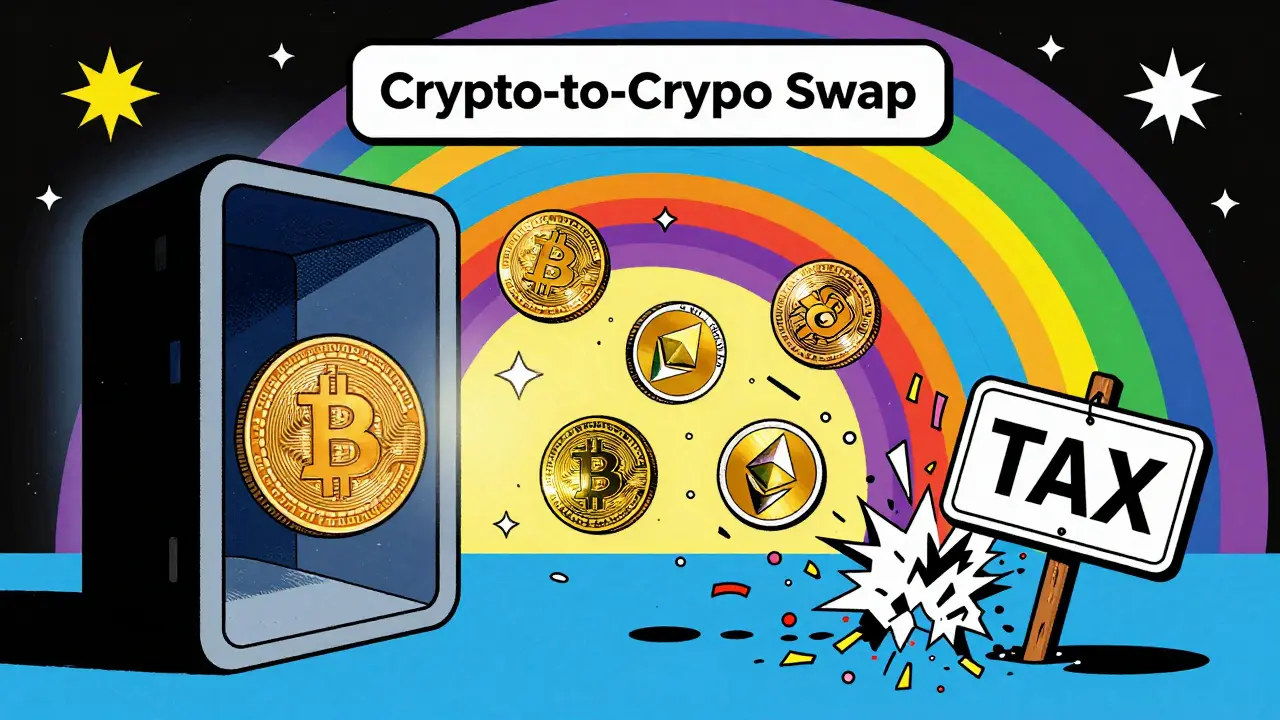
Compare this to Germany: they also offer tax-free gains after one year, but short-term trades get hit with your full income tax rate-up to 45%. France? A flat 30% on everything, including staking and crypto-to-crypto trades. The Netherlands? They tax every swap as a sale. Portugal doesn’t.One of the biggest advantages? Crypto-to-crypto trades are not taxable events. You can swap Bitcoin for Ethereum, then for Solana, then back to Bitcoin, and Portugal won’t care. No tax triggered. No record needed. That’s huge for portfolio rebalancing. Most countries force you to track every tiny swap as a taxable sale. Portugal lets you move freely.
And while countries like Spain and Italy are tightening rules and increasing reporting demands, Portugal’s stance has stayed steady since the 2023 reforms. There’s been no backtracking. No surprise audits. No new taxes on passive income. The system is predictable-something every investor values.
What You Must Track
Tax-free doesn’t mean carefree. You still need to prove you held Bitcoin for over a year. That means keeping records of:- When you bought each Bitcoin (date and price)
- When you sold it (date and amount)
- Whether you traded it for another crypto (to avoid accidental taxable events)
Portugal’s tax authority (Autoridade Tributária e Aduaneira) doesn’t actively monitor wallets yet. But they’re building tools to do so. If you’re audited, you’ll need to show proof. Many investors use platforms like CoinTracking or Koinly to auto-import trades from exchanges and generate reports that match Portugal’s PIT Code categories.
Don’t assume your exchange statement is enough. Exchanges don’t track acquisition dates the way Portugal requires. You need to know exactly when you bought each coin, not just your total balance.
Who Benefits the Most?
If you’re an individual investor buying Bitcoin and holding it for years? Portugal is ideal. You’ll likely pay zero tax. No matter how much it grows.If you’re a digital nomad? Combine Portugal’s crypto tax rules with the Non-Habitual Residence (NHR) Program. Even if you earn crypto income from abroad, you can pay just 20% on Portuguese-sourced income-or nothing at all if it’s foreign. That’s a rare combo: tax-free long-term Bitcoin gains plus low tax on global income.
But if you’re a professional trader? You’ll pay more. The 53% top rate on business income is steep. Some traders in Lisbon and Porto are already shifting operations to Estonia or Malta where business crypto taxes are lower. But for most people-not full-time traders-this isn’t a problem.
What’s Changing? What’s Not?
The 2023 tax reform was the biggest shift in years. Before that, crypto was completely untaxed. Now, Portugal chose structure over silence. They didn’t ban anything. They didn’t overcomplicate it. They just drew clear lines:- Investor? Hold over a year → pay 0%
- Passive income? Staking, lending → 28%
- Business? Trading full-time → progressive rates up to 53%
There’s no sign of change in 2026. No proposed hikes. No new reporting mandates. The government still sees crypto as a way to attract talent, capital, and digital nomads. The Golden Visa program even accepts crypto investments as qualifying assets. That’s not accidental. It’s strategy.

Real-World Impact
In Lisbon’s coworking spaces, you’ll find investors from Germany, Sweden, and the UK who moved to Portugal specifically for the tax treatment. One investor from Berlin told a crypto forum: "I bought Bitcoin in 2021. Sold half in 2025. Paid €0 in tax. I didn’t even file a form. That’s freedom."On Reddit, r/BitcoinPortugal has over 12,000 members. The top threads? "How to prove my holding period," "Is staking still tax-free?" (it’s not-28% applies), and "Can I move my crypto to a Portuguese bank?" (yes, and it’s easy).
Industry analysts from CoinTracking and CoinLedger still rank Portugal as "one of the most crypto-friendly countries in the world." Why? Because it’s simple. Transparent. And it works.
What to Do Next
If you’re thinking about moving your Bitcoin to Portugal-or already live here-here’s your checklist:- Track every Bitcoin purchase date and cost basis
- Hold for 365+ days before selling to avoid capital gains tax
- Report staking and lending income at 28% annually
- Don’t treat crypto as a business unless you’re trading full-time
- Use a crypto tax tool that supports Portuguese PIT Code categories
There’s no rush. No deadline. No hidden fine. Just a system that rewards patience. And in a world where most governments are chasing crypto profits, Portugal lets you keep yours.
Is Bitcoin completely tax-free in Portugal?
No-not entirely. Bitcoin is tax-free only if you hold it for more than 365 days and sell it for euros or another fiat currency. If you sell within a year, you pay 28% capital gains tax. Passive income like staking or lending is always taxed at 28%. Professional trading is taxed at progressive rates up to 53%. The tax-free benefit applies only to long-term individual investors.
Do I have to pay tax on crypto-to-crypto trades in Portugal?
No. Portugal does not treat swapping Bitcoin for Ethereum or any other cryptocurrency as a taxable event. You can trade between cryptos as often as you like without triggering capital gains tax. This is one of Portugal’s biggest advantages over countries like the U.S., Germany, or the UK, where every swap is considered a sale and taxed.
What happens if I don’t report my crypto income in Portugal?
Currently, Portugal’s tax authority has limited ability to track crypto transactions. However, they are actively building systems to monitor exchanges and wallet addresses. If you’re caught underreporting, you’ll owe back taxes plus penalties and interest. For passive income like staking, the 28% rate is straightforward to calculate. It’s better to report honestly than risk future audits.
Can I use the Non-Habitual Residence (NHR) program with crypto income?
Yes. The NHR program allows qualifying residents to pay just 20% on Portuguese-sourced income and exempt most foreign income-including crypto earnings from outside Portugal-for up to 10 years. This works well with Portugal’s crypto tax rules: you can earn Bitcoin staking rewards abroad and pay zero tax in Portugal, while also benefiting from the 20% flat rate on local income. It’s a powerful combination for digital nomads.
Is mining Bitcoin taxable in Portugal?
It depends. If you mine Bitcoin as a hobby or side activity, the rewards count as capital income (Category E) and are taxed at 28%. But if you’re mining at scale-with equipment, employees, or regular revenue-you’re considered a business. Then your profits fall under Category B and are taxed at progressive rates up to 53%. Most individuals aren’t affected, but serious miners should consult a tax advisor.