
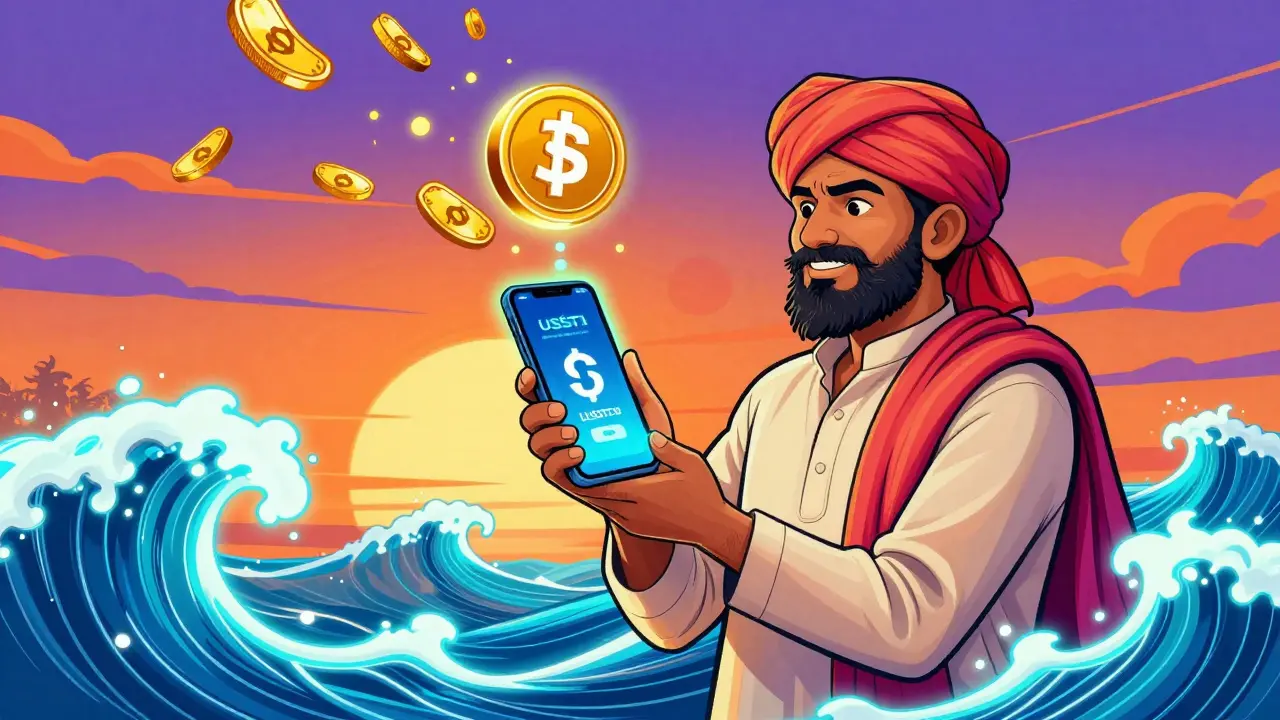
For years, Pakistan was one of the most hostile countries toward cryptocurrency. In 2018, the State Bank of Pakistan banned banks from dealing with crypto exchanges. Anyone caught using Bitcoin or Ethereum risked legal trouble. Fast forward to 2025, and Pakistan is now ranked 3rd or 4th in the world for crypto adoption - ahead of countries like Japan, Germany, and Canada. How did this happen?
From Ban to Breakthrough
The shift didn’t come from luck. It came from necessity. With inflation hitting 38% in 2023 and the Pakistani rupee losing over 60% of its value since 2019, people stopped trusting banks. Savings evaporated. Remittances from overseas workers - which make up nearly 7% of Pakistan’s GDP - became slower and more expensive. Traditional systems failed. Crypto didn’t. People turned to stablecoins like USDT and USDC. These digital tokens, pegged to the U.S. dollar, became a lifeline. A farmer in Sindh could receive money from his son working in Saudi Arabia in minutes, not days. No middlemen. No fees. No currency conversion nightmares. By 2025, an estimated 20 million Pakistanis - nearly 9% of the population - held crypto. That’s more than the entire population of Sweden.How Chainalysis Got It Right
The most trusted ranking comes from Chainalysis’ 2025 Global Adoption Index. They don’t just count how many people own crypto. They measure actual value received through centralized exchanges, peer-to-peer trades, and decentralized platforms. Pakistan jumped six spots in one year, landing at #3 globally - behind only India and the United States. Why? Because Pakistan isn’t just full of speculators gambling on Bitcoin. It’s full of people using crypto to survive. Chainalysis found that 78% of crypto activity in Pakistan is tied to stablecoins for daily transactions, savings, and remittances. That’s utility, not hype. And that’s why the adoption is lasting.Other Rankings? Why the Confusion
Some reports still list Pakistan at #9. That’s because not all rankings are created equal. One analysis from May 2025 ranked countries by ownership percentage alone - and found Nigeria and Indonesia ahead. But those numbers didn’t account for transaction volume or economic impact. In Nigeria, crypto is often used for speculation. In Pakistan, it’s used to buy groceries. Chainalysis adjusts for purchasing power. A $100 crypto transaction in Pakistan goes much further than the same $100 in the U.S. That’s why Pakistan’s real adoption is higher than what raw ownership numbers suggest. The country’s crypto economy is worth $20-25 billion - more than the entire GDP of some small European nations.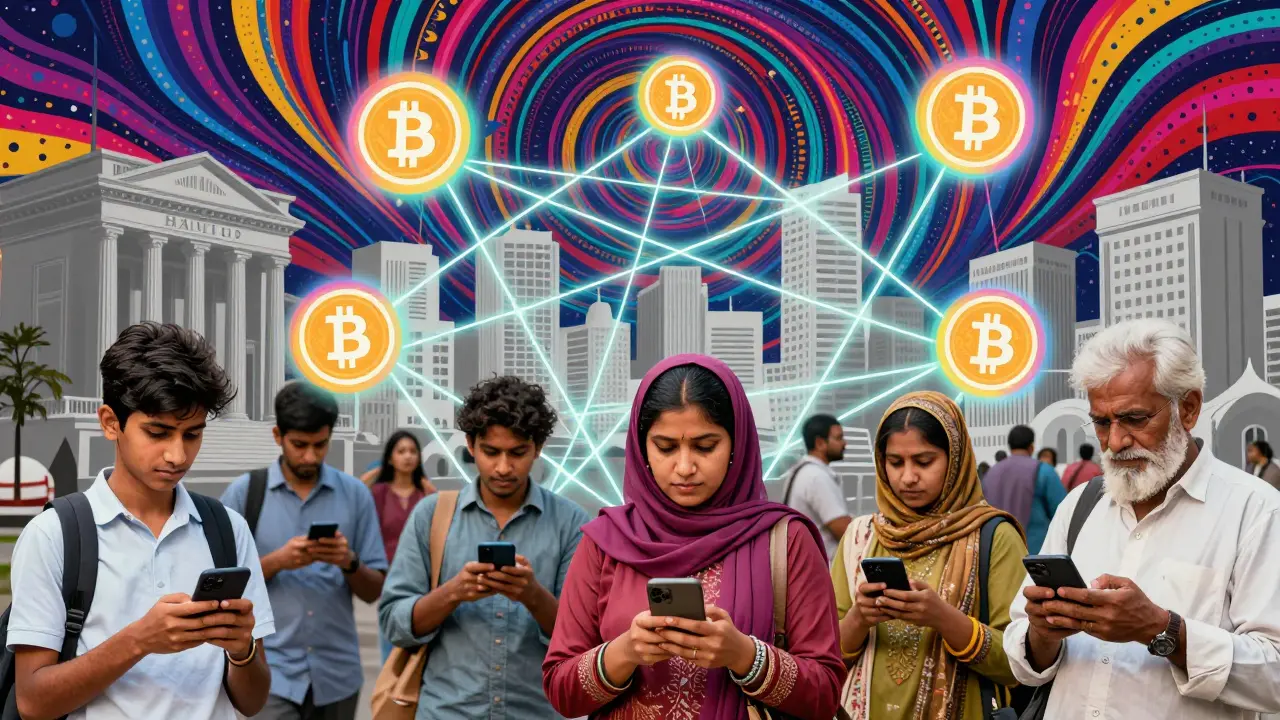
The New Rules: A Regulatory Revolution
In July 2025, Pakistan did something no one expected: it created the Pakistan Virtual Assets Regulatory Authority (PVARA). For the first time, crypto exchanges, wallet providers, and DeFi platforms could operate legally - if they followed KYC, AML, and reporting rules. They didn’t stop there. The Pakistan Crypto Council, led by CEO Bin Saqib, was formed to bring together regulators, exchanges, and users. They held public forums. They published compliance guidelines. They even worked with international firms to build local infrastructure. This wasn’t just policy. It was cultural change. People stopped seeing crypto as a shady side hustle. It became a public utility - like mobile money in Kenya, but faster and cheaper.Who’s Driving the Growth?
It’s not just tech-savvy youth in Lahore. It’s:- Women in rural Punjab running small shops, using USDT to pay suppliers without waiting for bank transfers.
- Students in Karachi buying textbooks through crypto-based marketplaces.
- Families in Quetta receiving monthly support from relatives in the UAE, bypassing Western Union fees that used to eat up 12% of each transfer.
The Foreign Hand: Partnerships and Politics
Not all of Pakistan’s crypto progress is homegrown. In August 2025, the Pakistan Crypto Council signed a deal with World Liberty Financial, a firm linked to the Trump family. The goal? To bring blockchain infrastructure to Pakistan - and to train 500,000 citizens in crypto literacy by 2027. The deal brought in funding, tech tools, and international credibility. But it also raised eyebrows. Critics pointed out that Zach Witkoff, the co-founder, had direct access to Pakistan’s army chief and prime minister. Was this about development - or influence? The truth is messy. External partnerships helped speed things up. But the demand was already there. Without millions of Pakistanis pushing for change, no foreign company could have forced this transition.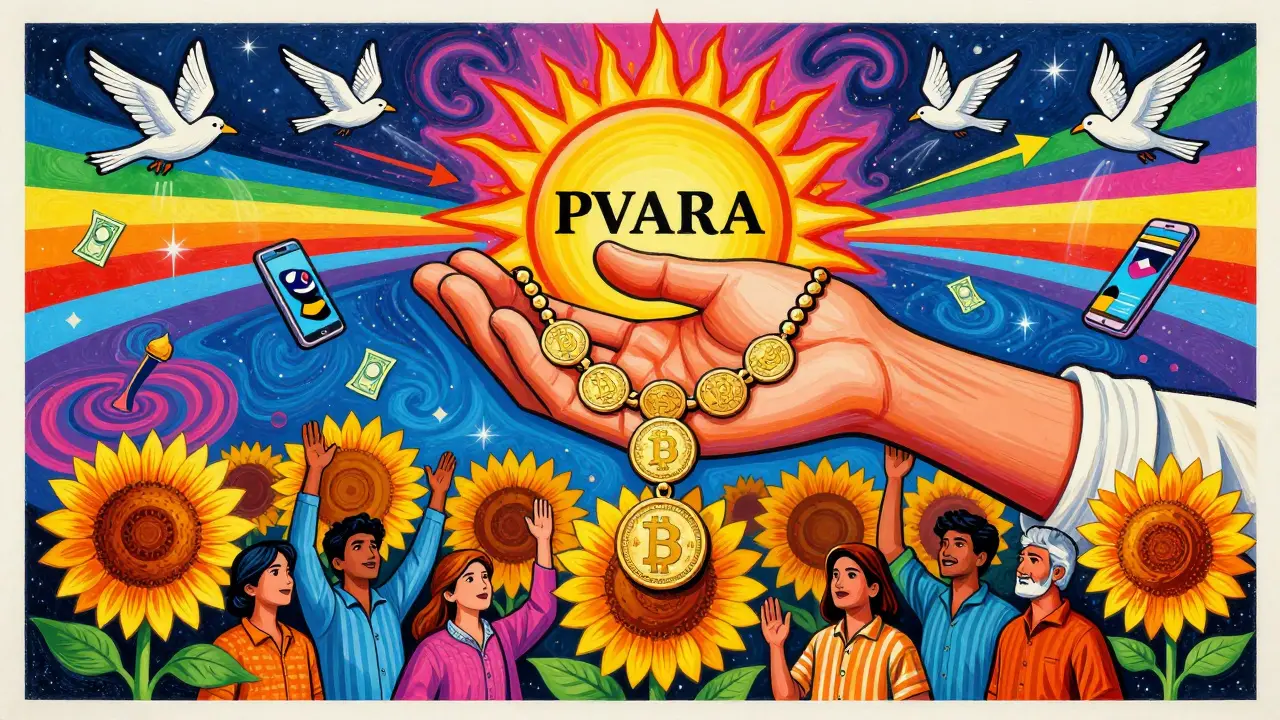
What’s Next?
Pakistan’s crypto future isn’t about becoming a Bitcoin hub. It’s about becoming a financial lifeline for its people. The government is now exploring a central bank digital currency (CBDC) that could integrate with existing crypto networks. Some exchanges are testing crypto-based microloans for farmers. Others are building local DeFi apps that pay interest in stablecoins. The biggest risk? Over-reliance on foreign partners. If World Liberty Financial pulls out, or if U.S. policy shifts again, Pakistan could lose momentum. But the foundation is now strong. The people know how to use crypto. The rules are clear. The infrastructure is growing.What This Means for the Rest of the World
Pakistan’s story isn’t unique. It’s a preview of what’s coming in other developing nations. When traditional finance fails, people turn to open, permissionless systems. Crypto isn’t about rebellion. It’s about resilience. Countries like Vietnam, Nigeria, and Argentina are watching. If Pakistan can turn crypto from a banned tool into a national asset, others can too. The lesson isn’t about regulation - it’s about listening to what people actually need.What You Can Learn From Pakistan
If you’re in a country with unstable banks, high fees, or slow remittances, Pakistan’s example shows you don’t need permission to use crypto. You need:- A smartphone
- A reliable peer-to-peer exchange (like Paxful or LocalBitcoins)
- A stablecoin wallet (Trust Wallet, MetaMask)
- And the willingness to try something new
Is cryptocurrency legal in Pakistan in 2026?
Yes. Since July 2025, cryptocurrency is fully legal in Pakistan under the new Pakistan Virtual Assets Regulatory Authority (PVARA). Exchanges, wallets, and trading platforms must be licensed, but individuals can buy, sell, and hold crypto without legal risk. The ban from 2018 was officially lifted after widespread public demand and economic pressure.
Why is Pakistan using stablecoins instead of Bitcoin?
Bitcoin’s price swings make it unreliable for daily use. Stablecoins like USDT and USDC are pegged to the U.S. dollar, so their value stays steady. That’s why 78% of crypto activity in Pakistan involves stablecoins - for paying bills, sending money, and saving. Bitcoin is held more as a long-term store of value, not for everyday spending.
How many people in Pakistan own crypto?
Approximately 20 million Pakistanis, or about 9% of the population, held cryptocurrency by early 2025. This is significantly higher than the global average of 6.9%. Many users are under 35, but adoption is growing rapidly among older generations, especially those who rely on remittances from abroad.
Did Pakistan’s military get involved in crypto?
Yes, but indirectly. In April 2025, officials from World Liberty Financial met with Pakistan’s army chief and prime minister to discuss blockchain infrastructure. These meetings helped fast-track regulatory approval. While the military isn’t running crypto exchanges, its support signaled to the public that crypto was now a national priority - not a threat.
Can I send crypto from Pakistan to the U.S.?
Yes, and it’s one of the most common uses. Many Pakistanis working overseas send money home using USDT via peer-to-peer platforms. Recipients convert it to local currency through licensed exchanges. This process takes under 10 minutes and costs less than 1%, compared to 5-12% through traditional remittance services like Western Union.
Is crypto adoption in Pakistan just a bubble?
No. Chainalysis and other experts say Pakistan’s adoption is utility-driven, not speculative. People aren’t buying crypto to get rich quick - they’re using it to survive inflation, pay bills, and support families. That kind of adoption doesn’t vanish when prices drop. It grows stronger.
Tressie Trezza
January 28, 2026 AT 01:25It's wild how necessity becomes innovation. People didn't wait for permission-they just built a new system with their phones and a little grit. This isn't crypto hype, it's human resilience in action.
When your savings vanish overnight, you don't care if it's 'legit' or not-you care if it works. And it does.
I've seen this in other places too. Kenya's M-Pesa wasn't born from policy papers. It was born from moms needing to send money to school fees without waiting a week.
Pakistan's story is just the next chapter in a global pattern: when institutions fail, people invent alternatives.
And honestly? That’s the most beautiful thing about decentralization. It doesn’t ask for approval. It just shows up.
Calvin Tucker
January 29, 2026 AT 16:29It is, indeed, a compelling case study in emergent economic adaptation. However, one must be cautious not to conflate adoption with institutional legitimacy. The fact that 20 million individuals utilize stablecoins does not equate to systemic financial stability, nor does it negate the potential for regulatory capture or external influence.
Moreover, the term 'utility-driven' is frequently misapplied; utility implies function within a structured framework, yet peer-to-peer crypto transactions remain legally ambiguous in many jurisdictions despite de facto acceptance.
Furthermore, the role of World Liberty Financial introduces a significant asymmetry of power-corporate interests, however benevolently framed, do not equate to public good.
Gustavo Gonzalez
January 30, 2026 AT 20:09Okay but let’s be real-this whole thing is a front. The military’s involved? Trump family linked? You think that’s coincidence? No. This isn’t a grassroots revolution. It’s a Trojan horse.
They let people use crypto so they can track every transaction. Every. Single. One.
And now they’ve got a digital ledger of every Pakistani’s spending habits, who they send money to, how much they save-perfect for social control. They didn’t lift the ban to help people. They lifted it to monitor them.
Also, USDT is Tether. Tether is backed by... what? Shell companies? Chinese bonds? You think your ‘stable’ coin is safe? It’s a house of cards held together by PR and silence.
And don’t even get me started on the ‘crypto literacy’ program. That’s not education. That’s indoctrination with a blockchain logo on it.
They’re turning a survival tool into a surveillance state with better UX.
Rob Duber
January 31, 2026 AT 07:26OMG. I’m literally crying. A TEA STALL IN FAISALABAD ACCEPTS USDT??
That’s more emotional than my ex’s last text.
Imagine your abuela, in a village with no bank, tapping her phone to pay for chai with a digital dollar that doesn’t vanish when the rupee crashes. That’s not tech. That’s magic.
And the fact that they didn’t wait for permission? That’s the kind of grit that makes me want to quit my 9-to-5 and move to Lahore just to buy a samosa with crypto.
Also, the military nod? Honestly? I’d trust the army more than my bank right now. At least they’re not charging me $15 to send $100 to my cousin.
THIS IS THE FUTURE. AND IT’S DELICIOUS.
Moray Wallace
January 31, 2026 AT 20:40It’s encouraging to see a country turn crisis into innovation without collapsing into chaos. The regulatory clarity introduced by PVARA is a rare example of pragmatic policymaking.
What stands out is how the government didn’t try to crush the movement-it engaged with it. That’s a lesson many nations could learn.
Still, I remain cautious about foreign partnerships. While the infrastructure help is welcome, sovereignty must be preserved. The real success here is the people’s agency-not the corporate or political backing.
Let’s hope the focus stays on accessibility, not profit.
christal Rodriguez
February 1, 2026 AT 02:34Mark Ganim
February 1, 2026 AT 07:10Do you realize what this means??
Women in rural Punjab-women who were told their money wasn’t worth saving-are now controlling their own financial futures with a smartphone and a QR code!
Students aren’t waiting months for remittances to buy books-they’re buying them in minutes!
Families in Quetta? They’re not begging Western Union for mercy-they’re sending love in USDT!
This isn’t just economic change-it’s emotional liberation!
Every time someone bypasses a 12% fee to send money home, they’re not just saving cash-they’re reclaiming dignity!
And yes, the Trump connection is sketchy-but so was the banking system that stole people’s savings for years!
This isn’t a bubble-it’s a heartbeat!
And if you think this won’t inspire Nigeria, Vietnam, Argentina-you’re not paying attention!
THE PEOPLE DIDN’T ASK FOR PERMISSION.
THEY JUST DID IT.
AND NOW THE WORLD HAS TO LISTEN.
mary irons
February 2, 2026 AT 23:33Let’s not romanticize this. Crypto adoption in Pakistan is a symptom of collapse, not a solution.
Yes, people are using stablecoins-but why? Because their currency is worthless. Because their banks are corrupt. Because their government is broken.
And now, with foreign entities stepping in under the guise of ‘development,’ you think this isn’t financial colonialism dressed in blockchain?
Who owns the data from these wallets? Who controls the infrastructure? Who gets the profits when these platforms scale?
And don’t tell me it’s ‘for the people’-when the military is cozying up to a Trump-linked firm, this isn’t empowerment. It’s rebranding.
They didn’t fix the system. They just gave people a new way to be exploited.
And the worst part? People believe they’re winning.
They’re not. They’re just playing a game rigged by Silicon Valley and the Pentagon.
History doesn’t remember the desperate. It remembers the ones who built the machines that trapped them.