

You’ve probably seen it pop up in a chat group or on a social media feed: Teddy Doge, often labeled as Teddy V2. It sounds cute. It sounds like the next big thing. But before you send any money toward this token, we need to have a very honest conversation about what is actually happening behind the scenes. The data surrounding this project is messy, contradictory, and frankly, alarming for anyone looking for a safe investment.
When you dig into the details of Teddy Doge, you don’t find a clear roadmap or a thriving community. Instead, you find a patchwork of conflicting information that suggests either extreme disorganization or intentional deception. Let’s break down exactly what this token claims to be versus what the market data tells us.
The Identity Crisis: What Is Teddy Doge?
The first red flag with Teddy Doge is that nobody seems to agree on its basic facts. If you look at major tracking platforms, you get completely different stories about where it came from and how it works.
CoinMarketCap lists Teddy Doge as a project introduced in 2020 in the United Arab Emirates. According to their description, it was built on principles of decentralization and aimed to provide users with a unique blockchain identity using something called a "living biobank." That sounds high-tech and ambitious. However, Coinbase says the cryptocurrency launched in 2022 and operates on the BNB Smart Chain (specifically as a BEP20 token).
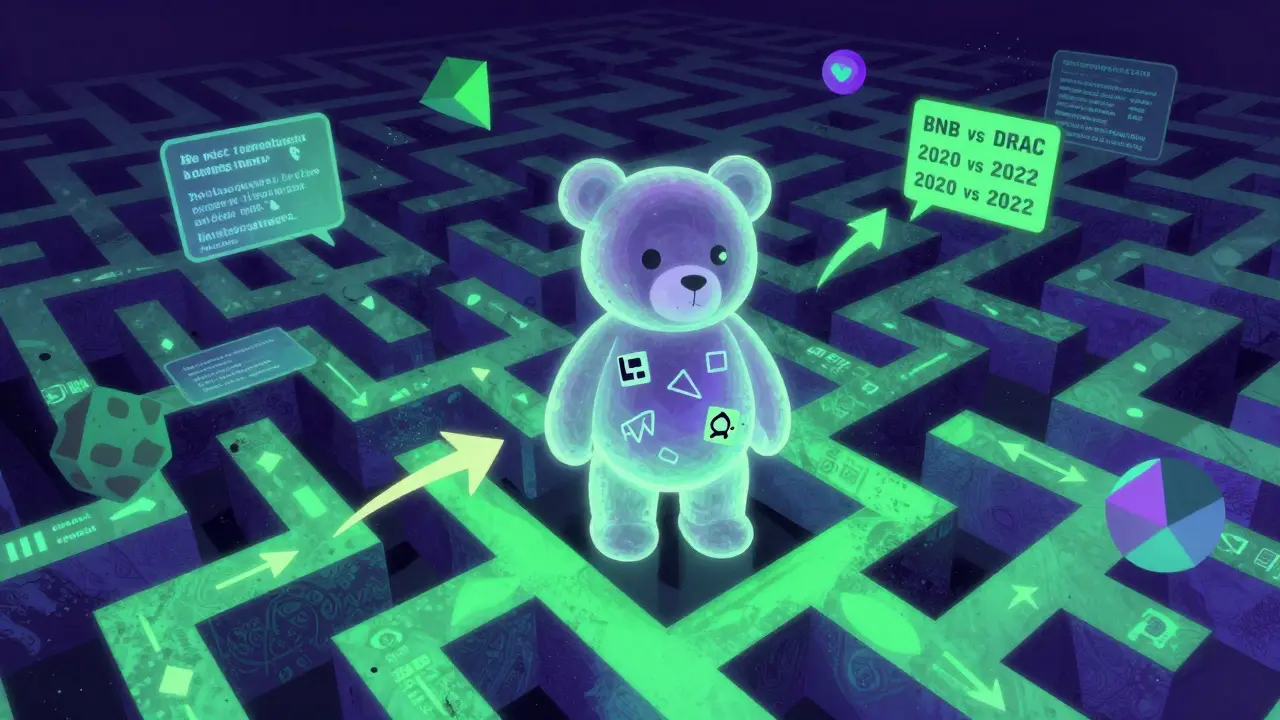
This isn't just a minor typo. A two-year gap in launch dates and a complete difference in underlying technology (DRAC network vs. BNB Smart Chain) means one of two things: either there are multiple different projects using the same name, or the information being presented to investors is fabricated. In the world of crypto, consistency is key. When the basics are wrong, you have to question everything else.
Technical Claims vs. Market Reality
Let’s look at what the project promises versus what it delivers. The pitch includes a suite of decentralized finance (DeFi) features:
- A decentralized exchange (DEX) for swapping tokens
- Liquidity provision and yield farming opportunities
- A cross-chain bridge for moving assets between blockchains
- NFT minting and auction platforms
- A dedicated wallet for asset management
- Community-driven governance via faction voting
On paper, this looks like a robust ecosystem. In reality, these features are rarely functional in low-cap, unverified tokens. Most of these "features" are simply smart contracts that haven't been audited or widely used. The mention of a "biobank" for identity verification is particularly suspicious. There is no evidence of such a system existing in the public domain, nor is there any regulatory compliance associated with handling biological data on a blockchain. This sounds more like buzzword salad designed to impress inexperienced investors than a real technical solution.
The Price Problem: Why Data Doesn't Match
If you try to check the price of Teddy Doge today, you will likely feel confused. Here is why:
| Platform | Reported Price | 24h Volume | Status/Notes |
|---|---|---|---|
| Binance | < $0.000001 USD | $401.75 | Not listed for trading; market cap $0 |
| Coinbase | €0.0000000001 | €22.91 | 100% below all-time high; supply listed as 0 |
| Crypto.com | $0.00000001234 | N/A | Not tradable on platform yet |
| CoinPaprika | $0.011628 | $2.74 | Shows 6,007% increase (likely data error) |
Look at those numbers. Binance and Coinbase show the token is essentially worthless, with prices near zero and virtually no trading volume. Meanwhile, CoinPaprika shows a price of over $0.01 with a massive percentage gain. This discrepancy is a classic sign of data aggregation errors or manipulation. Often, bots will trade tiny amounts of a token to create fake volume and price spikes, which then get picked up by automated trackers. This creates an illusion of activity where none exists.
The fact that major exchanges like Binance explicitly state the coin is not listed for trading is a huge warning sign. Liquidity is life in crypto. If you can’t easily buy or sell the token on a reputable platform, you are stuck holding a digital rock.
Confusion with Other Tokens
To make matters worse, there appears to be confusion with another token called "Teddy the Tile Doge." OKX references this separate token with a price around $0.000129 and 1 billion tokens in circulation. CoinGecko also tracks this variant. When multiple tokens share similar names, it dilutes the brand and makes it easier for scammers to trick people. You might think you’re buying the "official" Teddy Doge, but you could end up with a worthless clone.

Is Teddy Doge a Scam?
I won’t use the word "scam" lightly, but the characteristics here fit the profile of high-risk, speculative assets that often turn out to be rug pulls or abandoned projects. Consider these factors:
- No Major Exchange Listings: If a project has real utility, it gets listed on major exchanges. Teddy Doge is absent from the top tier.
- Contradictory Origins: Different sources claim different launch years and technologies.
- Extreme Volatility with No Volume: Prices swing wildly because there are so few real trades happening.
- Vague Utility: The "biobank" and "blockchain identity" claims lack proof of concept or adoption.
Investors should exercise extreme caution. Tokens with these traits typically indicate either abandoned development, minimal community support, or outright fraud. Even if the developers had good intentions originally, the current state of the project offers no clear value proposition.
How to Protect Yourself
If you are still curious about Teddy Doge or similar meme coins, follow these rules to keep your capital safe:
- Verify Contract Addresses: Never buy a token based solely on its name. Always check the official contract address on a blockchain explorer like BscScan (for BEP20 tokens).
- Check Liquidity: Look at the liquidity pool depth. If it’s shallow, you won’t be able to sell when you want to.
- Ignore Social Hype: Telegram groups and Twitter accounts can be bought. Real communities build products, not just noise.
- Diversify: Never put more than you can afford to lose into micro-cap tokens.
In the end, Teddy Doge (Teddy V2) serves as a reminder that not every shiny new coin is worth your attention. With conflicting data, lack of exchange support, and vague technical claims, it falls squarely into the category of "avoid unless you are prepared to lose everything." Stick to established projects with transparent teams and proven track records.
What is the current price of Teddy Doge (Teddy V2)?
The price of Teddy Doge varies wildly depending on the source due to low liquidity and potential data errors. Major platforms like Binance and Coinbase list it at near-zero values (less than $0.000001), while some aggregators may show inflated prices. Because it is not widely traded, there is no reliable single market price.
Is Teddy Doge listed on Binance?
No, Binance explicitly states that Teddy Doge is not listed for trading on their platform. This lack of listing on major exchanges significantly limits its accessibility and legitimacy.
What blockchain does Teddy Doge operate on?
There is conflicting information. Some sources claim it uses the DRAC network, while others, including Coinbase, state it operates on the BNB Smart Chain (BEP20). This inconsistency raises questions about the project's transparency.
Why is there so much confusion about Teddy Doge?
Confusion arises from multiple tokens with similar names (like "Teddy the Tile Doge"), inconsistent launch dates reported by different platforms, and extreme price volatility caused by low trading volume. These factors make it difficult to distinguish the real project from clones or data errors.
Should I invest in Teddy Doge?
Given the lack of major exchange listings, contradictory technical details, and extremely low liquidity, investing in Teddy Doge carries very high risk. It is generally advisable to avoid such tokens unless you fully understand the risks of losing your entire investment.
Diana Morris
May 27, 2026 AT 00:27stop buying garbage coins because they have cute names you need to wake up and smell the coffee this is a rug pull waiting to happen look at the data it is all fake volume and bots manipulating the charts for fun people are so desperate for gains that they ignore basic due diligence it makes me sick how easy it is to scam newbies in this space just because someone posts a picture of a dog does not mean there is a blockchain behind it do your homework or stay out of the market entirely
Dianne Wright
May 27, 2026 AT 09:49i feel like everyone here is missing the point of community driven projects why are you so obsessed with centralized exchanges listing everything it feels like you are trying to drain the energy from independent developers who are actually building something real even if the data looks messy right now maybe they are just growing pains instead of scams you should support small caps instead of bashing them constantly
trisya hazriyana
May 30, 2026 AT 12:40the epistemological crisis of identity in decentralized finance is fascinating yet terrifying when we consider the ontological status of a token that exists only as a discrepancy in ledger entries the notion of a biobank on blockchain is a semantic void designed to exploit the cognitive biases of retail investors who seek validation through technological jargon rather than tangible utility it is a performative act of innovation devoid of substance essentially a simulacrum of value created by algorithmic noise and social engineering tactics that prey on the human desire for belonging in digital tribes
Debbie Lewis
May 31, 2026 AT 15:17just watching from the sidelines really glad i never bought into any of these meme coins with confusing names its wild how many different versions of teddy doge exist out there probably best to stick to things you can actually trade easily without worrying about getting stuck with worthless tokens
Eric Grosso
May 31, 2026 AT 21:16so wait u saying the price is basically zero on binance but like a dollar somewhere else thats crazy how do ppl even know which one is real lol i tried looking it up once and got lost in all the different contract addresses its a mess honestly
Edith Mair
May 31, 2026 AT 23:21The lack of major exchange listings is the most critical factor here. If a project cannot secure a spot on reputable platforms, it indicates a fundamental failure in compliance and security standards. Investors must recognize that liquidity is not just a feature but a necessity for any viable asset. Without it, the token is merely a speculative instrument with no underlying value proposition or exit strategy for holders.
Sam Dashti
June 2, 2026 AT 15:03it is like trying to catch smoke with your bare hands you reach for the shiny object but it slips right through your fingers leaving nothing but ash and regret the whole circus of fake volumes and bot armies is a dazzling distraction from the empty stage behind the curtain where no actual product resides just echoes of promises bouncing off hollow walls in a digital canyon of despair