

What Exactly Is SIBCoin?
If you have stumbled upon SIBCoin (ticker: SIB) in your crypto portfolio or on a trading chart, you might be wondering what makes this specific coin different from the thousands of other altcoins out there. SIBCoin is not a new meme coin or a hype-driven token launched last week. It is a legacy project with roots going back to May 9, 2015. Originating from Siberia, it was designed as a "people’s cryptocurrency" specifically for the Russian-speaking community and Eastern European markets.
At its core, SIBCoin is a fork of the Dash blockchain. However, it isn't just a copy-paste job. The developers tweaked the underlying code to address specific needs of its target audience, focusing heavily on privacy, accessibility for non-English speakers, and resistance to specialized mining hardware. Its slogan, "Of the people, by the people, for the people," reflects its grassroots origins. While it started as a regional experiment, it aims to function as a global peer-to-peer digital cash system.
The Technology Behind the Curtain
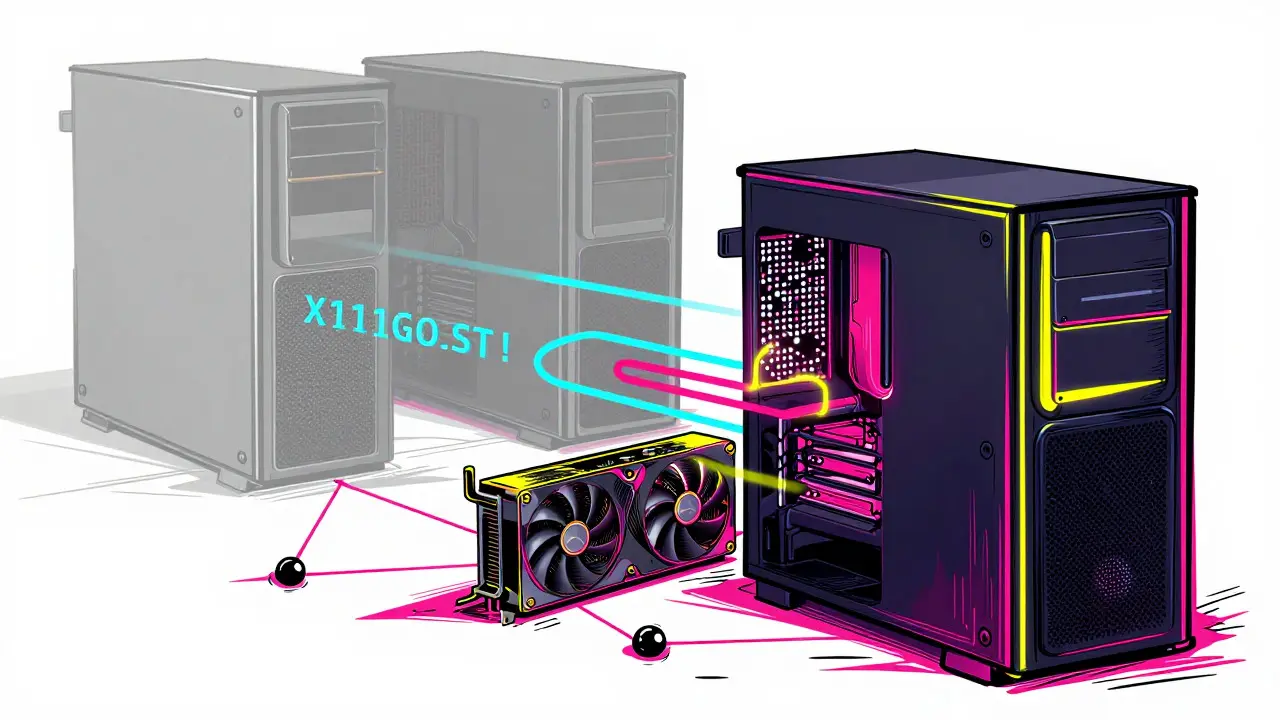
To understand SIBCoin, you need to look under the hood at its technology. Most cryptocurrencies rely on standard algorithms like SHA-256 (used by Bitcoin) or Ethash (used by Ethereum). SIBCoin takes a different path. It uses a consensus mechanism called Proof-of-Work (PoW), but with a twist. The algorithm powering the network is known as X11GOST.
This hybrid algorithm combines Dash's original X11 hashing method with the Streebog (or Stribog) hash function. Streebog is a cryptographic standard developed in Russia and approved by the Federal Security Service (FSB) as a national standard. Why does this matter? The primary goal here is ASIC resistance. ASICs are expensive, specialized machines that dominate mining for major coins like Bitcoin, often centralizing power in the hands of large mining farms. By using X11GOST, SIBCoin attempts to keep mining accessible to everyday users with regular computer hardware (GPUs and CPUs), preserving decentralization.
Furthermore, SIBCoin retains the two-tier network architecture of Dash. This means it has miners who secure the network and a second layer of servers called Masternodes. These masternodes don't just validate transactions; they enable advanced features like InstantSend and PrivateSend, which we will discuss next.
Privacy and Speed: The Core Features
In the world of public blockchains, every transaction is visible to everyone. For many users, this lack of anonymity is a dealbreaker. SIBCoin addresses this through its masternode network, offering two key features:
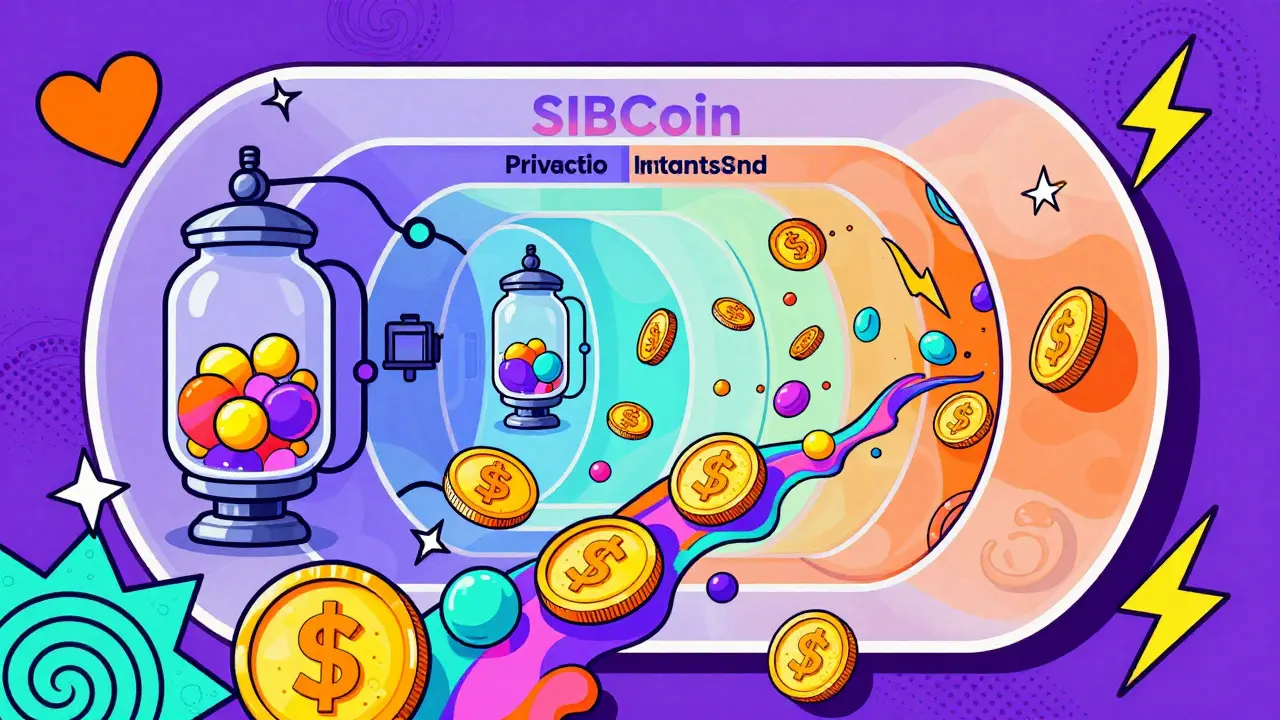
- PrivateSend: This feature allows users to mix their coins with others in the network. When you send a transaction, your coins go through several rounds of mixing (typically 2 to 8 rounds) across randomly selected masternodes. This breaks the link between your wallet address and the recipient, significantly enhancing privacy. It is similar to how physical cash works-you can hand someone a bill without them knowing where it came from originally.
- InstantSend: Waiting for block confirmations can be slow. SIBCoin’s InstantSend uses masternode quorums to lock transactions within seconds. Once locked, the transaction is effectively irreversible. This makes SIBCoin suitable for point-of-sale payments where immediate confirmation is crucial, unlike Bitcoin which can take 10 minutes or more for a single confirmation.
Additionally, the whitepaper mentions an "X-layer" platform based on the Coinprism protocol. This layer is designed to support the issuance of custom digital assets, or "colored coins," on top of the SIBCoin blockchain. This expands the utility of the network beyond simple value transfer, allowing for the creation of tokens, loyalty points, or other digital contracts directly on the chain.
Masternodes: Passive Income or High Risk?
One of the most attractive aspects of SIBCoin for investors is the opportunity to run a masternode. Unlike some high-barrier projects that require tens of thousands of dollars in collateral, SIBCoin has historically had a lower entry threshold. According to various technical guides and reviews from 2025 and 2026, the requirement to start a masternode is typically 1,000 SIB locked in a wallet.
However, the economics are complex. Masternode operators receive a portion of the block rewards-often cited as around 50% of the miner's reward share. In earlier years, this translated to annual yields of approximately 17%. But here is the catch: as the price of SIB fluctuates and the total supply increases, the real-world return on investment (ROI) changes. Some recent analyses suggest payback periods can extend to over 1,500 days (more than four years). To run a node, you also need a VPS (Virtual Private Server) with a static IP address, adding a small monthly cost to the equation.
For the technically inclined, setting up a masternode involves downloading the official wallet, transferring the collateral, configuring the server via Linux command line, and registering the node. It is not a plug-and-play process for beginners, requiring a moderate level of IT competence.
Market Reality: Liquidity and Volatility
Let’s talk numbers. As of mid-2026, SIBCoin is classified as a micro-cap asset. Data aggregators show conflicting information, which is common for low-volume coins. CryptoSlate reported a market capitalization of roughly $2.9 million with a circulating supply of about 19.79 million SIB. However, other platforms like Binance and Investing.com have shown erratic data, sometimes listing zero volume or synthetic prices. This discrepancy highlights a critical risk: low liquidity.
The all-time high for SIBCoin was approximately $5.19, reached during the speculative boom of late 2017. Since then, the price has dropped by over 99%, hovering in the range of $0.02 to $0.15 depending on the exchange and data source. Trading volumes are often near zero on major exchanges, meaning that buying or selling large amounts could significantly impact the price. Most active trading appears to happen on smaller venues like YoBit rather than top-tier global exchanges.
| Metric | Value / Detail |
|---|---|
| Consensus Algorithm | X11GOST (Proof-of-Work) |
| Total Supply Cap | 29,000,000 SIB |
| Circulating Supply | ~19,790,761 SIB |
| Masternode Collateral | 1,000 SIB |
| Key Features | PrivateSend, InstantSend, ASIC Resistance |
| Primary Audience | Russian-speaking community, Privacy advocates |
Is SIBCoin Still Relevant?
The community around SIBCoin remains active, particularly on Reddit and Russian-language forums. Discussions frequently revolve around technical upgrades, such as updating the codebase to the latest Dash version (13.0) to protect against 51% attacks and further refining the mining algorithm to ensure fairness. This indicates that the project is not dead; developers and users are still engaged in maintaining the network.
However, its relevance is niche. It serves a specific demographic that values privacy and cultural alignment. If you are looking for the next big thing with massive institutional adoption, SIBCoin is likely not it. But if you are interested in decentralized finance experiments, privacy-focused coins, or supporting community-driven projects outside the mainstream Western narrative, SIBCoin offers a unique case study.
How to Get Started
If you decide to explore SIBCoin, here is the practical path forward:
- Get a Wallet: Download the official SIBCoin wallet from the project’s website. Ensure you verify the download source to avoid malware.
- Acquire SIB: Due to low liquidity on major exchanges, you may need to use smaller exchanges like YoBit or peer-to-peer platforms to buy SIB. Be prepared for wider bid-ask spreads.
- Secure Your Assets: If holding long-term, consider moving your coins to a cold storage solution if supported, or keep them in a secured local wallet with strong backups.
- Consider Mining or Masternodes: If you have spare GPU power, you can mine SIB. If you have 1,000 SIB and technical skills, look into running a masternode for passive yield, but calculate the ROI carefully based on current prices.
Is SIBCoin safe to use?
SIBCoin uses robust cryptographic standards, including the Russian Streebog algorithm, which enhances security. However, like any small-cap cryptocurrency, it carries risks related to liquidity and market volatility. Always do your own research and never invest more than you can afford to lose.
Can I mine SIBCoin with my home computer?
Yes. SIBCoin is designed to be ASIC-resistant, meaning you can mine it using standard GPUs or CPUs. You will need to join a mining pool and configure mining software compatible with the X11GOST algorithm.
What is the difference between SIBCoin and Dash?
SIBCoin is a fork of Dash, so they share similar features like InstantSend and PrivateSend. The main differences are SIBCoin's use of the X11GOST algorithm for ASIC resistance, its focus on the Russian-speaking market, and its lower masternode collateral requirement.
Why is the price of SIBCoin so volatile?
SIBCoin is a micro-cap asset with low trading volume. Small buys or sells can cause significant price swings. Additionally, data discrepancies across exchanges can lead to artificial price variations.
Heather Austin
July 19, 2026 AT 02:29honestly the x11gost algo is pretty neat for keeping asics out but let's be real about that liquidity situation
i've been watching micro caps like this since the dash fork days and the volume on yobit is basically a ghost town now
you can buy some sib but good luck selling more than a few hundred without crashing the chart yourself
the masternode yield looks nice on paper at 17% annualized but when the coin price drops 90% your roi goes to zero faster than you can say 'private send'
also setting up a linux vps for 1000 coins collateral is a lot of hassle for pennies in actual profit
just something to keep in mind if you're thinking of running a node
Lisa Chong
July 20, 2026 AT 09:54they are using russian fsb approved cryptography which means the backdoors are already installed for the state surveillance apparatus
do not trust anything with streebog hash functions because it is clearly designed to allow the authorities to decrypt your private transactions whenever they deem fit
the whole concept of privacy here is an illusion crafted to lull western users into a false sense of security while their data is being harvested by eastern bloc intelligence agencies
we must remain vigilant against these digital trojans disguised as cryptocurrency projects
it is morally reprehensible to support technology that relies on authoritarian standards rather than open source verification from democratic nations
typo typos everywhere but the truth remains clear
Ran Tao
July 21, 2026 AT 18:13oh please spare me the conspiracy theories 🙄
lisa you are literally overthinking every single line of code just to feel important 😂
streebog is just a hash function it doesn't magically give the fsb a master key unless the implementation was flawed which is a different issue entirely
and heather stop acting like you know everything about liquidity when you probably haven't traded anything in years 🤡
this coin is a relic yes but it has a dedicated community that actually cares about decentralization unlike the btc maximalists who worship centralization
let people mine with their gpus in peace instead of crying about market cap numbers that change every second anyway 💅
Drew M
July 22, 2026 AT 06:39ran is absolutely right about the community spirit though i have to agree with heather on the technical risks ⚠️
look i love the idea of a people's currency and the instant send feature is genuinely useful for small transactions where you don't want to wait ten minutes for confirmation
but let's not pretend this is going to replace bitcoin anytime soon 📉
the volatility is insane and seeing prices swing based on one trade on a tiny exchange is terrifying for anyone holding significant amounts
still there is something charming about the grassroots effort to maintain a fork from 2015 in this day and age of ai generated meme coins 🤖
maybe we should all just appreciate the engineering effort even if the economics are broken currently ✨
Deep Rahman
July 22, 2026 AT 20:11when we look at the history of money we see that value is often derived from trust in the system rather than the intrinsic properties of the asset itself and this brings us to a philosophical question about what constitutes true freedom in a digital age
sibcoin attempts to bridge the gap between technological capability and human desire for anonymity yet it struggles with the paradox of needing a centralized authority to verify the very privacy it promises to protect through its masternode structure
the use of a russian cryptographic standard introduces an element of cultural specificity that may alienate global users while simultaneously attracting those who distrust western financial institutions
this duality creates a fascinating tension within the project as it tries to exist in multiple ideological spaces at once without fully satisfying any of them
perhaps the true value lies not in the price per coin but in the experiment of maintaining a decentralized network outside the mainstream narrative for over a decade despite overwhelming odds
Melissa Beckwith
July 24, 2026 AT 14:47actually deep rahman you are missing the point entirely because the issue isn't philosophical it is purely economic and technical
the fact that the circulating supply is nearly twenty million coins with a market cap under three million dollars means that the price discovery mechanism is fundamentally broken due to lack of participants
every time someone tries to sell a large amount the order book collapses because there are no buyers willing to absorb the liquidity shock at current prices
furthermore the claim that it is asic resistant is debatable given that specialized miners could potentially build chips for x11gost if the profitability threshold was ever met which would instantly render gpu mining obsolete
the masternode requirement of one thousand coins sounds low compared to dash but relative to the total supply and transaction fees it represents a significant lockup of capital that yields diminishing returns over time
so while the community may be passionate the mathematical reality suggests that this project is slowly dying a quiet death due to irrelevance rather than any grand conspiracy or philosophical failure