
Imagine a company where no CEO exists, no board of directors holds secret meetings, and every rule change requires a public vote from thousands of strangers around the world. That sounds like science fiction, but it is how Decentralized Autonomous Organizations, or DAOs, actually work today. If you have ever wondered who runs a crypto project when there is no boss to call, this is the answer. You do not need a computer science degree to understand them, but you do need to know that they are reshaping how we think about ownership and control online.
The Core Idea: Code Is Law
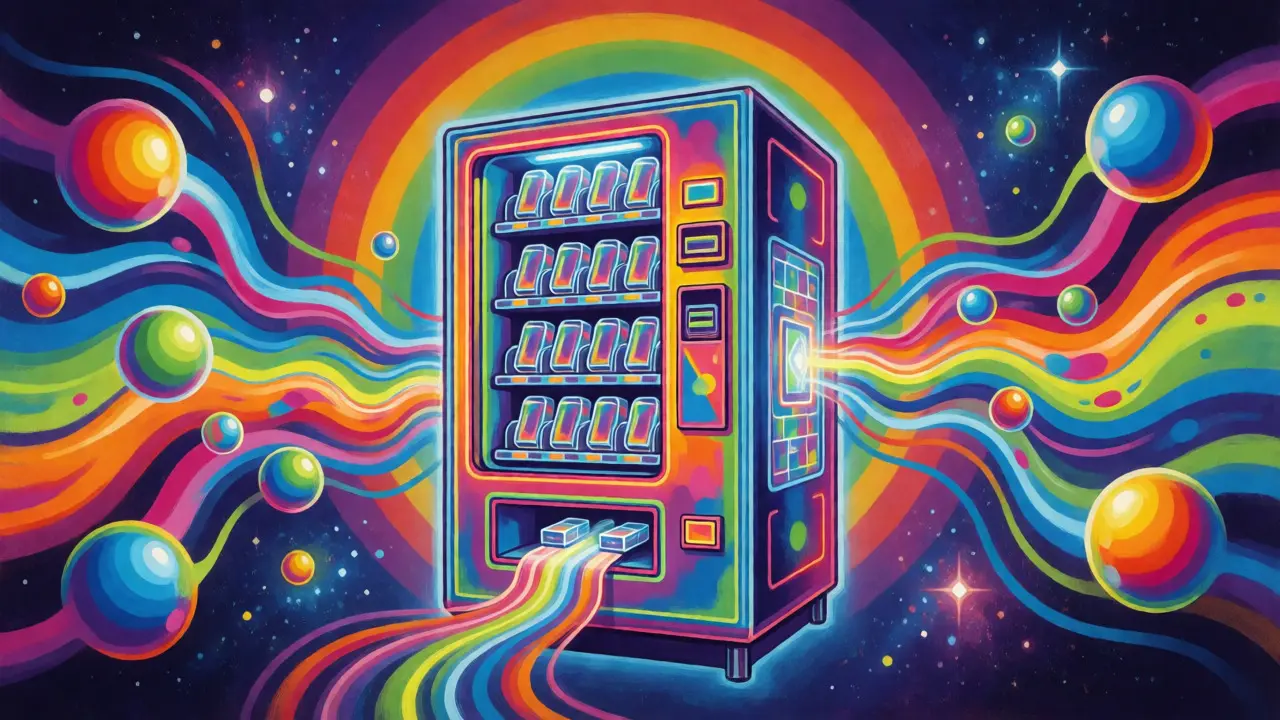
A DAO is an entity that operates without central leadership. Instead of a manager telling employees what to do, the rules are written into smart contracts on a blockchain. These are self-executing programs that automatically enforce agreements when specific conditions are met. Think of a vending machine: you put in money, press a button, and the machine gives you a soda. No human needs to be there to hand it over. The code ensures the transaction happens exactly as programmed. In a DAO, the "vending machine" handles complex business decisions, treasury management, and voting rights.
This structure removes the need for trust in people. You do not have to trust that the founder will keep their promise; you only have to trust that the code works as written. This transparency is the main selling point. Every proposal, every vote, and every dollar spent from the treasury is visible on the blockchain for anyone to audit. There are no backroom deals.
How Do You Actually Vote?
If you want to participate, you typically need governance tokens. These are digital assets that represent your membership and voting power. Unlike traditional stocks, these tokens often give you direct say in protocol upgrades or spending proposals. For example, if you hold UNI tokens, you can vote on changes to the Uniswap exchange. Your voting weight usually matches the number of tokens you hold. So, someone with 10,000 tokens has ten times the influence of someone with 1,000 tokens.
But here is the catch: voting costs money. On networks like Ethereum, each vote requires a "gas fee," which is a payment to miners or validators to process your transaction. As of late 2025, casting a single vote could cost anywhere from $2 to $15 depending on network congestion. This creates a barrier to entry. Many users find themselves spending hours figuring out how to connect a wallet like MetaMask just to cast one ballot. It is not always user-friendly, and many newcomers drop out because the interface feels like operating a spaceship rather than clicking a website.
Why Did They Start? A Quick History
The concept isn't new. BitShares launched in 2014 as the first successful implementation, though it was called a "decentralized autonomous company" then. But things got serious in 2016 with "The DAO." It raised $150 million worth of Ether in just weeks. Then, hackers exploited a bug in the code and stole $50 million. This disaster forced the entire Ethereum community to make a hard fork-a split in the blockchain-to reverse the theft. It showed both the potential and the fragility of this model. Today, DAOs manage over $21 billion in assets, according to recent data, proving that despite early stumbles, the model survived.

Types of DAOs You Will See
Not all DAOs do the same thing. They fall into four main categories, each serving a different purpose:
- Protocol DAOs: These manage decentralized finance (DeFi) platforms. Examples include MakerDAO and Uniswap. They decide interest rates, liquidity rewards, and technical upgrades.
- Investment DAOs: These pool money from members to buy assets. PleasrDAO famously bought Edward Snowden’s NFT for $5.4 million. Members vote on what to buy and sell.
- Social DAOs: These are like exclusive clubs. Friends With Benefits charges a monthly fee in crypto to join. You get access to private chats, events, and networking.
- Philanthropy DAOs: These distribute funds to causes. GitcoinDAO uses a method called quadratic funding to support open-source software projects, distributing millions to developers worldwide.
The Good, The Bad, and The Ugly
Let's be honest: DAOs are messy. On the plus side, they lower coordination costs. ConstitutionDAO raised $47 million in 72 hours to try and buy a copy of the US Constitution. A traditional nonprofit would have taken months to set up legal entities and pay staff. Here, thousands of people pooled cash instantly with almost zero admin overhead.
However, speed is a major issue. A corporate board might approve a decision in two days. A DAO often takes eleven days or more because proposals must sit for a voting period, and quorums (minimum voter turnout) must be reached. When Beanstalk Farms was hacked in 2022, losing $182 million, the DAO structure slowed down the emergency response. Centralized teams could have acted faster. This slowness makes DAOs poor choices for crises but great for long-term strategy.
Another problem is "whale dominance." While the idea is democracy, the top 10 token holders in many major DAOs control over 50% of the voting power. If a few rich individuals agree, they can pass any proposal they want, regardless of what the thousands of small holders think. This undermines the ideal of decentralization.
Are DAOs Legal?
This is the biggest question keeping regulators awake at night. In the United States, the Securities and Exchange Commission (SEC) has warned that many DAO tokens might be unregistered securities. If a token promises profit based on the efforts of others, it falls under the Howey Test, a legal standard for securities. Wyoming passed the first law recognizing DAOs as LLCs in 2021, giving them some legal protection. The EU’s MiCA framework also offers clarity by treating most DAO tokens as utility tokens unless they promise guaranteed profits. But globally, the legal status is still a gray area. If you are investing, assume there is regulatory risk until the SEC provides clearer guidelines, which are expected soon.
| Feature | Traditional Company | DAO |
|---|---|---|
| Leadership | CEO and Board of Directors | No central leader; community votes |
| Transparency | Private financial records | All transactions on public blockchain |
| Decision Speed | Fast (days) | Slow (weeks due to voting periods) |
| Ownership | Shareholders | Governance Token Holders |
| Legal Status | Well-defined corporation | Gray area / Evolving regulations |
How to Join Your First DAO
If you want to try this, start small. You don't need to buy expensive tokens immediately. Look for social DAOs with low entry fees or protocol DAOs that allow delegation. Delegation lets you lend your voting power to someone else who understands the tech better, so you don't have to research every proposal. Tools like Snapshot make voting easier by allowing gas-free votes on Layer 2 networks. Just remember: never send money to a DAO address without verifying the contract source code first. Scams are common, and once the crypto leaves your wallet, it is gone forever.
Do I need to own cryptocurrency to join a DAO?
Usually, yes. Most DAOs require you to hold their specific governance tokens to vote. However, some social DAOs accept stablecoins (like USDC) or even fiat currency via credit card integrations. Always check the specific DAO's rules before joining.
Can I lose my money in a DAO?
Yes. Risks include smart contract bugs (code errors), hacking, and market volatility of the governance token itself. Additionally, if the DAO makes bad investment decisions voted on by the community, the treasury value can drop significantly.
What is a "quorum" in DAO voting?
A quorum is the minimum percentage of total voting power that must participate in a vote for it to be valid. If a DAO has 1 million tokens and requires a 10% quorum, at least 100,000 tokens' worth of votes must be cast. If fewer people vote, the proposal fails automatically, even if everyone who voted said "yes."
Are DAOs anonymous?
Partially. Wallet addresses are pseudonymous, meaning your real name isn't on the blockchain. However, if you link your wallet to a social media account or use a centralized exchange to buy tokens, your identity can be traced. Some DAOs require KYC (Know Your Customer) verification for certain roles or payouts.
Who pays for the gas fees when voting?
You do. Each time you cast a vote on-chain, you pay a network transaction fee. This can be annoying if you vote frequently. Many DAOs now use off-chain voting tools like Snapshot, where you sign a message digitally without paying gas fees, and the result is executed later by a designated keeper.