
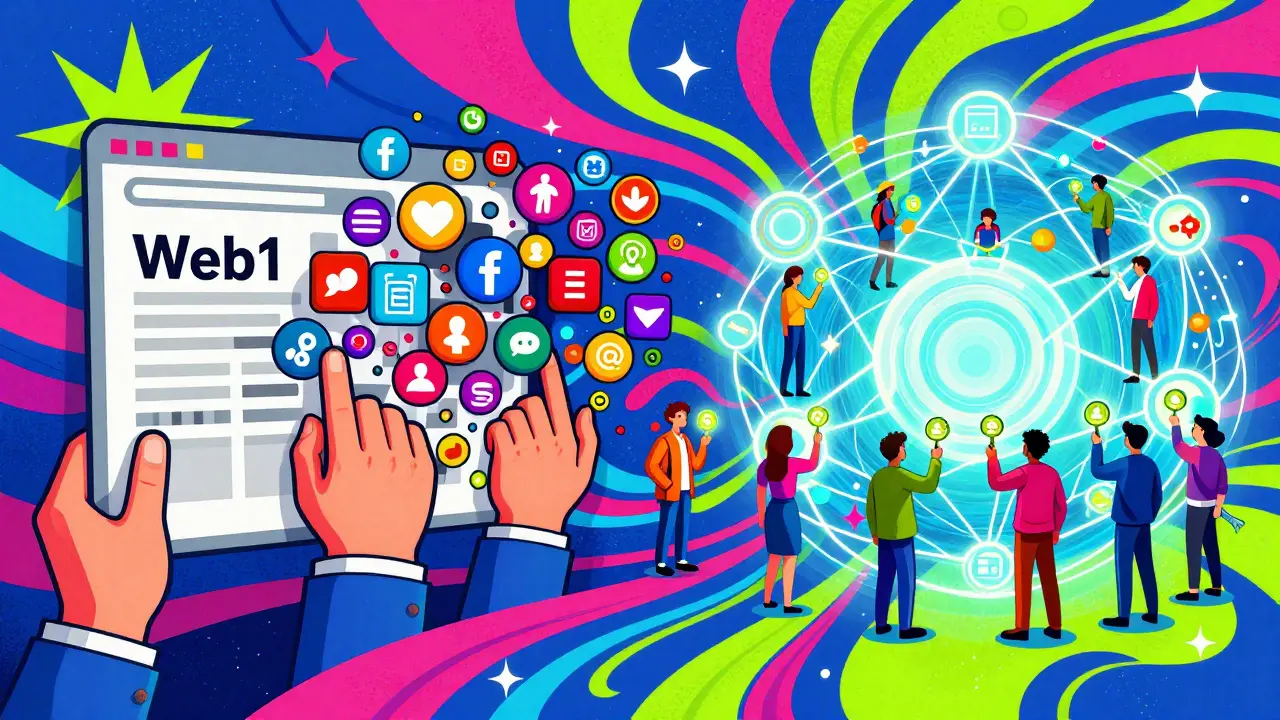
Think about the last time you posted a photo on social media or bought an e-book. Who actually owns that content? You might feel like it’s yours, but legally and technically, you’re just renting space on someone else’s server. If that platform bans your account tomorrow, your history vanishes. This is the core problem Web3 is trying to solve.
Web3 isn’t just another tech buzzword. It represents a fundamental shift from the current internet model (Web2), where big corporations control your data, to a decentralized system where you hold the keys to your digital life. In this new era, known as the "read-write-own" web, you don’t just create content; you own it. This article breaks down how Web3 changes the rules of ownership, what it means for your daily online interactions, and whether it’s worth the learning curve.
What Is Web3 and Why Does Ownership Matter?
To understand Web3, you first have to look at what came before. The first generation of the internet, Web1, was mostly static. You could read information, but you couldn’t easily interact with it. Then came Web2, the social web. Platforms like Facebook, X (formerly Twitter), and Instagram allowed us to write and share. But there was a catch: these platforms owned the infrastructure and your data. They monetized your attention through ads, and they held the power to change the rules anytime.
Web3 flips this script. Built on blockchain technology, it introduces true digital sovereignty. Instead of trusting a central company to keep your data safe, you trust code and cryptography. When we talk about "digital ownership" in Web3, we mean verifiable, transferable rights to digital assets. These aren’t just files on a hard drive; they are entries on a public ledger that prove you own them, no matter which app or website you use to view them.
| Feature | Web1 (1989-2004) | Web2 (2004-Present) | Web3 (Emerging) |
|---|---|---|---|
| User Action | Read-only | Read-Write | Read-Write-Own |
| Data Control | Individual (local) | Corporations (centralized servers) | Users (decentralized blockchain) |
| Monetization | Direct sales/subscriptions | Advertising/Data selling | Tokens/Native value exchange |
| Ownership Model | N/A | Licenses/Rental | Cryptographic Proof |
The Technology Behind Digital Ownership
So, how does the internet know you own something without a bank or a lawyer verifying it? The answer lies in cryptographic verification. Every transaction on a blockchain is recorded immutably across thousands of computers worldwide. This makes it nearly impossible to fake ownership or reverse a legitimate transfer.
The most common tool for this is the Non-Fungible Token (NFT). While many people associate NFTs only with expensive JPEGs of monkeys, they are essentially certificates of authenticity. An NFT can represent anything unique: a piece of music, a virtual land plot, a domain name, or even a deed to a physical house. The token itself doesn’t store the image or file; it points to it and proves who holds the rights.
Under the hood, standards like Ethereum’s ERC-721 enable these tokens to exist. As of late 2023, millions of NFT transactions had been recorded, showing real demand for verifiable ownership. However, the technology extends beyond art. In Decentralized Finance (DeFi), you own your financial instruments directly. In Decentralized Autonomous Organizations (DAOs), owning a governance token gives you a vote in how a community is run. This shifts power from CEOs to users.
Getting Started: Wallets and Private Keys
If you want to participate in Web3, you need a digital wallet. Unlike your banking app, a Web3 wallet like MetaMask or Phantom doesn’t hold your money. It holds your private keys.
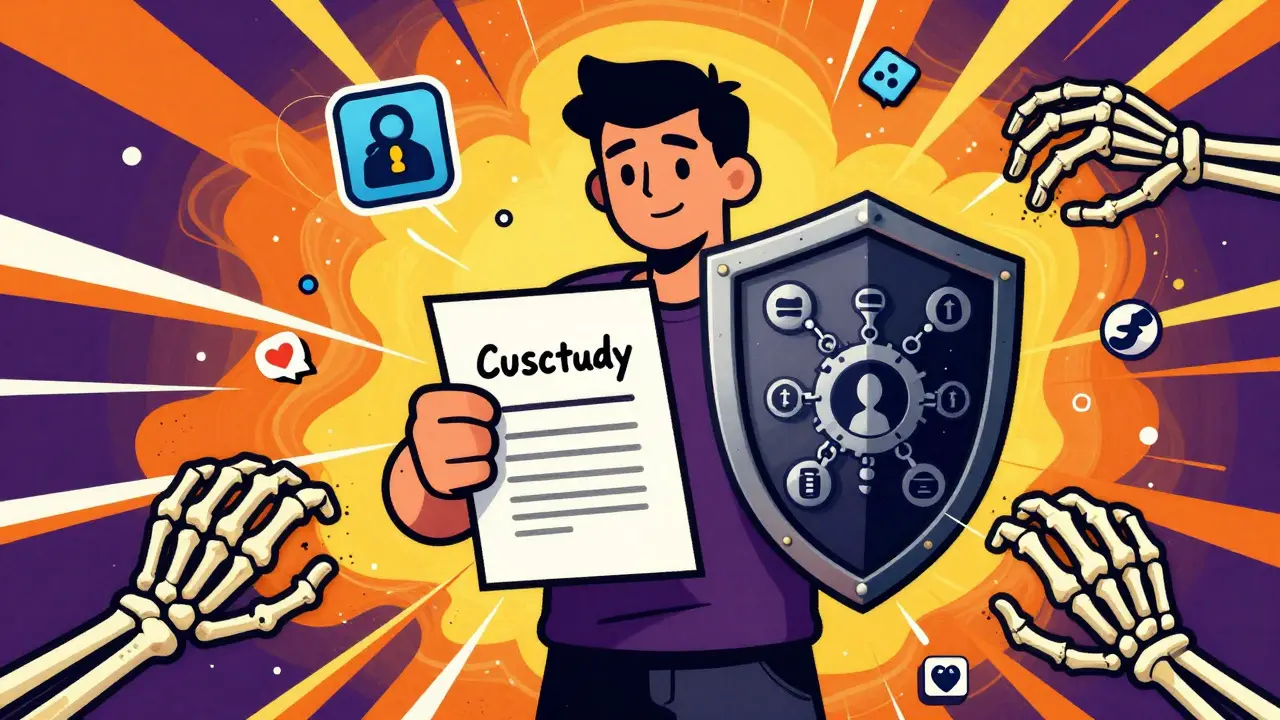
This distinction is critical. Your private key is like the master password to your entire digital identity. If you lose it, no customer support team can help you recover your assets. There is no "forgot password" link. This is the double-edged sword of self-custody: total freedom comes with total responsibility.
- Create a Wallet: Download a reputable non-custodial wallet extension or mobile app.
- Secure Your Seed Phrase: During setup, you’ll get a 12 or 24-word recovery phrase. Write this down on paper and store it safely offline. Never screenshot it or save it in cloud notes.
- Fund Your Wallet: Buy cryptocurrency (like ETH or SOL) from an exchange and send it to your wallet address.
- Connect to dApps: Use your wallet to log into decentralized applications. You’ll sign transactions instead of entering passwords.
Remember, anyone can see your public address (your "account number"), but only you should ever know your private key or seed phrase. Sharing these is like handing someone the keys to your house and your bank vault.
The Real Costs and Challenges
Web3 sounds utopian, but the user experience is still rough. One major hurdle is gas fees. On networks like Ethereum, every transaction requires a fee paid to validators. During busy times, these fees can spike to $50 or more per transaction. For buying a $5 digital sticker, that’s not feasible. This is why Layer 2 solutions like Polygon and Arbitrum are gaining popularity-they offer faster speeds and lower costs by processing transactions off the main chain.
Security is another massive concern. Because transactions are irreversible, scams are devastating. Phishing attacks, fake websites, and malicious smart contracts cost users billions in recent years. A single click on a bad link can drain your wallet instantly. Education is your best defense. Always verify URLs, use hardware wallets for large amounts, and never connect your wallet to untrusted sites.
Additionally, the environmental impact remains a debate. While Bitcoin’s proof-of-work consensus consumes significant energy, Ethereum switched to proof-of-stake in 2022, reducing its energy usage by over 99%. Newer chains like Solana also prioritize efficiency, processing thousands of transactions per second with minimal carbon footprint.
Who Wins and Who Loses?
Let’s look at two sides of the coin. On one hand, creators benefit immensely. Musicians, artists, and writers can sell directly to fans without intermediaries taking huge cuts. Smart contracts can automatically pay royalties every time a work is resold. Imagine a painter getting paid every time their painting changes hands, forever.
On the other hand, casual users struggle. The complexity of managing keys, understanding gas fees, and navigating multiple blockchains creates a high barrier to entry. Most people just want to post a photo or buy a game skin without thinking about cryptographic ledgers. Until the user interface becomes invisible-where Web3 works seamlessly behind the scenes like Web2 does today-mass adoption will remain slow.
| Advantages | Disadvantages |
|---|---|
| True ownership of digital assets | High risk of user error and loss of funds |
| No central censorship | Complex user experience |
| Transparent provenance | Volatile transaction costs |
| Direct creator monetization | Regulatory uncertainty |
The Future of Digital Identity
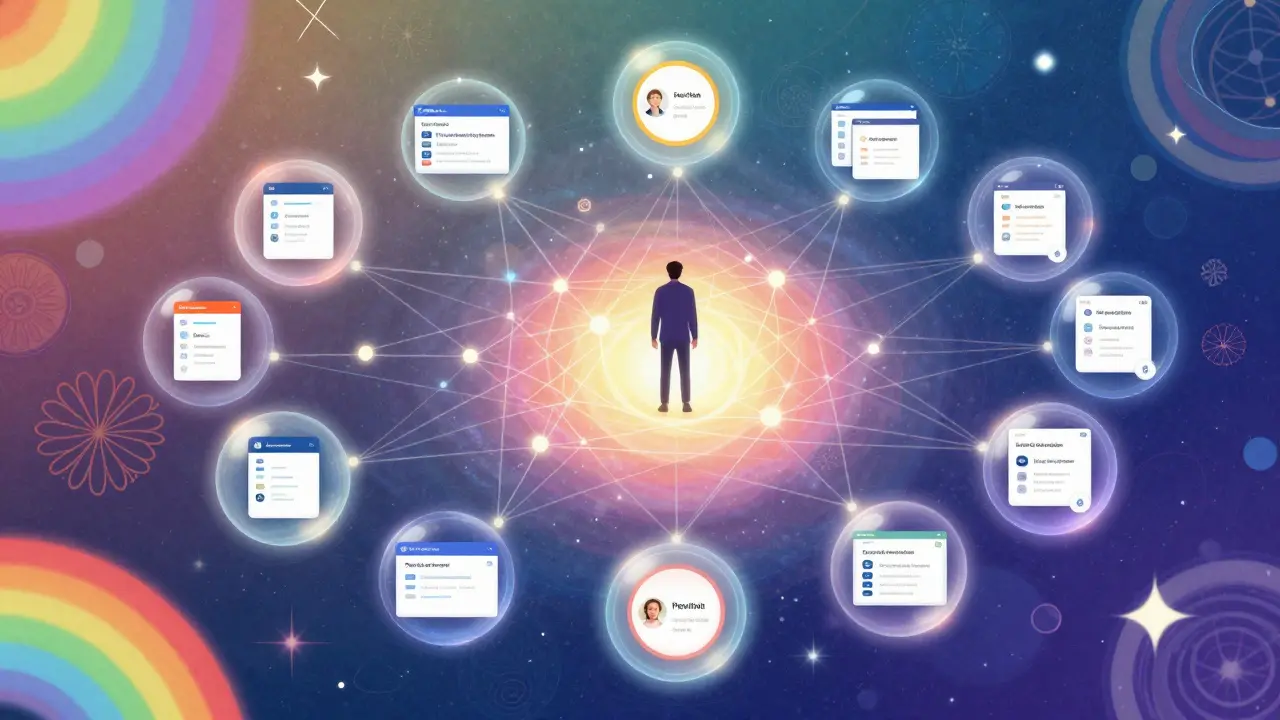
Looking ahead, Web3 is moving toward interoperability. Soon, you won’t just own an asset on one platform; you’ll carry your identity, reputation, and assets across different apps. This concept, called Self-Sovereign Identity (SSI), allows you to prove you’re over 18 or a graduate of a specific university without revealing your full birth date or transcript. Zero-knowledge proofs make this possible, enhancing privacy while maintaining verification.
As regulations like the EU’s MiCA framework come into effect, clarity will increase. This doesn’t mean the end of decentralization, but rather a maturation of the industry. By 2030, experts predict hundreds of millions of users will interact with Web3 technologies, often without realizing it. The goal is to make the technology so seamless that "blockchain" disappears from the conversation, leaving only the benefits of ownership and privacy.
Is Web3 legal?
Yes, using Web3 technologies is generally legal in most countries. However, regulations vary significantly. The European Union has introduced comprehensive rules with MiCA, while the US uses a case-by-case approach. Always check local laws regarding cryptocurrency taxes and digital asset ownership.
Can I lose my Web3 assets?
Yes. If you lose your private key or seed phrase, your assets are gone forever. Additionally, if you fall victim to a scam or send funds to the wrong address, transactions cannot be reversed. Security practices like using hardware wallets are essential.
What is the difference between Web2 and Web3?
In Web2, companies like Google or Meta own your data and control access. In Web3, you own your data and assets via blockchain technology. Web3 is decentralized, meaning no single entity controls the network, whereas Web2 is centralized.
Do I need to buy Bitcoin to use Web3?
Not necessarily. While Bitcoin is a cryptocurrency, Web3 primarily runs on smart contract platforms like Ethereum, Solana, or Polygon. You may need small amounts of these native tokens to pay for transaction fees, but you don’t need to invest heavily to start exploring.
Is Web3 environmentally friendly?
It depends on the blockchain. Older systems like Bitcoin use energy-intensive mining. However, modern Web3 platforms like Ethereum (post-Merge) and Solana use proof-of-stake or other efficient methods, reducing energy consumption by over 99% compared to previous models.
Nick G
July 11, 2026 AT 13:01I have been following the evolution of digital infrastructure for quite some time, and it is fascinating to observe how we are transitioning from a model of centralized control to one that emphasizes individual sovereignty. The article makes a compelling case for the necessity of Web3 in restoring agency to the user, particularly regarding data ownership which has become such a contentious issue in recent years. It is important to consider that while the technology is still maturing, the underlying principles of decentralization offer a promising path toward a more equitable digital landscape where users are not merely products to be monetized but active participants with verifiable rights.
Nick Wengel
July 11, 2026 AT 20:45This is a really clear explanation of why we need this shift. I always thought NFTs were just about expensive pictures but reading this makes me see they could be useful for things like tickets or verifying identity without giving away all my personal info to big companies.
Eric Braddock
July 12, 2026 AT 15:59You are completely missing the forest for the trees here because the entire premise of 'decentralization' is a facade designed to obscure the fact that venture capital firms and early insiders are simply creating new monopolies under the guise of technological liberation. The cryptographic proofs you speak of are easily manipulated by those with sufficient computational resources and political influence, rendering the concept of 'true ownership' an absolute fallacy in a system rigged against the average participant who lacks the technical literacy to navigate the labyrinthine smart contracts that inevitably contain backdoors for the architects themselves.
Alicia Hull
July 13, 2026 AT 19:34While the theoretical framework presented here is intriguing, one must critically examine the practical implications of self-custody on vulnerable populations who may lack the digital literacy required to secure private keys effectively. The assertion that Web3 provides true sovereignty ignores the stark reality that a single error can result in irreversible financial loss, thereby exacerbating existing inequalities rather than mitigating them through a more accessible and robust educational infrastructure that currently does not exist at scale.
Johan Otto
July 14, 2026 AT 11:36Wow, everyone is so excited about losing their money forever. This sounds like a nightmare waiting to happen. Why would anyone want to be responsible for everything when they could just let a company handle it? Seems like too much drama for zero gain honestly.
Anuj Kashyap
July 14, 2026 AT 18:16The irony is palpable when we discuss 'ownership' in a realm where the assets are essentially lines of code dependent on electricity and server uptime 🤷♂️. We are trading the tyranny of corporate algorithms for the tyranny of complex cryptography, assuming that understanding gas fees and seed phrases equates to freedom rather than just a different kind of enslavement to a system we barely comprehend 😂. Perhaps the real value lies not in owning the JPEG, but in the collective delusion that gives it price, which is a philosophical stance as valid as any other in the grand theater of human economics 🎭.
Tracy Marshall
July 15, 2026 AT 10:06it is disturbing to think that our governments will eventually allow these unregulated ledgers to dictate property rights without oversight :/ the moral decay of society is evident when people prioritize digital tokens over tangible community bonds and trust in established institutions that have served us well for decades despite their flaws
Guy Davis
July 15, 2026 AT 18:10u guys r so naive if u think this changes anything its just another way for elites to steal ur stuff n there r no rules so good luck trying to get yr money back wen it gets hacked lol