
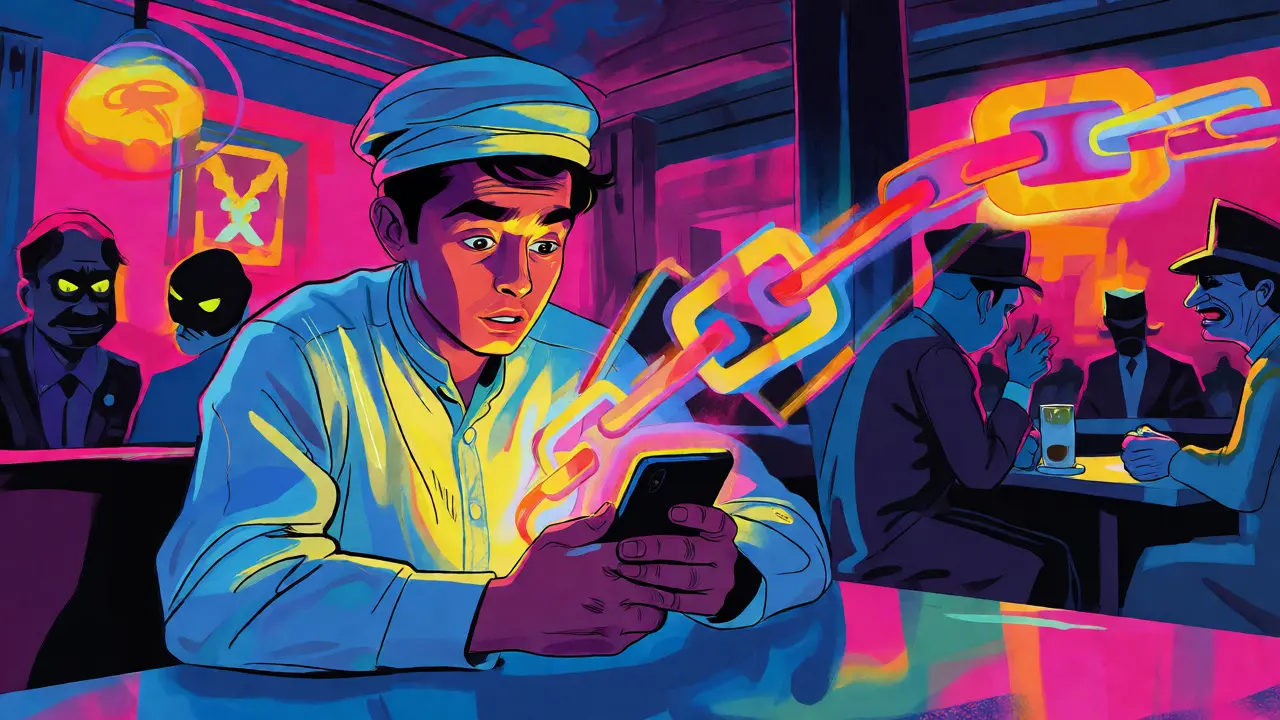
Imagine trying to buy a coffee with Bitcoin in Tunis, only to risk going to jail for it. That is the reality for thousands of Tunisians today. Since Central Bank of Tunisia (BCT) slapped a comprehensive ban on all cryptocurrency transactions back in May 2018, a massive shadow economy has emerged. It’s not just a few hobbyists; it’s a sophisticated network of traders who have turned prohibition into an art form. They use Virtual Private Networks (VPNs) and peer-to-peer platforms to trade digital assets while dodging banking alerts that could freeze their accounts or worse.
You might wonder why anyone would take such risks. The answer lies in economic necessity and technological curiosity. While the state explores its own blockchain initiatives, citizens are locked out of the global digital finance boom. This article breaks down how underground crypto trading actually works in Tunisia, the specific tools traders use, the severe legal penalties involved, and what the future holds as parliament debates decriminalization.
The Origins of the Prohibition
To understand the current chaos, you have to look at the timeline. Between 2013 and 2017, crypto was a regulatory gray area in Tunisia. People traded without much fuss. Then, in May 2018, the BCT issued a circular declaring all cryptocurrency transactions illegal. They cited concerns over money laundering, terrorism financing, and the volatility of digital assets. But there was another layer: Islamic finance rules. Many scholars argued that because crypto lacks intrinsic value and involves excessive uncertainty (gharar), it didn't fit traditional Sharia-compliant banking models.
This wasn't just a warning label; it was a hard stop. Banks were instructed to block any transaction linked to crypto exchanges. If your bank statement showed a transfer to a known exchange like Coinbase or Binance, you could expect a call from compliance officers or even an account freeze. The goal was to protect the Tunisian Dinar (TND) from capital flight, but the side effect was pushing an entire market underground.
How Traders Beat the System
So, if banks block transfers, how do people actually buy Bitcoin? They don’t use direct bank wires. Instead, they rely on Peer-to-Peer (P2P) platforms. P2P trading allows users to transact directly with one another, using the platform only as an escrow service to hold funds until both parties confirm the deal.
The most popular method involves using international exchanges that offer robust P2P markets. As of mid-2025, Binance P2P remains the dominant channel for Tunisian users. Here is the typical workflow:
- Find a Seller/Buyer: A trader logs into Binance P2P via a VPN to bypass local internet restrictions on crypto sites.
- Negotiate Terms: They find a counterpart willing to accept payment via local methods that don't scream "crypto." This often means cash handovers, mobile money transfers, or transfers between personal bank accounts labeled vaguely (e.g., "rent" or "gift").
- Escrow Protection: The seller locks the crypto in Binance’s escrow. The buyer sends the TND.
- Release Funds: Once the seller confirms receipt of the TND, the crypto is released to the buyer.
This method keeps the actual fiat currency movement off the radar of automated banking filters. However, it requires trust and careful verification. Scams are common, so experienced traders stick to users with high completion rates and verified IDs.
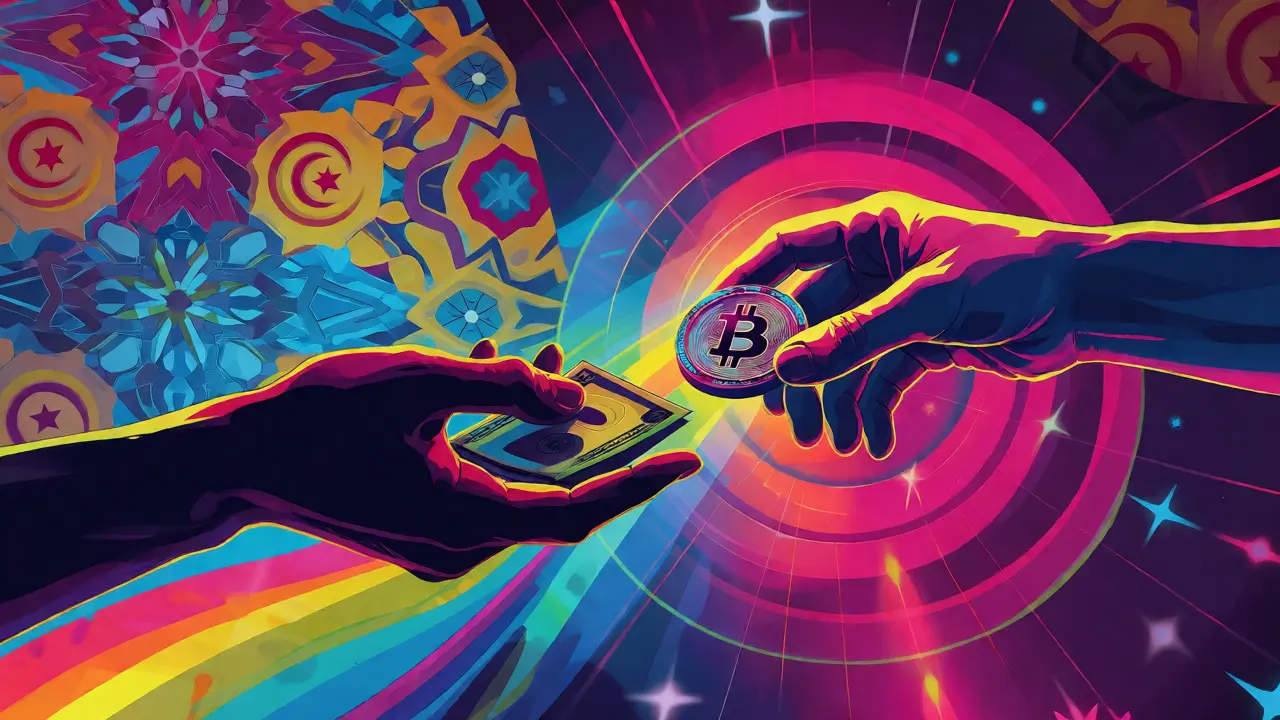
The Toolkit: Platforms and Coins
While Binance is king, it’s not the only player. Tunisian tech-savvy traders also frequent LocalBitcoins, although its activity has waned globally. Other accessible platforms include KuCoin, OKX, and MEXC. These platforms are chosen for their liquidity and support for USDT (Tether), which acts as the primary stablecoin for settling trades due to its dollar peg.
| Asset/Platform | Role in Underground Market | Risk Level |
|---|---|---|
| Binance P2P | Primary exchange hub for fiat-crypto swaps | Medium (Account freezes possible) |
| USDT (Tether) | Digital dollar substitute for savings/trading | Low (Stable value, widely accepted) |
| Bitcoin (BTC) | Store of value and speculative asset | High (Volatility and legal scrutiny) |
| Ethereum (ETH) | Used by developers for DeFi/NFT experiments | Medium (Technical barrier) |
| Poste Tunisienne | Ironic irony: State postal service exploring blockchain | N/A (State initiative) |
Interestingly, while citizens face jail time for trading, the state postal service, Poste Tunisienne, has been quietly researching blockchain payment systems. This contradiction highlights the disconnect between political fear of decentralized money and administrative interest in the underlying technology.
Legal Risks: More Than Just a Fine
Let’s be clear: this isn't a victimless crime in the eyes of the law. The penalty isn't just a slap on the wrist. In 2021, a teenager was jailed for operating a small crypto exchange. This case sent shockwaves through the community and sparked cabinet-level discussions about whether the laws were too harsh.
The legal framework categorizes crypto possession and trading as potentially criminal offenses under existing banking and financial regulations. Enforcement mechanisms include:
- Bank Monitoring: Algorithms flag unusual transaction patterns. Frequent small transfers to individuals can trigger reviews.
- Account Freezes: Banks may freeze accounts pending investigation, locking users out of their own money for weeks.
- Criminal Prosecution: In extreme cases, especially those involving large volumes or perceived money laundering, prosecutors can pursue charges leading to imprisonment.
Compliance requirements for formal businesses are strict. Any entity touching the financial sector must adhere to Anti-Money Laundering (AML) checks. This includes Customer Due Diligence (CDD) and Enhanced Due Diligence (EDD) for high-risk clients. Records must be kept for ten years, and suspicious transactions reported to the Tunisian Financial Analysis Committee (CTAF) within ten days. Underground traders operate completely outside this loop, meaning they have no consumer protection if a P2P partner scams them.

Economic Impact and Brain Drain
The ban hasn't stopped crypto; it has exported it. Tunisia suffers from significant brain drain in the fintech sector. Talented developers and entrepreneurs often migrate to countries like Canada or Switzerland, where legal frameworks encourage innovation. By banning crypto, Tunisia loses potential tax revenue and fails to capture the economic benefits of early adoption.
Locally, some firms adapt by focusing on blockchain applications that don't involve public tokens-like supply chain management or secure voting systems. These areas remain legally safer. Meanwhile, the underground market continues to grow modestly but steadily. It serves as a hedge against inflation and a way to access global markets for freelancers paid in foreign currencies who want to avoid unfavorable exchange rates.
The Future: Decriminalization on the Horizon?
Is change coming? There are signs. Parliamentary committees are currently reviewing draft bills that could decriminalize crypto possession and introduce a licensing regime. The Central Bank has shown cautious progress by considering fintech licenses and advancing research into a Central Bank Digital Currency (CBDC).
However, timelines are uncertain. Global pressure and the undeniable resilience of the underground market suggest that total prohibition is unsustainable. Eventually, regulators will likely need to choose between embracing regulation for oversight or maintaining a ban that is increasingly difficult to enforce. For now, Tunisian traders continue to navigate the shadows, proving that technology often moves faster than legislation.
Is it illegal to own Bitcoin in Tunisia?
Yes, effectively. The Central Bank of Tunisia banned all cryptocurrency transactions in 2018. While simply holding coins in a private wallet is harder to police, buying, selling, or exchanging them through banks or recognized entities is prohibited and can lead to account freezes or legal action.
Which platform do Tunisians use most for crypto trading?
Binance P2P is the most popular platform. It allows users to trade directly with each other using local payment methods, bypassing the need for direct bank transfers to international exchanges, which are typically blocked.
Can I get arrested for trading crypto in Tunisia?
There is a documented precedent. In 2021, a teenager was jailed for operating a crypto exchange. While individual retail traders are less likely to face immediate arrest than operators, they risk account freezes and potential prosecution for violating banking laws.
Why did Tunisia ban cryptocurrencies?
The ban was driven by concerns over money laundering, terrorism financing, capital flight affecting the Tunisian Dinar, and interpretations of Islamic finance principles regarding uncertainty and lack of intrinsic value.
Are there plans to legalize crypto in Tunisia?
Parliamentary committees are considering draft bills to decriminalize possession and create a licensing regime. The Central Bank is also researching a Central Bank Digital Currency (CBDC), indicating a shift toward regulated digital finance, though no definitive legalization date exists yet.