
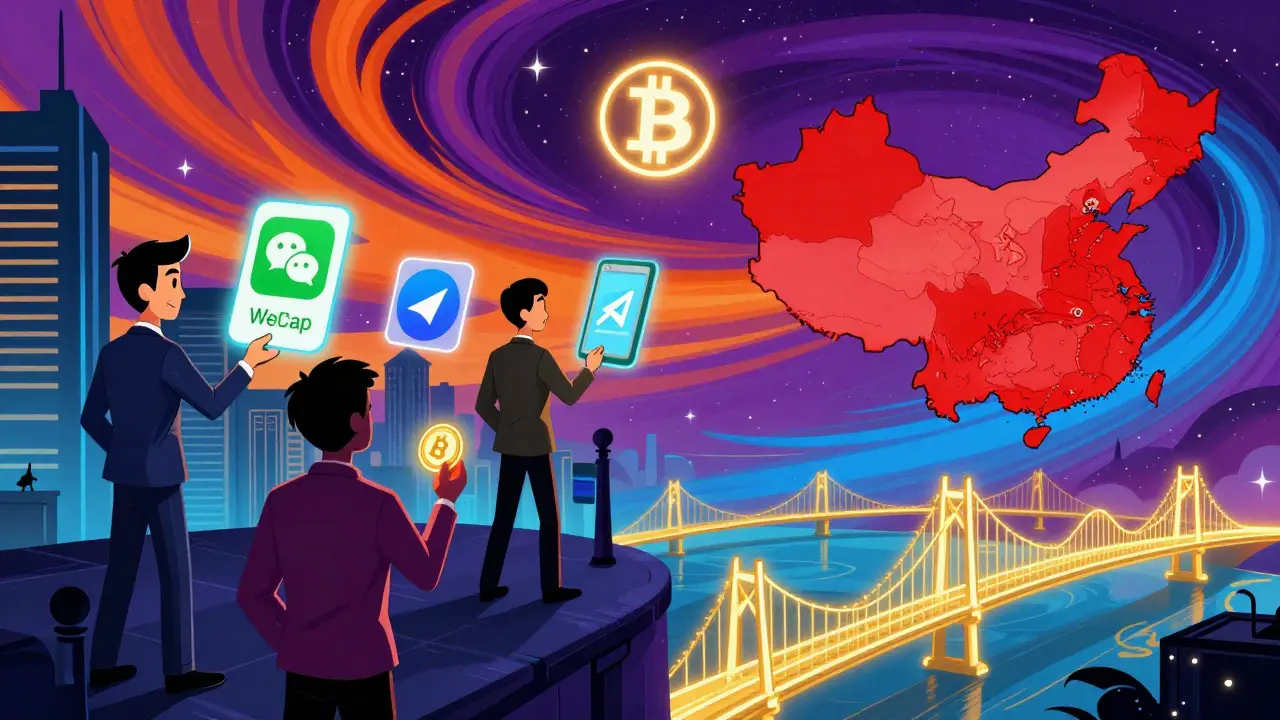
China officially banned cryptocurrency trading and mining in 2021. Banks can't touch it. Exchanges like Binance and Coinbase are blocked. Yet, billions of dollars in crypto still move through the shadows. Between July 2022 and June 2023, Chinese traders conducted $86.4 billion in underground crypto transactions - more than Hong Kong, where crypto is legal. This isn't a fringe activity. It's a massive, resilient market that refuses to die - even under intense pressure.
How Did We Get Here?
China didn't wake up one day and ban crypto. It was a slow, methodical shutdown. In 2013, banks were told not to handle Bitcoin. In 2017, domestic exchanges were shut down. By 2021, the People's Bank of China (PBOC) made it crystal clear: no trading, no mining, no services. Financial institutions were ordered to cut off all crypto-related accounts. The message was loud: this isn't just discouraged - it's illegal. But here's the twist: personal ownership of Bitcoin, Ethereum, or any other coin? Still technically legal. You can hold it. You can buy it with cash. You just can't trade it on an exchange, use a platform, or let a bank touch it. This gray zone became the loophole everyone used. Courts even called crypto "legal property" in 2025, giving holders some protection if their coins were stolen - but not if they tried to sell them.The Underground Network: How It Actually Works
You won't find a crypto app on your Chinese phone. But you'll find people trading on WeChat, Telegram, and encrypted forums. The system is built on three pillars: P2P platforms, OTC brokers, and Hong Kong. Peer-to-peer (P2P) trading is the backbone. Traders connect directly, paying in yuan through bank transfers, Alipay, or WeChat Pay. These platforms aren't official - they're run by private individuals who act as escrow. You send money. They send crypto. It's risky, but it's the only way. Some brokers have built reputations over years. Others vanish overnight. Over-the-counter (OTC) desks have become the go-to for bigger players. These aren't licensed firms - they're informal networks of traders with connections to Hong Kong bank accounts. A trader in Shanghai might send 500,000 yuan to a broker in Guangzhou. The broker then buys Bitcoin on a Hong Kong exchange and sends it to the trader's wallet. No bank involved. No traceable trail. The commission? Usually 1-3%. Hong Kong is the bridge. It's the only place where crypto is legal and accessible. Many mainland traders set up shell companies or use family members in Hong Kong to open bank accounts. From there, they access Binance, Kraken, or Coinbase. VPNs are everywhere - not just for bypassing the Great Firewall, but for hiding IP addresses and avoiding detection. Some traders use multiple VPNs in rotation. Others rely on private proxy networks that change daily.Why Are People Still Trading?
It's not about speculation. It's about survival. China's stock market crashed. The CSI 300 index fell 35% between 2021 and 2023. Corporate earnings missed forecasts for ten straight quarters. Savings accounts pay less than 1.5% interest. Real estate? Prices dropped in 70% of major cities. People needed somewhere to put their money. Crypto offered returns no other asset could match. And it's not just retail investors. The average trade size in China's underground market is $10,000 to $1 million - nearly double the global average. These are high-net-worth individuals, business owners, and professionals using crypto to preserve wealth. Stablecoins like USDT and USDC became the preferred medium because they don't swing wildly. You can lock in value, move it across borders, and convert back to yuan without losing half your money to volatility.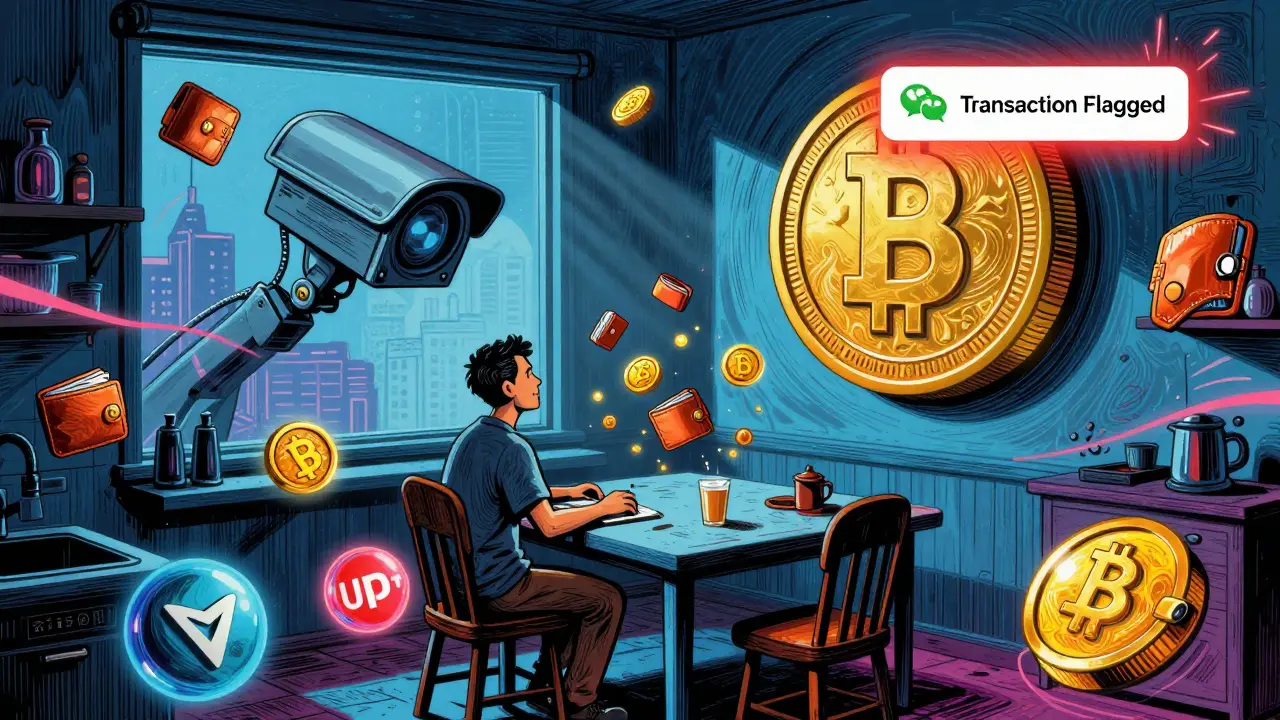
The Real Risks: More Than Just Getting Caught
Yes, you could get arrested. Enforcement is unpredictable. One month, nothing happens. The next, a trader gets fined 500,000 yuan and has their bank account frozen. In 2024, a Shanghai businessman was sentenced to three years in prison for running a P2P crypto service. His crime? Facilitating transactions between clients. But legal trouble is just the tip. The bigger dangers are hidden:- Scams: Fake brokers, rigged trades, and exit scams are common. No regulator means no recourse.
- Lost funds: If your wallet is hacked or you send crypto to the wrong address, there's no customer service to call.
- Bank account freezes: If a bank detects crypto-related transfers, they can lock your account for months - even if you didn't trade.
- VPN shutdowns: The government cracks down on VPN providers. One day, your connection drops. The next, you can't access your exchange.
- Conversion headaches: Turning crypto back into yuan is harder than buying it. You need a trusted contact. If they disappear, your money is gone.
Who's Really in Charge?
The government doesn't want crypto to disappear - it wants to replace it. China's digital yuan (e-CNY) is the real story. It's not a decentralized coin. It's a state-controlled digital currency. Every transaction is tracked. Every dollar is monitored. The PBOC isn't trying to stop innovation - it's trying to own it. Crypto threatens that control. That's why it's banned. But the underground market won't vanish. It's too big. Too entrenched. Too necessary for people who can't find better returns. Even if the government cracks down harder, traders adapt. They use new tools. New routes. New brokers. The system evolves - not because it's legal, but because it works.
What's Next?
Shanghai regulators are now talking about stablecoin rules. That's a signal. Not a reversal. A recalibration. Maybe the government is thinking: "If we can't stop crypto, maybe we can control it - through regulated digital assets." For now, the underground market keeps running. It's not a revolution. It's a quiet rebellion. Millions of people are using it to protect their wealth, escape poor returns, and take control of their money - even if it means living in a legal gray zone.How Traders Are Adapting
Experienced traders don't rely on one method. They layer their strategies:- Use multiple VPNs - one for access, another for identity masking.
- Keep crypto in cold wallets, never on exchanges.
- Use Hong Kong bank accounts for deposits and withdrawals.
- Trade in stablecoins first, then convert to Bitcoin or Ethereum only when needed.
- Build trusted networks through family, friends, or professional contacts - never strangers.
- Monitor regulatory announcements closely. A single WeChat post from a local official can trigger panic selling.
The Psychological Toll
It's not just about money. It's about stress. Traders describe constant anxiety. "Every time I transfer yuan, I worry," one user wrote on a Chinese crypto forum. "What if the bank flags it? What if they freeze my account? What if they come for me?" Many avoid telling anyone - not even close family. The fear isn't just legal. It's social. Being caught with crypto can mean losing your job, your reputation, even your ability to get a loan. Yet, they keep going. Because the alternative - watching your savings shrink in a bank - feels worse.Is it illegal to own Bitcoin in China?
Yes, owning Bitcoin or any cryptocurrency is not illegal in China. You can buy it with cash, hold it in a wallet, and store it privately. The ban targets trading, mining, and financial services - not personal possession. However, courts have ruled that crypto is "legal property," meaning you can sue if someone steals your coins. But if you try to sell it through a platform or exchange, you're violating the law.
Can Chinese banks detect crypto transactions?
Banks can't see if you bought Bitcoin, but they can see unusual patterns. If you send 500,000 yuan to a stranger and receive crypto the same day, the bank may flag the transfer. They don't know it's crypto - they just see a suspicious payment. That's enough to freeze your account, ask for proof of income, or report you to authorities. Many traders now use small, irregular transfers to avoid detection.
Why is Hong Kong so important for crypto trading in China?
Hong Kong is the only major financial hub near China where crypto trading is legal and regulated. Chinese traders use Hong Kong bank accounts, corporate structures, and exchanges to access global crypto markets. Many set up shell companies there or use relatives to open accounts. From Hong Kong, they can buy Bitcoin, withdraw to wallets, and transfer funds back to China - all without triggering mainland regulations. Over 60% of underground crypto flows in China pass through Hong Kong.
Are stablecoins safer than Bitcoin in China?
Yes, for most traders. Stablecoins like USDT and USDC are pegged to the U.S. dollar, so they don't swing in value like Bitcoin. This makes them ideal for moving money across borders without losing value. Traders use them as a bridge: yuan → USDT → Bitcoin. They're also easier to hide in transactions, since their price stability makes them look like regular payments. Over 80% of underground trades in China now use stablecoins as the primary asset.
Will China ever legalize crypto again?
Full legalization is unlikely. But controlled access might happen. The government is focused on its own digital yuan. If stablecoins are regulated - like being allowed only through licensed platforms tied to e-CNY - China might open a narrow window. It won't be Bitcoin or Ethereum. It will be state-approved digital assets with full surveillance. The underground market will shrink, but not disappear - because the demand for alternatives won't vanish.
lori sims
February 27, 2026 AT 08:35Reggie Fifty
February 28, 2026 AT 00:53Kristi Emens
February 28, 2026 AT 07:05Deborah Robinson
March 1, 2026 AT 18:19Michelle Mitchell
March 2, 2026 AT 00:19