
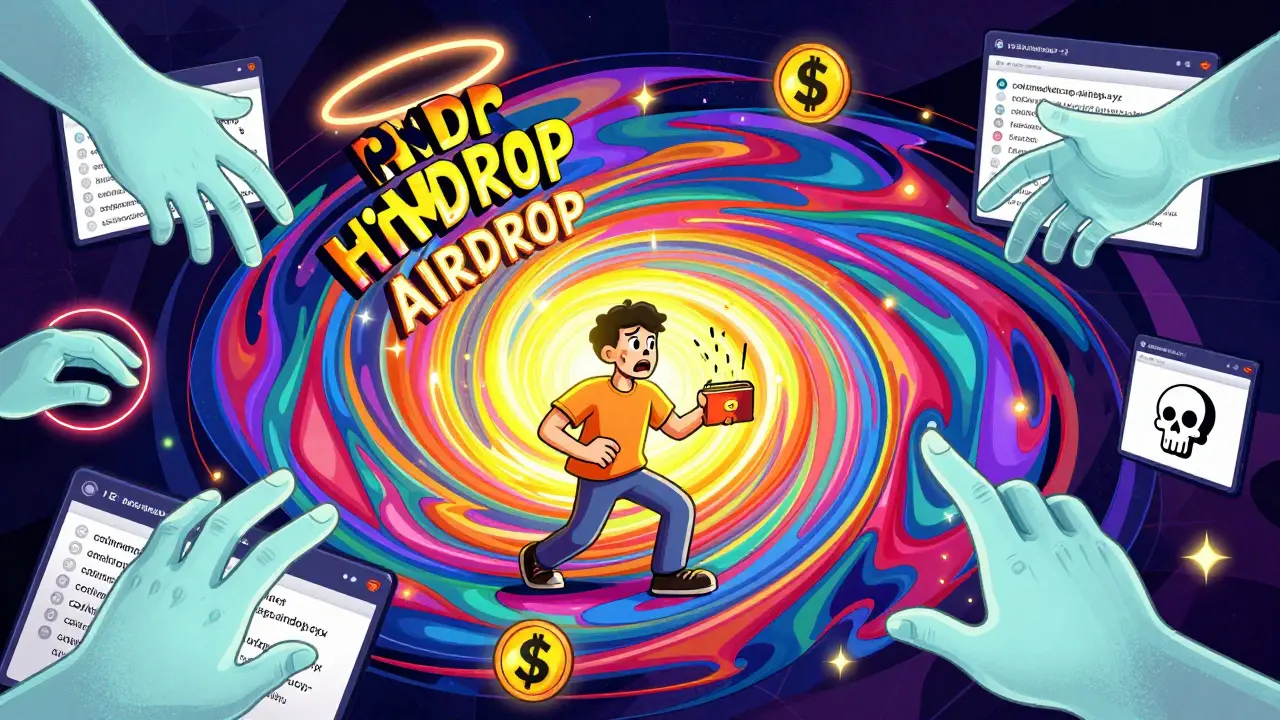
There’s a lot of noise online about a Pandora Finance (PNDR) airdrop tied to CoinMarketCap Community. If you’ve seen posts claiming you can claim free PNDR tokens just by linking your CoinMarketCap account, stop. There is no official airdrop. Not now. Not planned. Not happening.
This isn’t just a rumor-it’s a trap. Scammers are using the names of real platforms like CoinMarketCap and Pandora Finance to trick people into connecting wallets, sharing private keys, or paying "gas fees" to claim tokens that don’t exist. You won’t get free PNDR. You’ll lose your crypto.
What Is PNDR, Really?
Pandora Finance (PNDR) is a token built on the Binance Smart Chain (BSC). It was launched in January 2021 by Pushkar Vohra with the goal of building a customer-focused crypto ecosystem. The total supply is capped at 100 million tokens. Sounds promising? Here’s the reality.
As of October 2025, PNDR trades at around $0.0031. That’s down 99.6% from its all-time high of $0.74. The 24-hour trading volume? Just $97.28. That’s less than the cost of a coffee in most cities. When a token’s daily trading volume is this low, it means almost no one is buying or selling it. No liquidity. No interest. No real market.
The project says it’s moving toward a DAO structure, where PNDR holders would vote on future updates. But there’s no evidence of active governance. No public votes. No proposals. No community meetings. Just a website that hasn’t updated in months.
Why the CoinMarketCap Airdrop Claim Is Fake
CoinMarketCap doesn’t run airdrops. It’s a price tracking site. It doesn’t issue tokens. It doesn’t manage wallets. It doesn’t partner with obscure projects to give away free crypto. If you see a post saying "Claim your PNDR via CoinMarketCap Community," it’s a phishing page.
Real airdrops from legitimate projects-like Uniswap in 2020 or Axiom Exchange in early 2025-don’t ask you to log in with your email or connect your MetaMask to a random website. They announce the airdrop on their official blog, Twitter, or Discord. They list clear eligibility rules: "You must have made at least 3 swaps on our testnet by June 1, 2025." They don’t use vague phrases like "Join now to unlock your reward."
Pandora Finance has never announced any airdrop. Not on their website. Not on their Twitter. Not on their Telegram. Not even in their GitHub commits. If it’s not on their official channels, it’s fake.
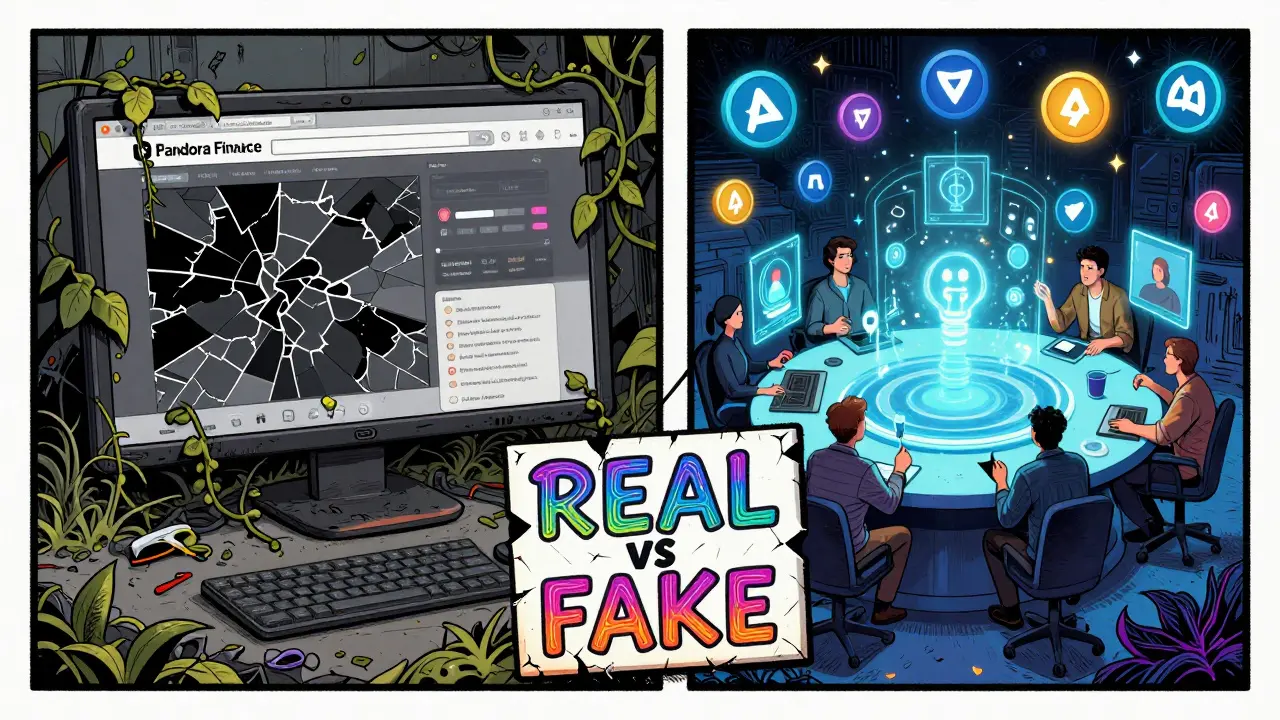
How to Spot a Crypto Airdrop Scam
Here’s what every real airdrop looks like-and what fake ones do instead:
- Real: You earn tokens by using a testnet, staking, or trading on the platform before launch. You get notified via email or in-app alert.
- Fake: You’re told to "connect wallet" to a website that looks like CoinMarketCap or Pandora Finance. The URL might be
coinmarketcap-airdrop[.]xyzorpandora-finance[.]io. - Real: You never pay gas fees to claim airdrop tokens. If they ask for ETH, BNB, or USDT to "unlock" your reward, it’s a scam.
- Fake: They say "Only 500 spots left!" or "Claim before it’s gone!"-classic urgency tactics.
- Real: The project has a transparent team, active social media, and a working product.
- Fake: The team is anonymous. The website has broken links. The whitepaper is copied from another project.
Check the domain. If it’s not pandora.finance, it’s not real. If it’s not coinmarketcap.com, they’re not affiliated.
What About the PANDORA Token?
There’s another project called PANDORA (all caps), which trades around $536-$1,059. It’s completely unrelated to PNDR. This token was delisted from Gate.io in July 2025 and had a buyback offer at $141.99. People confuse the two because of the similar names. But PANDORA is a separate project with its own blockchain, team, and history. Don’t mix them up.
If you’re looking at a site offering "PANDORA" tokens, it’s not the same as PNDR. And if you’re being told to claim "PNDR via CoinMarketCap," you’re being targeted by someone who doesn’t care whether you lose money-they just want your private key.
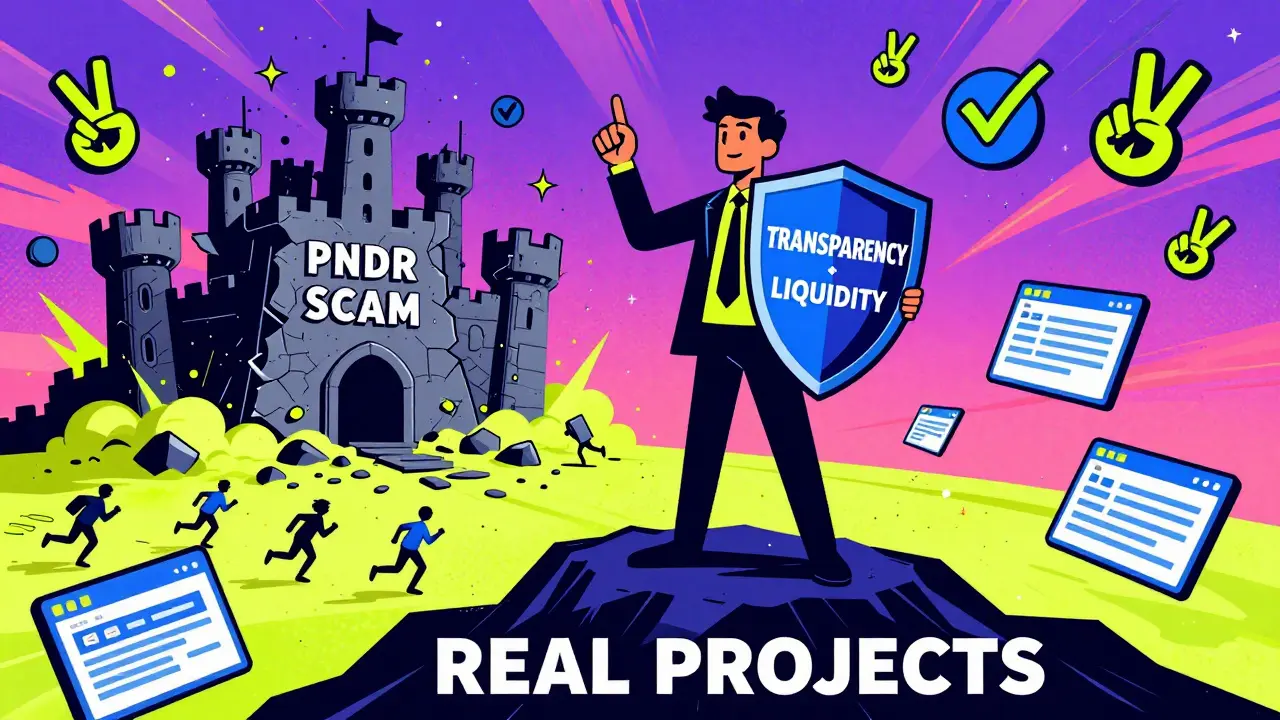
What Should You Do Instead?
If you still want to participate in real airdrops, here’s how:
- Follow active projects with real usage. Look for tokens with daily trading volumes over $1 million.
- Join official Discord servers. Real teams talk daily. Scammers disappear after the hype.
- Use testnets. Projects like Monad, Hyperliquid, and Axiom Exchange reward users who interact with their test networks.
- Track airdrops on trusted sites like AirdropAlert or TokenDrop, not random Reddit threads.
- Never connect your main wallet. Use a burner wallet with a tiny amount of gas.
PNDR isn’t worth your time. The token has lost 86% of its value in the last year. Trading volume is near zero. The team is silent. There’s no roadmap. No updates. No community.
Don’t waste energy chasing a ghost. Focus on projects with real users, real volume, and real transparency.
Why This Matters
Crypto airdrops used to be a way to reward early adopters. Now, they’re a weapon for scammers. The average user doesn’t know the difference between a real token and a dead one. And scammers know it.
Pandora Finance’s PNDR is a textbook example of a project that ran out of steam. It had a launch, a website, and a whitepaper. But no product. No users. No future. And now, people are being tricked into thinking it’s coming back-because they want to believe.
You don’t need to chase every airdrop. You need to protect your assets.
Is there a real PNDR airdrop happening through CoinMarketCap?
No. There is no official PNDR airdrop tied to CoinMarketCap. CoinMarketCap does not run or partner with projects for token distributions. Any website or social post claiming otherwise is a scam designed to steal your crypto or private keys.
How do I know if an airdrop is legitimate?
Legitimate airdrops are announced on official channels: the project’s website, verified Twitter/X account, or Discord server. They never ask you to pay fees to claim tokens. They never ask you to connect your main wallet. They provide clear eligibility rules (e.g., "Use our testnet 5 times before June 1"). Always verify the URL-scammers use domains like coinmarketcap-airdrop[.]xyz to trick you.
Why is PNDR’s price so low?
PNDR has lost 99.6% of its value since its all-time high of $0.74. As of October 2025, it trades at $0.0031 with a 24-hour volume of just $97.28. This means almost no one is trading it. The project has not released new products, updated its roadmap, or engaged its community in over a year. Low volume and zero activity = dead project.
Can I still buy PNDR tokens?
Technically, yes-you can buy PNDR on decentralized exchanges like PancakeSwap. But with a trading volume under $100 per day, there’s almost no liquidity. If you buy it, you likely won’t be able to sell it later. Don’t invest money you can’t afford to lose. This is not a viable asset.
What’s the difference between PNDR and PANDORA?
They’re completely different. PNDR (Pandora Finance) is a BSC token trading at $0.0031. PANDORA (all caps) is a separate token that traded above $500 and was delisted from Gate.io in July 2025. The names are similar, but the projects, teams, and blockchains are unrelated. Confusing them is how people get scammed.
If you’re looking for real opportunities, focus on projects with active development, real users, and transparent teams. Don’t chase ghosts. Protect your wallet. And always ask: "Who benefits if I click this?"
Ben Pintilie
February 10, 2026 AT 20:27PNDR? More like PANDORA'S BOX OF LOSSES. Don't even click it.
Andrea Atzori
February 12, 2026 AT 04:07Joe Osowski
February 13, 2026 AT 13:29Gaurav Mathur
February 14, 2026 AT 17:41Jeremy Lim
February 15, 2026 AT 01:30Why do people keep doing this? Why do they keep clicking? Why do they keep sending money to ghosts?
Elizabeth Choe
February 16, 2026 AT 07:44Then I remembered: last year I lost $200 on a "MonaCoin airdrop" that was just a honeypot contract. I cried. I yelled at my cat. I deleted every crypto app.
Now? I only follow projects that have actual humans talking in their Discord. No bots. No urgency. No "limited spots!"
If it feels like a sales pitch - it's a trap.
Beth Trittschuh
February 18, 2026 AT 00:25Benjamin Andrew
February 18, 2026 AT 08:53Donna Patters
February 20, 2026 AT 06:52Michelle Cochran
February 20, 2026 AT 17:27