
The core problem is a misunderstanding of how Smart Contracts work. Most people believe that if a royalty is written into the contract, it's immutable. In reality, while the contract is immutable, the transfer of a token can happen without the contract ever being asked to trigger a payment. Marketplaces are the ones who decide whether to honor that request. This has led to a fragmented landscape where your earnings depend entirely on where your work is being flipped.
The Tech Behind the Paycheck
To understand why some platforms pay and others don't, we have to look at the plumbing. Most Ethereum-based projects use EIP-2981, which is an Ethereum Improvement Proposal that creates a standardized way for NFTs to signal their royalty information. Instead of every artist writing their own custom code, EIP-2981 provides a universal language that tells a marketplace: "The creator is at this address, and they want 5%."
On the Solana side of things, the Metaplex Creator Standard handles this. Because Solana's architecture is different, it requires a different set of rules to manage how funds are routed back to the original minter. Despite these standards, the actual enforcement is voluntary. If a marketplace decides to ignore EIP-2981, the blockchain doesn't have a "police force" to force the payment. This technical loophole sparked the so-called "royalty wars" in 2022 when platforms started competing for users by offering zero-royalty trading.
Comparing the Major Players
Not all marketplaces treat creators the same. Some are actively fighting to keep royalties alive, while others have essentially abandoned them to attract high-volume traders. For example, OpenSea has tried to protect artists with an "Operator Filter Registry." This is essentially a blacklist; if a marketplace is known for skipping royalties, OpenSea can block that marketplace from interacting with certain collections. However, OpenSea generally enforces royalties at the collection level, meaning individual pieces in a larger set might not always be protected if the collection settings are off.
Magic Eden, the giant of the Solana ecosystem, took a more volatile path. They once boasted protocol-level protection, but in August 2022, they shifted to "optional royalties." This meant the buyer could choose whether or not to pay the artist. While they recently introduced a "Royalty Shield" to incentivize payments, a 2025 report showed that only about 35% of buyers actually comply. On the opposite end of the spectrum, platforms like Solanart have been criticized for a complete lack of enforcement, making them a risky choice for professional artists.
| Platform | Enforcement Type | Max Royalty Rate | Primary Strategy |
|---|---|---|---|
| OpenSea | Enforced (Collection) | 10% | Operator Filter / Blacklisting |
| Rarible | Enforced | 50% | High Creator Flexibility |
| Blur | Optional/Incentivized | Variable | Token Reward Incentives |
| Magic Eden | Optional | Variable | Royalty Shield (Incentives) |
| Solanart | None | N/A | Zero-Fee Trading |
The Economic Conflict: Traders vs. Creators
Why is this happening? It comes down to basic economics. Enforced royalties create a price premium. Research from SSRN suggests that NFTs with mandatory royalties often trade at a 5% to 8% premium compared to the same assets on royalty-free platforms. For a trader flipping 100 NFTs a day, that 5% is the difference between a profit and a loss. This creates a massive incentive for marketplaces to offer "royalty-free" trading to lure in the big whales.
This puts creators in a tough spot. Some artists, like Tyler Hobbs, have responded by publicly blacklisting platforms that evade payments. Others have noticed a strange phenomenon called the "overconfidence effect." Some creators lower their initial mint price, betting that they'll make it all back through secondary royalties. But when those royalties drop from 10% to 0.4% because of platform shifts, those artists find themselves in a financial hole they can't climb out of.
How to Actually Secure Your Royalties
If you're minting today, you can't just set a percentage and hope for the best. You need a strategy. First, research the platform's current stance. Don't be fooled by "supported" royalties-look for "enforced" royalties. If you are using Ethereum, ensure your developer implements the NFT royalties via EIP-2981 and considers an Operator Filter if you're listing on OpenSea.
Second, consider diversifying where you list. Some artists use tools like the Royalty Registry, a community effort to create a cross-platform standard that doesn't rely on a single marketplace's whim. Third, be realistic about the rates. While Rarible allows up to 50%, the market generally prefers 2.5% to 10%. Setting your royalty too high might actually kill your primary sales because buyers know they'll be hit with a massive fee when they try to sell it later.
Where the Market is Heading
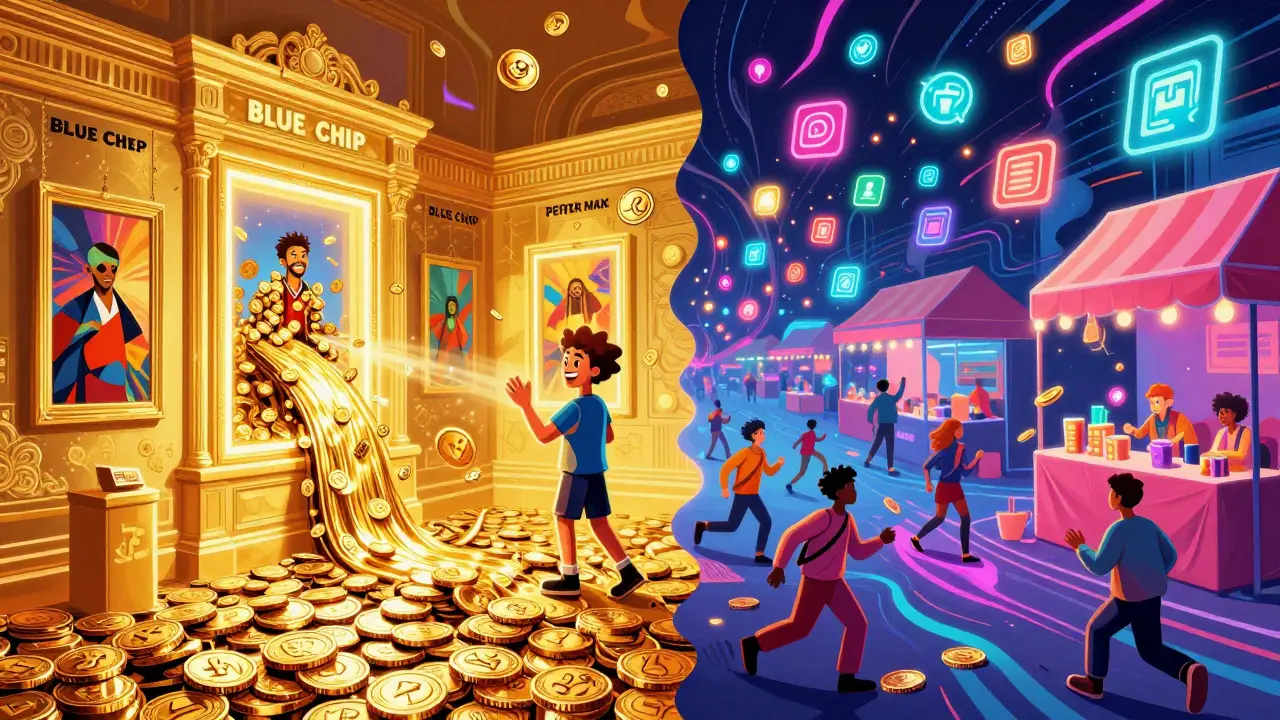
We are currently seeing a split in the market. We're moving toward a "two-tier" system. High-end, blue-chip collections-the ones backed by major brands like Nike or Tiffany's-tend to stay on platforms that enforce royalties because their brand prestige outweighs the 5% cost. Meanwhile, commodity NFTs and "pfp" projects are moving toward royalty-free models to maximize liquidity.
Looking ahead, the most likely scenario is a stabilization of rates. Analysts predict we'll eventually land on a global standard of 2% to 4%. This is high enough to provide a sustainable stream for artists but low enough that traders won't feel the need to migrate to "pirate" marketplaces to avoid them. Until that happens, the burden of enforcement remains on the creator to monitor their sales and choose their platforms wisely.
Are NFT royalties actually permanent?
No. While the royalty percentage is written into the smart contract, the blockchain itself cannot force a marketplace to pay it. Royalties are enforced by the marketplace's software, not the blockchain's core protocol. If a platform chooses to ignore the royalty request, the payment simply doesn't happen.
What is EIP-2981?
EIP-2981 is an Ethereum standard that allows an NFT to tell any marketplace who should receive royalties and how much. It prevents the need for every marketplace to have its own unique system for tracking creators, making it easier for royalties to work across different platforms.
Which platform is best for creators who want royalties?
Currently, OpenSea and Rarible are among the strongest for enforcement. OpenSea uses an Operator Filter to block royalty-evading platforms, and Rarible offers a wide range of customizable rates. Avoid platforms like Solanart if royalty enforcement is your primary goal.
Why did some platforms make royalties optional?
To attract traders. Because royalties act as a tax on every trade, traders prefer platforms that eliminate them. This leads to higher trading volume for the platform, even if it harms the original artists.
Can I change my royalty percentage after minting?
It depends on the contract. If you used a standard platform interface (like OpenSea's minting tool), you can usually adjust the slider in your collection settings. However, if the royalties are hard-coded into a custom smart contract without an update function, they are permanent and cannot be changed.
Alex Long
April 18, 2026 AT 21:09Typical crypto scam logic. Who actually cares about the artist when the liquidity is drying up? This whole royalty thing is just a tax on trading and it's honestly hilarious that people still believe in these "dreams." Just admit the tech failed and move on.
Nishant Goyal
April 19, 2026 AT 21:32Interesting breakdown. It'll be good to see a standard finally stick.
Sandeep Bhoir
April 20, 2026 AT 00:46Oh sure, because relying on a "voluntary" standard is exactly how we solve everything in Web3. Truly a masterpiece of engineering right there. If you're actually minting and expecting a paycheck from a platform that lets the buyer decide if they feel generous, you're essentially playing a lottery where the house owns the tickets.
siddharth narula
April 20, 2026 AT 17:16One must contemplate the ethical void inherent in this digital gold rush. 🌌 It is a profound tragedy when the pursuit of profit eclipses the sanctity of the creator's labor. We are witnessing the commodification of art in its most grotesque form, where "smart contracts" serve as mere suggestions rather than moral imperatives. This systemic failure is a reflection of a society that values the flip over the foundation. 😔
Gaurav Undirwade
April 22, 2026 AT 00:00It is utterly reprehensible that creators are expected to navigate such a chaotic ecosystem. The lack of a centralized authority to enforce these payments is not a feature of decentralization, but a failure of professional conduct. Those who propagate the use of platforms like Solanart are complicit in the exploitation of the artistic community. One must demand a higher standard of integrity from these marketplaces immediately.