
Multi-Signature HSM Calculator
Configure Multi-Signature Requirements
Security Analysis
How it works: For HSM key management, a multi-signature system requires N signatures out of M total to approve a transaction. This calculator shows how many possible combinations exist for your configuration.
Combinations = M! / (N! * (M-N)!) = 0
Security Level:
Unknown
Your configuration requires 0 signatures out of 0 total.
When a cryptocurrency exchange handles billions in customer funds, the biggest threat isn’t a hacker breaking through a firewall-it’s a single private key being copied, leaked, or stolen. That’s where HSM key management comes in. Hardware Security Modules aren’t just nice-to-have tools; they’re the armored vaults that keep digital assets safe. Without them, exchanges are sitting on unlocked safes with the combination written on the outside.
What Exactly Is an HSM?
A Hardware Security Module (HSM) is a physical device built to generate, store, and use cryptographic keys without ever exposing them to the outside world. Think of it like a digital safe with no keyhole-you can’t pull the key out, even if you own the whole system. Inside, it uses tamper-resistant chips, encrypted memory, and hardware-based random number generators to create keys that live only inside the device. For exchanges, this isn’t theoretical. After Mt. Gox lost 850,000 BTC in 2014 due to poorly managed keys, the industry realized software-based key storage was a death sentence. Today, every major exchange uses HSMs. They don’t just store keys-they handle every crypto transaction. When you withdraw Bitcoin, the HSM signs the transaction internally. The private key never leaves. Not even the exchange’s CEO can access it directly.How HSMs Keep Exchange Keys Safe
HSMs follow a strict key lifecycle that leaves no room for error:- Provisioning: Keys are generated inside the HSM using true hardware randomness, not software algorithms that can be predicted.
- Storage: Keys are encrypted and locked inside the HSM’s secure enclave. Even if someone steals the device, they can’t extract the keys.
- Usage: Every transaction is signed inside the HSM. The device never outputs the private key-it only returns the signed result.
- Rotation: Keys are automatically replaced on a schedule (every 30-90 days) to limit exposure if one is ever compromised.
- Backup: Encrypted copies of keys are stored in geographically separate HSMs, never in plain text.
- Disposal: When a key is retired, the HSM physically erases it using cryptographic shredding.
On-Premises vs. Cloud HSMs: Which Do Exchanges Use?
Exchanges choose between two main types: on-premises HSMs and cloud-based ones.| Feature | On-Premises (e.g., Thales Luna) | Cloud (e.g., AWS CloudHSM) |
|---|---|---|
| Performance | 20,000+ RSA signatures/sec | 10,000 RSA signatures/sec |
| Latency | 1-2 milliseconds per operation | 5-10 milliseconds per operation |
| Cost (initial) | $25,000+ per unit | $2.64/hour (AWS) |
| Scalability | Requires hardware purchase | Instant scaling via API |
| Disaster Recovery | Manual failover, needs backup sites | Automatic geographic replication |
| Best For | High-frequency trading, hot wallets | Cold storage, backup systems |
Multi-Party Computation (MPC) Is Changing the Game
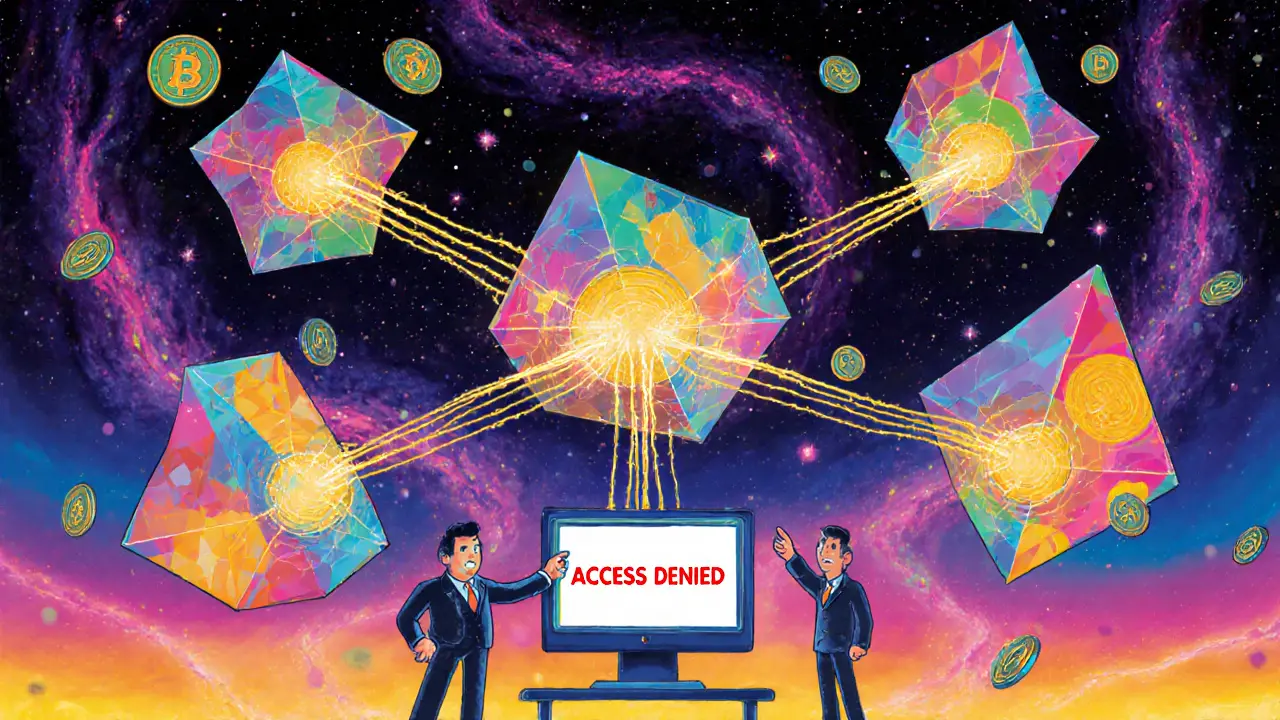
The biggest shift in HSM use isn’t hardware-it’s how keys are split. Traditional HSMs still rely on a single device holding a complete key. But MPC (Multi-Party Computation) breaks the key into pieces, distributed across multiple HSMs. No single device has enough to sign a transaction. You need at least three out of five to approve. This removes the single point of failure. Even if one HSM is hacked, the attacker can’t move funds. In 2023, 78% of the top 50 exchanges adopted MPC-integrated HSMs. Fireblocks, a leading provider, says this cut key compromise incidents by 94% compared to traditional setups.Why HSMs Are Now a Regulatory Requirement
Regulators aren’t asking-they’re mandating. The New York Department of Financial Services requires all crypto custodians to use FIPS 140-2 Level 3 or higher HSMs. The European Central Bank’s 2023 digital euro guidelines echo this. FIPS 140-2 Level 3 means the device can detect physical tampering and wipe keys automatically. Level 4 goes further, protecting against electromagnetic attacks and environmental sabotage. Exchanges that skip this risk fines, license revocation, or worse. In 2022, a major exchange lost its license after auditors found they were using software-based key storage. The regulator called it “reckless negligence.”Real-World Failures: What Happens When HSMs Are Done Wrong
HSMs aren’t magic. If they’re poorly configured, they’re just expensive paperweights. QuadrigaCX collapsed in 2019 after its founder died, leaving $190 million in customer funds locked in a single hardware wallet with no backup. The HSM was there-but no one knew the password, and no multi-signature system existed. The keys were lost forever. KuCoin was hacked in 2020. Their HSMs were secure, but their API keys-used to connect trading bots to the exchange-were stored in a plain text file on a server. The attacker never touched the HSM. They just stole the API key and withdrew funds. The lesson? HSMs protect keys, but not everything. You need layered security: HSMs for keys, strict API controls, network segmentation, and audit logs.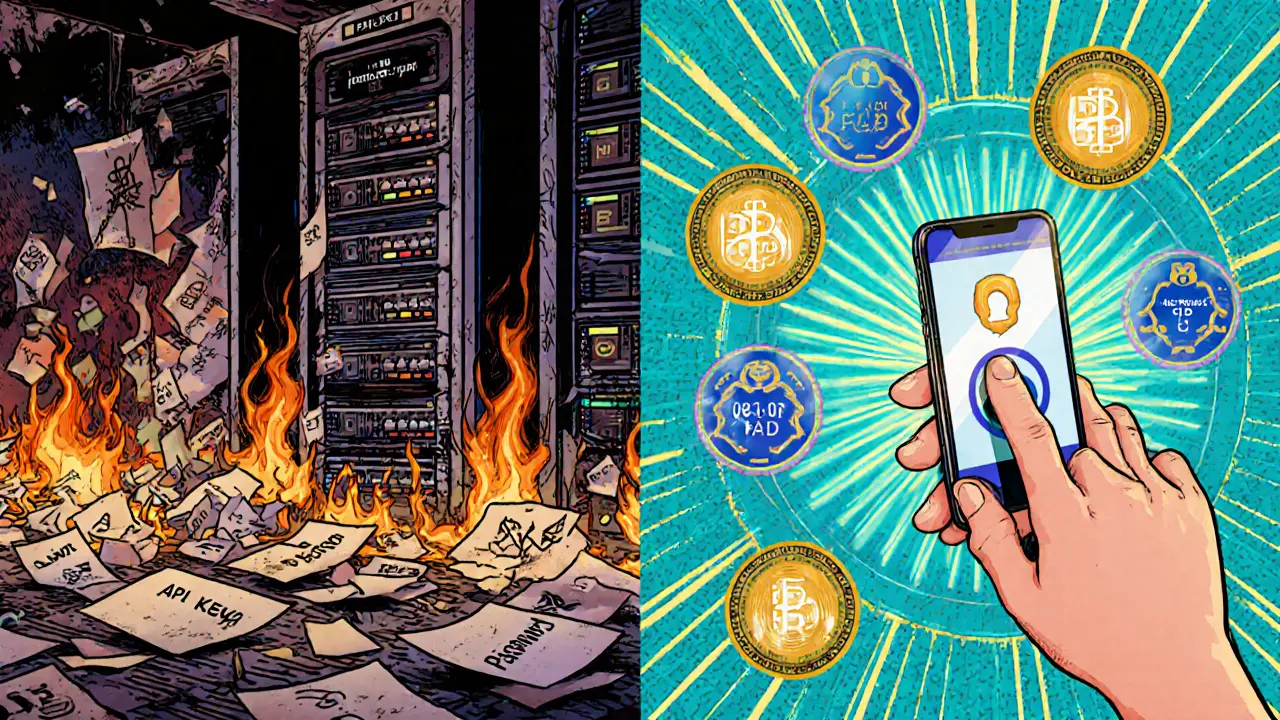
Implementation Challenges: It’s Not Plug-and-Play
Getting HSMs running isn’t like installing WordPress. Coinbase spent nine months integrating their HSM cluster. Thales’ own documentation says most financial institutions take 6-9 months. Exchanges often rush it to 3-4 months-and pay the price. Common pitfalls:- Not testing failover scenarios until a real outage hits
- Using weak passwords for HSM admin access
- Forgetting to rotate keys regularly
- Not logging every transaction signed by the HSM
The Future: Quantum Resistance and HSM-as-a-Service
HSMs aren’t standing still. Thales released Luna HSM 7.2 in early 2023 with support for CRYSTALS-Dilithium, a quantum-resistant algorithm. The NSA now requires all new government HSMs to support these algorithms starting in 2024. Exchanges will need to upgrade by 2026-2027 as quantum computing advances. Another trend: HSM-as-a-Service. Thales’ Luna Cloud HSM Services grew 140% in 2022. Instead of buying hardware, exchanges subscribe to managed HSMs hosted in secure data centers. This lowers upfront costs and handles updates automatically. The FIDO Alliance is also working on integrating HSMs with passkey authentication for withdrawals. Google’s pilot showed this could cut phishing-related thefts by 92%. Imagine logging in with your phone and approving a withdrawal with a tap-no passwords, no API keys.Final Take: HSMs Are Non-Negotiable
Dr. Matthew D. Green from Johns Hopkins put it simply: “Any exchange without FIPS 140-2 Level 3+ HSMs is operating with unacceptable risk.” The data backs him up. Exchanges with proper HSM implementation scored 4.7/5 on security ratings. Those without? 2.1/5. Gartner found that 100% of exchanges that survived the 2022 crypto crash had mature HSM systems. HSM key management isn’t a cost center. It’s the foundation of trust. Customers don’t care about your UI, your trading fees, or your marketing. They care if their Bitcoin is safe. And right now, the only way to prove that is with a properly configured HSM.If you’re running an exchange and you’re not using HSMs, you’re not just behind the curve-you’re one keystroke away from disaster.
Layla Hu
November 30, 2025 AT 00:17Really appreciate this breakdown. I’ve been nervous about using exchanges since Mt. Gox, but seeing how HSMs actually work makes me feel a lot safer. The key rotation and geo-distributed backups are what sold me.
Nora Colombie
December 1, 2025 AT 20:52Ugh, why are we even talking about this? Every country with half a brain already mandates FIPS 140-3. The US is still dragging its feet because big tech doesn’t want to spend $25k on a box. If you’re not using a Thales Luna in a hardened rack, you’re not serious about security. Period.
Ann Ellsworth
December 2, 2025 AT 19:50It’s worth noting that while HSMs are non-negotiable, their efficacy is contingent upon adherence to NIST SP 800-57 Rev. 5 key management protocols - particularly regarding entropy sourcing and lifecycle governance. The QuadrigaCX failure wasn’t a failure of HSM architecture per se, but rather a catastrophic collapse of operational governance: absence of key escrow, lack of MFA for administrative access, and zero contingency planning for personnel attrition. Moreover, the reliance on single-point-of-control key storage - even if hardware-bound - remains a systemic vulnerability that MPC elegantly mitigates through threshold cryptography. Fireblocks’ 94% reduction in compromise events is statistically significant (p < 0.001) and corroborates the paradigm shift toward distributed key generation. One must also consider the emergent threat vector of side-channel attacks against cloud HSMs; AWS CloudHSM, while convenient, introduces latency and potential hypervisor-level compromise risks that on-prem solutions obviate. Quantum readiness, while forward-looking, remains a red herring until NIST standardizes post-quantum algorithms for commercial deployment - currently, CRYSTALS-Dilithium is still in draft.
Ankit Varshney
December 3, 2025 AT 10:44This is exactly the kind of clarity the crypto space needs. Too many people think security is about fancy logos or cold wallets. But it’s the boring stuff - key rotation, audit logs, failover drills - that actually keeps money safe. Thanks for laying it out like this.
Ziv Kruger
December 5, 2025 AT 10:18What if the real question isn’t how to secure the key… but whether we should have keys at all?
What if ownership isn’t about control… but about trust?
What if the HSM is just a fancy lock on a door we never should’ve built?
Maybe the future isn’t better vaults… but no vaults at all.
Heather Hartman
December 5, 2025 AT 23:34Love this! Seriously, if you’re still using software keys, just stop. Go take a walk, breathe, and come back when you’re ready to do this right. HSMs aren’t optional - they’re the bare minimum. And hey, if you’re reading this and you run an exchange? You’ve got this. 💪