

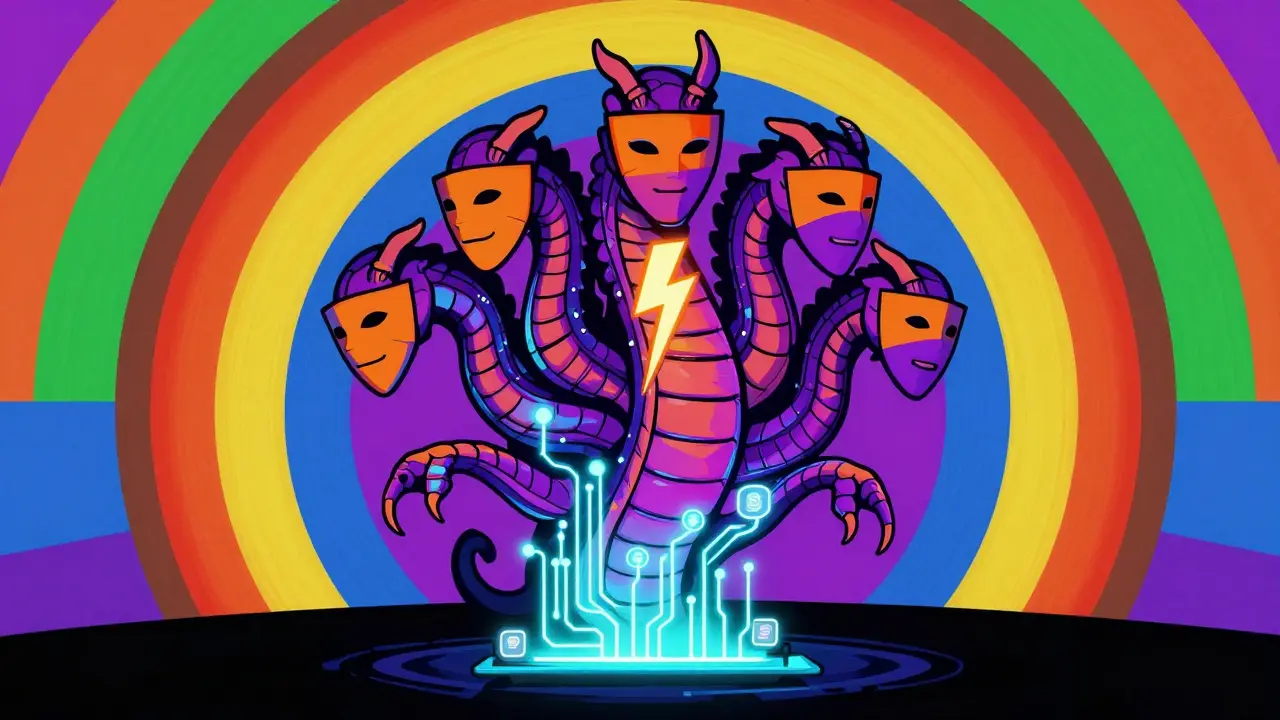
Sanctions were supposed to cut off the money supply. They didn't. Instead, they forced a rapid evolution in how illicit finance works. If you look at the headlines from early 2026, the story isn't just about frozen bank accounts; it is about a sophisticated, multi-layered digital infrastructure built specifically to ignore borders and restrictions. Russia has moved beyond simple Bitcoin transactions. Today, the operation involves custom-built tokens, shell companies in Central Asia, and exchanges that pop up like hydra heads whenever one gets shut down.
The core problem for regulators is speed and complexity. By the time a traditional sanction hits a bank account, the money is often already gone, converted into a digital asset, and moved through a chain of wallets that looks like noise on a blockchain explorer. This shift has turned cryptocurrency from a speculative investment tool into a critical component of geopolitical strategy. Understanding this mechanism is no longer just for intelligence agencies; it is essential for anyone involved in global finance or compliance.
The A7A5 Token: A Ruble-Backed Evasion Tool
At the heart of the current evasion network is a specific digital asset known as A7A5, a ruble-backed cryptocurrency designed to facilitate sanctions evasion by bridging Russian currency with international crypto markets. Launched in mid-2025, this token processed an astonishing $9.3 billion in transactions within just four months. That volume alone signals that this is not a niche experiment but a primary financial artery for sanctioned entities.
A7A5 operates on both the TRON and Ethereum blockchains. This dual-chain presence is a deliberate strategic choice. It provides redundancy. If regulators crack down on activity on one network, operations can shift to the other without losing liquidity. The token is issued by a firm based in Kyrgyzstan, a jurisdiction that has become a critical hub for these financial flows. By backing the token with the ruble, issuers create a stable value proposition for users who need to move wealth out of Russia without exposing themselves to the volatility of major cryptocurrencies like Bitcoin or Ethereum.
The mechanics are straightforward but effective. Users deposit rubles into the system, receive A7A5 tokens, and then trade these tokens for stablecoins or other assets on international exchanges. From there, the funds can be withdrawn into fiat currencies in non-sanctioning countries or used to purchase goods directly. This process bypasses the SWIFT banking system entirely, rendering traditional financial monitoring tools largely useless unless they are specifically calibrated to track this new token.
From Garantex to Grinex: The Hydra Effect
Exchanges are the gatekeepers of this ecosystem. For years, Garantex, a cryptocurrency exchange originally sanctioned by the United States for facilitating sanctions evasion served as a primary on-ramp for Russian capital. However, when the U.S. Secret Service led a takedown operation against Garantex on March 6, 2025, the response was immediate and revealing. Rather than shutting down, the operators simply rebranded.
Within days, Grinex, a replacement cryptocurrency exchange created by Garantex officers to continue services after sanctions appeared. Promotional materials for Grinex explicitly stated that it was formed in response to the sanctions and asset freezes affecting its predecessor. More importantly, it facilitated the direct transfer of customer deposits from Garantex to the new platform. This continuity of service demonstrated that the underlying infrastructure-the servers, the code, the user base-remained intact despite the legal pressure.
By mid-2026, Grinex had facilitated billions of dollars in transactions before being designated for sanctions by the U.S. Treasury's Office of Foreign Assets Control (OFAC). The designation cited that Grinex was owned or controlled by Garantex. Yet, even this sanction may not stop the flow. The pattern suggests a cycle: build an exchange, get sanctioned, rebuild under a new name, repeat. This "hydra effect" makes enforcement incredibly difficult because regulators are constantly playing catch-up with new domains and corporate shells.
Kyrgyzstan’s Role: The Financial Gateway
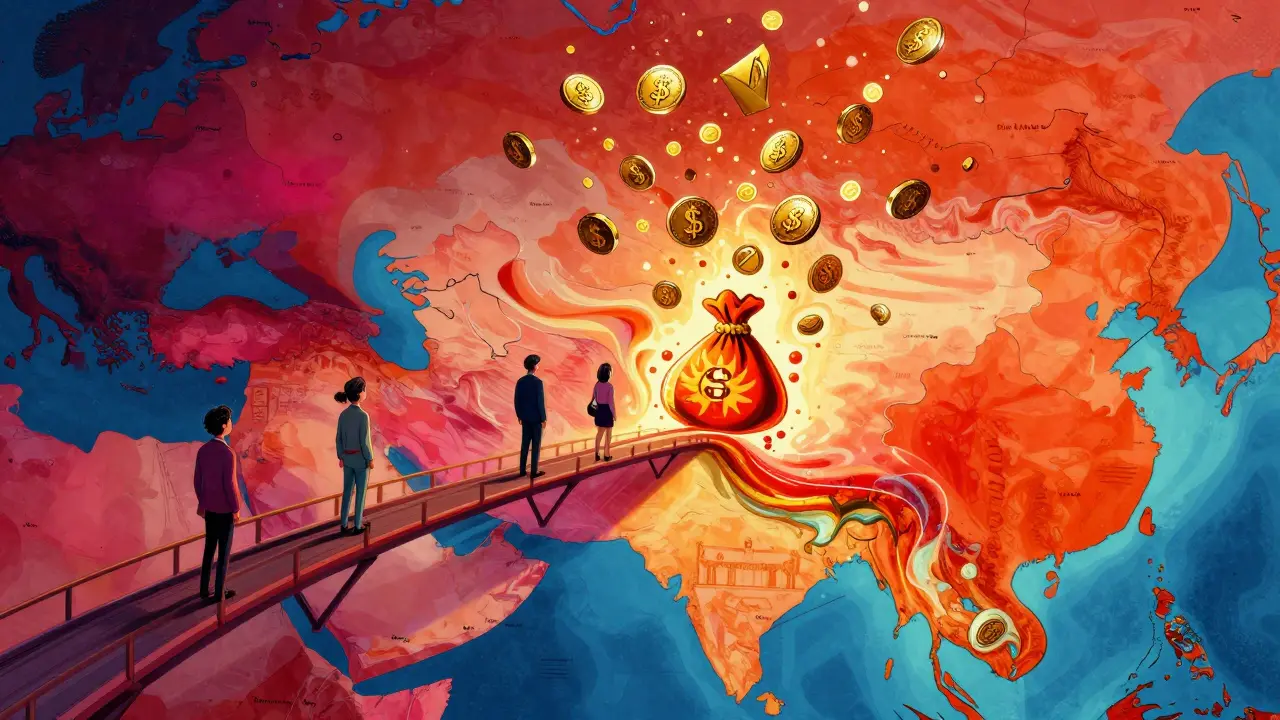
You cannot understand this network without looking at Kyrgyzstan. This Central Asian nation has become a critical node in the sanctions evasion web. Its role goes beyond hosting server farms; it involves active participation by local financial institutions. A key player here is Capital Bank, a Kyrgyzstani bank used by Russia to convert cryptocurrency into fiat currency for military procurement, directed by Kantemir Chalbayev.
Capital Bank serves as the bridge between the digital and physical worlds. While cryptocurrencies allow for easy movement of value across borders, you still need cash to buy weapons, fuel, or electronics. Capital Bank accepts incoming cryptocurrency transfers, converts them into local currency or hard assets, and then facilitates payments to suppliers. This integration of conventional banking with crypto infrastructure creates a comprehensive circumvention capability that is far more robust than using crypto alone.
The opacity of Kyrgyzstan's financial sector allows these transactions to happen with minimal scrutiny. Shell companies are registered easily, and know-your-customer (KYC) checks are often superficial or ignored. This environment enables the creation of complex structures where ownership is hidden behind layers of nominees and offshore entities. For Russia, Kyrgyzstan offers a nearby, friendly jurisdiction with loose enough regulations to serve as a financial escape hatch.
The Ilan Shor Connection: Political Financing
It is not just about military spending. The same networks are being used to influence political outcomes abroad. Data leaked in September 2025 regarding Ilan Shor, a sanctioned Moldovan fugitive politician and ally of Vladimir Putin convicted of bank theft revealed the breadth of this operation. Shor, who was sanctioned by the U.S. in 2022 for undermining democratic elections in Moldova, used crypto wallets linked to the A7 network to receive $8 billion in stablecoin transactions over 18 months.
Analysis by blockchain analytics firm Elliptic showed that these funds were not just sitting idle. They were used to purchase infrastructure for developing apps that manage and pay networks of political activists in Moldova. This demonstrates a dual-use capability of the sanctions evasion network: it supports both the war effort in Ukraine and hybrid warfare campaigns in neighboring countries. The ability to fund political destabilization anonymously through cryptocurrency gives actors like Shor a level of operational security that traditional banking could never provide.
International Regulatory Responses
The international community has begun to respond with coordinated action. In October 2025, the UK government announced targeted sanctions against the Grinex and Meer cryptocurrency exchanges, alongside the A7A5 token infrastructure. This was part of a broader effort involving over 2,700 existing UK sanctions against Russia. The goal was to disrupt the specific mechanisms enabling the war machine while reinforcing diplomatic pressure.
The European Union also stepped up its game with its 19th package of sanctions. This package marked a significant shift by directly targeting dirty Russian crypto schemes. It banned transactions on crypto platforms identified as being used to bypass restrictions. This move acknowledged that general sanctions on individuals were insufficient; the infrastructure itself needed to be attacked. By banning access to these specific platforms, the EU aimed to cut off the liquidity that makes these evasion schemes viable.
However, enforcement remains a challenge. The Financial Action Task Force (FATF) highlighted in August 2025 that terrorist organizations like ISIL-K were also increasingly using virtual assets. This broader context means that regulators must balance cracking down on state-sponsored evasion with preventing misuse by non-state actors. The complexity of distinguishing between legitimate privacy concerns and illicit evasion activities creates a regulatory gray zone that bad actors exploit.
Compliance Technology: The Arms Race
As evasion techniques grow more sophisticated, so does the technology used to detect them. Companies like Elliptic have added support for A7A5 screening on both TRON and Ethereum blockchains. This allows compliance teams to investigate wallets and transactions associated with the token in their products. This adaptation shows that the industry is not passive; it is actively evolving to keep pace with threats.
The development of these screening tools is crucial for financial institutions trying to adhere to anti-money laundering (AML) regulations. Without the ability to identify sanctioned tokens and addresses, banks and exchanges risk becoming unwitting participants in sanctions evasion. The integration of real-time blockchain analysis into compliance workflows is becoming a standard requirement for any institution handling digital assets.
Yet, there is always a lag. By the time a tool is updated to recognize a new evasion scheme, millions of dollars may have already moved. The cat-and-mouse game continues, with each side innovating faster than the last. Oxford Analytica predicted in September 2025 that Russia would continue expanding its crypto use for sanctions evasion, facing increasing regulatory pressure but finding short-term benefits in the chaos.
| Entity/Tool | Function | Status (as of 2026) |
|---|---|---|
| A7A5 Token | Ruble-backed digital asset for cross-border transfers | Active, sanctioned by UK |
| Grinex Exchange | Replacement for sanctioned Garantex | Sanctioned by US OFAC |
| Capital Bank (Kyrgyzstan) | Fiat conversion gateway for military purchases | Operational, under scrutiny |
| Elliptic Screening | Compliance tool for tracking A7A5 | Updated for TRON/Ethereum |
Future Trends and Implications
The implications for the broader cryptocurrency industry are profound. Legitimate businesses face increased scrutiny and higher compliance costs as regulators demand better tracking capabilities. The stigma associated with certain jurisdictions and tokens affects market confidence. At the same time, the demand for privacy-preserving technologies may rise, creating tension between security and anonymity.
Looking ahead, expect further innovation in both evasion and detection. Russia will likely develop more decentralized solutions to avoid single points of failure. Regulators will push for global standards on transaction reporting and identity verification. The outcome of this struggle will shape the future of digital finance, determining whether cryptocurrency becomes a tool for financial inclusion or remains a haven for illicit activity.
What is the A7A5 token?
The A7A5 token is a ruble-backed cryptocurrency created specifically to help bypass Western sanctions. It allows users to convert Russian rubles into a digital asset that can be traded on international markets via TRON and Ethereum blockchains, effectively moving wealth out of sanctioned zones.
Why did Garantex become Grinex?
After the U.S. Secret Service took action against Garantex in March 2025, its operators created Grinex to continue providing services. Grinex transferred customer deposits from Garantex and explicitly marketed itself as a response to the sanctions, demonstrating the resilience of these evasion networks.
How does Kyrgyzstan fit into this network?
Kyrgyzstan serves as a critical hub due to its opaque financial sector and proximity to Russia. Institutions like Capital Bank act as gateways, converting cryptocurrency into fiat currency for purchasing military goods, while local firms issue tokens like A7A5 to facilitate the initial exit of funds from Russia.
Is Ilan Shor connected to these crypto schemes?
Yes. Leaked data showed that wallets linked to Ilan Shor, a sanctioned Moldovan politician, received $8 billion in stablecoins via the A7 network. These funds were used to finance political activism and infrastructure in Moldova, showing how sanctions evasion tools are also used for hybrid warfare.
Can regulators stop these crypto flows?
Regulators are making progress through coordinated sanctions on specific exchanges like Grinex and tokens like A7A5. However, the decentralized nature of blockchain and the ease of creating new platforms mean that complete cessation is unlikely. It remains an ongoing arms race between evaders and compliance technology.
Shelby Cantu
May 9, 2026 AT 00:25the hydra effect is real
Destiny Kilby
May 10, 2026 AT 12:30i find it deeply troubling that financial systems are being weaponized in such a way to bypass international norms and cause harm. the sheer volume of transactions processed through these shadow networks indicates a level of organization that is quite alarming for global stability. we often think of sanctions as a clear line in the sand but this article shows how easily those lines can be blurred by technology. the use of kyrgyzstan as a hub feels like a betrayal of trust in regional cooperation and transparency. it makes me wonder about the people involved in these banks who are facilitating military procurement with digital assets. there is a human cost to every dollar that moves through these channels unseen. i hope regulators can find a way to close these loopholes before more damage is done to innocent economies.
Tobias Gjerlufsen
May 11, 2026 AT 00:49you are all missing the point entirely because you lack the intellectual capacity to grasp the fundamental nature of decentralized finance versus state control. this is not just about evasion it is about the inevitable collapse of the fiat system which is inherently flawed. the ruble backed token is a joke but the underlying mechanism of moving value without permission is the future. regulators are trying to stop the tide with a spoon while the rest of us see the horizon. the speed at which these wallets move funds renders traditional banking obsolete within a decade if not sooner. you cling to your swift codes and your compliance checks like they are sacred texts when they are merely shackles on progress. the hydra does not care about your laws because the code does not recognize borders. only fools believe that sanctions work in a digital age where anonymity is king. wake up sheeple
Ruben Michel
May 12, 2026 AT 11:21one must acknowledge the sophisticated nature of the infrastructural adaptation described herein. the transition from garantex to grinex exemplifies a strategic resilience that cannot be ignored by serious analysts. it is evident that the regulatory bodies are operating with a significant lag time which allows these entities to maintain operational continuity. the involvement of capital bank in kyrgyzstan highlights the critical importance of jurisdictional arbitrage in modern financial warfare. furthermore the utilization of dual chain presence for the a7a5 token demonstrates a level of technical redundancy that is commendable in its efficiency. however one should not underestimate the eventual tightening of noose around these operations as compliance technology evolves. the arms race between detection and evasion will likely determine the fate of these illicit flows in the coming years.
Jerry CUNNINGHAM SR
May 13, 2026 AT 09:28it is important to look at this situation with an open mind and understand that complex geopolitical issues require nuanced solutions. we must respect the boundaries of international law while also recognizing the challenges that enforcement agencies face in a rapidly changing digital landscape. i believe that collaboration between nations and tech companies is essential to address these concerns effectively. we should encourage dialogue rather than aggression when discussing how to improve compliance frameworks. everyone has a role to play in ensuring that financial systems remain secure and transparent for all users. let us focus on building bridges and finding common ground to solve these problems together. education and awareness are key to preventing misuse of these technologies by bad actors.