
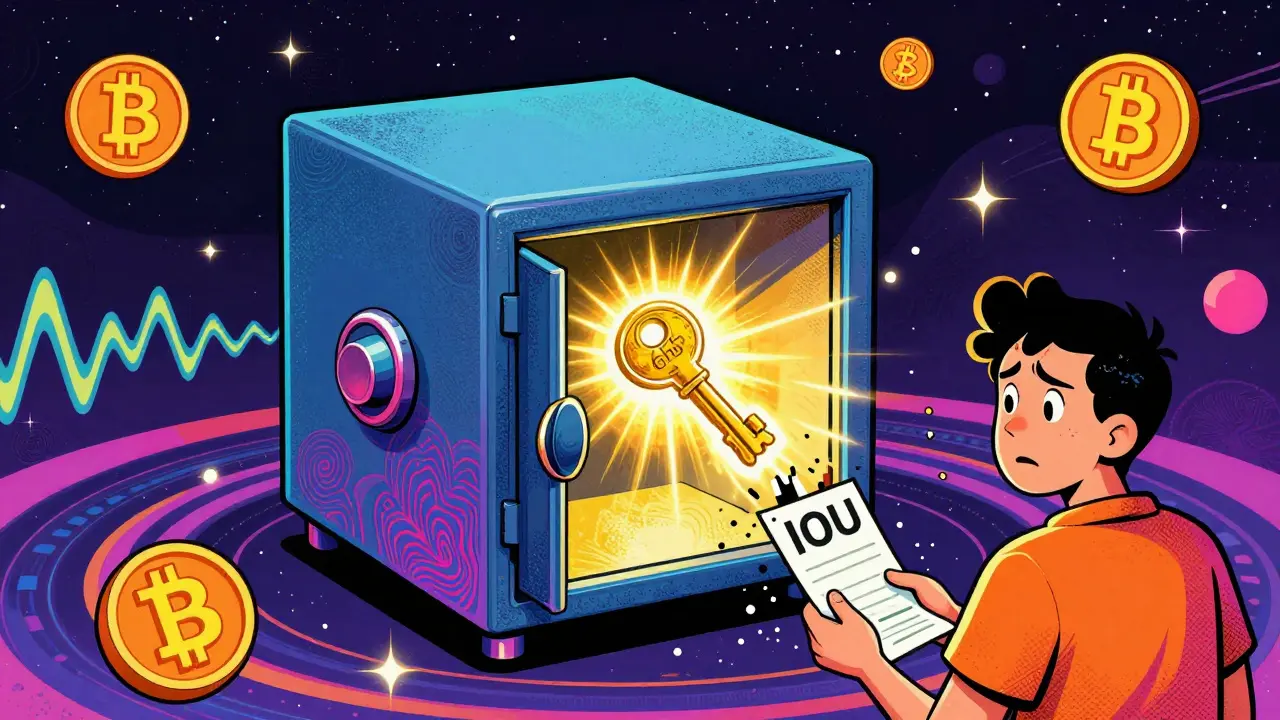
Think of your crypto assets like a safe deposit box in a bank. The bank holds the key. You get a receipt. But if the bank goes under, or gets hacked, or decides to freeze your account - too bad. Your receipt doesn’t mean you own anything. That’s what happens when you leave your crypto on an exchange. The real ownership? It’s not in your account balance. It’s in the private key.
What Exactly Is a Private Key?
A private key is a long string of letters and numbers - usually 64 characters long, written in hexadecimal. It’s not a password you made up. It’s mathematically generated when you create a crypto wallet. This key is the only thing that lets you move your coins. No one else. Not the exchange. Not the wallet app. Not even the blockchain network itself. Only your private key can sign a transaction to send funds out. It works with a public key - like your crypto address. Think of the public key as your email address. Anyone can send money there. But only the private key can say, "Yes, I authorize this transfer." The system uses cryptography so that even if someone knows your public key, they can’t reverse-engineer your private key. It’s mathematically impossible with today’s computers. That’s why it’s secure.Not Your Keys, Not Your Coins
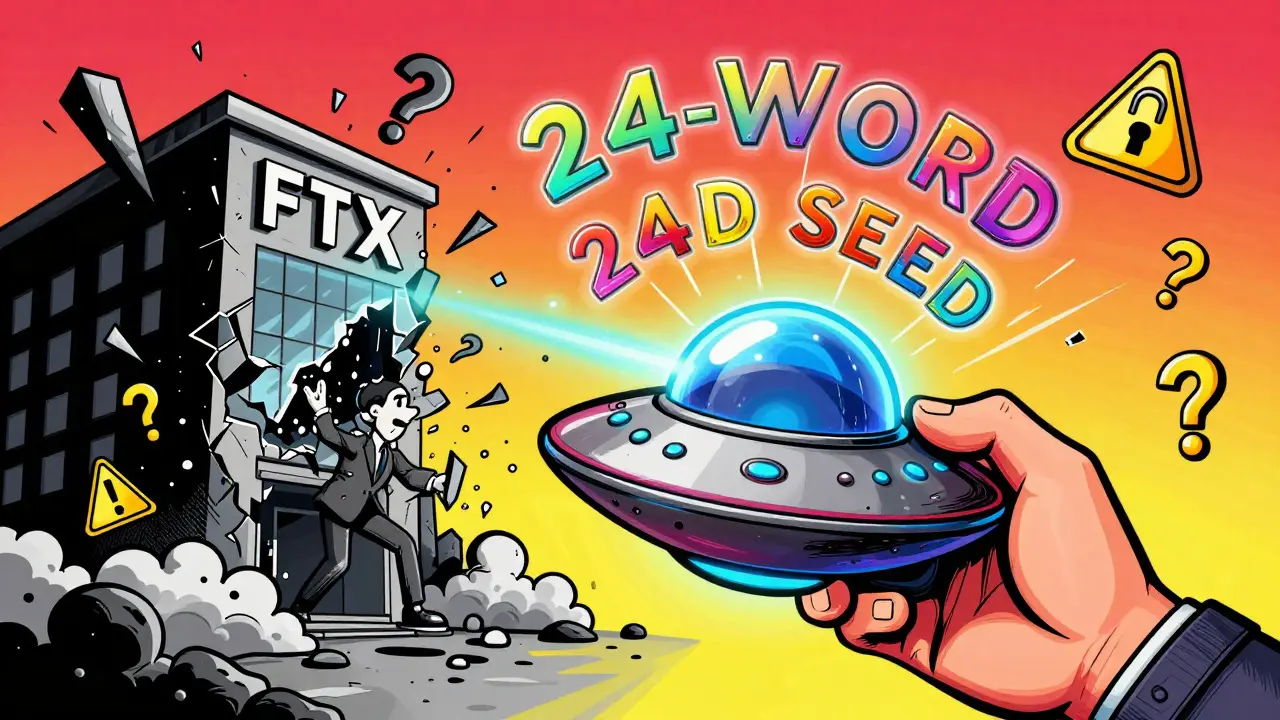
This phrase isn’t just a slogan. It’s the foundation of everything crypto stands for. If you don’t hold the private key, you don’t own the crypto. You’re just holding an IOU from someone else - like a voucher from a store that might close tomorrow. When you buy Bitcoin on Coinbase or Ethereum on Binance, those platforms hold the private keys. You see your balance. You think you own it. But if Coinbase gets hacked, or gets shut down by regulators, or just decides to freeze accounts - you lose everything. And you have zero legal recourse. That’s not speculation. That’s happened. In 2022, FTX collapsed. Over $8 billion in customer funds vanished because the exchange never actually held them in separate wallets. They used customer funds to cover their own bets. People who held their own private keys? They were fine. They didn’t lose a cent.How Private Keys Actually Work
Here’s the step-by-step of what happens when you send crypto:- You open your wallet and type in the recipient’s public address (like 0x742...a9c).
- You enter the amount - say, 0.5 ETH.
- You hit "Send."
- Your wallet asks for your private key to sign the transaction.
- You confirm using your password, PIN, or hardware device.
- Your private key creates a digital signature - a unique proof that only you could have authorized this.
- The network checks that signature using your public key. It doesn’t need your private key. It just verifies the math adds up.
- If it checks out, the transaction gets added to the blockchain.
Where Do You Store Your Private Key?
There are three main ways to store your private key - each with trade-offs:- Software wallets (like MetaMask or Exodus): Installed on your phone or computer. Easy to use. But if your device gets infected with malware, your keys can be stolen. These are "hot wallets" - always connected to the internet.
- Hardware wallets (like Ledger, Trezor, OneKey): Physical devices that look like USB sticks. Your private key never leaves the device. You connect it to your computer only when sending funds. The device signs transactions offline. This is "cold storage" - the gold standard for security.
- Paper wallets: A printed copy of your private key and public address. No tech involved. But if you lose it, burn it, or someone finds it - it’s gone forever.
The Biggest Risk? You.
The system is secure. The math is solid. The hardware is reliable. The biggest threat isn’t hackers. It’s you. People lose crypto every day because they:- Forget their password or PIN.
- Write their seed phrase on a sticky note and lose it.
- Take a photo of their private key and upload it to the cloud.
- Buy a fake hardware wallet from Amazon that’s already compromised.
- Don’t test their backup before they need it.
Why This Matters More Than Ever
In 2024, the crypto wallet market hit $7.3 billion. Hardware wallet sales jumped 400% after the FTX collapse. Companies like MicroStrategy and Tesla now hold billions in Bitcoin using enterprise-grade key management systems. Why? Because they know: control equals security. Governments are starting to notice. The EU’s MiCA regulation, effective in 2025, will require exchanges to clearly separate customer funds from their own. But it won’t force them to give you your keys. That’s still up to you. Meanwhile, new tech like Multi-Party Computation (MPC) is emerging. It splits your key into pieces stored across devices. No single point of failure. But even MPC still puts control in your hands - not the company’s.
What Happens If You Lose Your Key?
Nothing. No one can recover it. No customer service line. No "I forgot my password" button. No magic reset. The blockchain doesn’t have a help desk. If you lose your private key, your crypto is gone. Permanently. Locked in a digital vault with no keyhole. That’s why education matters more than hype. You don’t need to be a programmer. You just need to be careful.Getting Started: 3 Simple Steps
If you’re ready to take control:- Buy a hardware wallet - Ledger Nano X or Trezor Model T are trusted options.
- Set it up. Write down the 24-word recovery phrase. Store it offline. In a fireproof safe. Not on your phone. Not in the cloud.
- Send a small amount of crypto (like $10 worth) to test it. Then send it back. Confirm you can access it.
Final Thought
Crypto’s promise isn’t just about money. It’s about freedom. Freedom from banks. Freedom from censorship. Freedom from third parties deciding what you can do with your own money. But that freedom only exists if you hold the key. If you don’t - you’re still living in the old system. Just with digital numbers instead of paper bills. Own your keys. Own your crypto.Can someone steal my crypto if they know my public address?
No. Your public address is like your email - it’s meant to be shared. Anyone can send crypto to it. But only the person with the private key can send funds out. Knowing your address doesn’t give anyone access to your money.
Is it safe to store my private key on my phone?
It’s possible, but risky. Phone wallets (like MetaMask) are convenient but vulnerable to malware, phishing, or device theft. If your phone gets hacked, your crypto can be drained instantly. For anything more than small amounts, use a hardware wallet instead.
What’s the difference between a private key and a seed phrase?
Your seed phrase (usually 12 or 24 words) is a human-readable backup of your private key. If you lose your wallet, you can use the seed phrase to restore access to all your keys and addresses. The private key itself is a long string of numbers and letters - too hard to write down manually. The seed phrase lets you recover everything without needing to remember the key.
Can I have multiple private keys for one crypto asset?
Yes. Most wallets generate a new address (and thus a new private key) for every transaction. But they’re all controlled by the same seed phrase. So even if you have hundreds of addresses, one seed phrase gives you access to all of them.
What happens if I lose my hardware wallet?
If you still have your seed phrase, you can buy a new hardware wallet and restore your funds in minutes. If you lost both the device and the seed phrase, your crypto is permanently gone. That’s why backing up your seed phrase is non-negotiable.
Are hardware wallets really safer than software wallets?
Yes. Hardware wallets store your private key offline and only sign transactions when you physically press a button. Even if your computer is infected with malware, the key never leaves the device. Software wallets run on connected devices - making them far more vulnerable to remote attacks.
Can the government freeze my crypto if I hold my own keys?
Not directly. If you control your private key, no government or bank can block your transactions - unless they physically seize your device or force you to reveal your key. That’s why self-custody is the only way to truly protect your assets from centralized control.
Do I need to pay fees to use my private key?
You pay network fees (gas) when you send crypto - not to use your key. These fees go to miners or validators who process your transaction. Your private key itself costs nothing to use. You can generate and store it for free.
Ryan Depew
January 21, 2026 AT 14:00Bro, if you’re still using a software wallet for more than $500, you’re just begging to get rekt. I’ve seen so many people lose everything because they thought ‘it’s fine, I’ve got antivirus.’ Nah. Malware doesn’t care about your antivirus. It just waits for you to open MetaMask. Then boom - gone. Hardware wallet. Now. No excuses.
Melissa Contreras López
January 22, 2026 AT 00:49Y’all are making this sound like a horror movie, but honestly? It’s just responsibility. Think of your seed phrase like your birth certificate - you don’t need to show it to anyone, but if you lose it, you lose your identity. Write it on metal. Keep one copy in a fireproof box, another with a trusted family member. It’s not scary if you treat it like something precious, not like a secret you’re ashamed of.
Andy Simms
January 23, 2026 AT 16:16For anyone new here - don’t overthink the tech. You don’t need to understand elliptic curve cryptography to own your keys. Just buy a Ledger, plug it in, write down the 24 words in order, and test sending $5 back and forth. Do that once. Then do it again in six months. If you can do that, you’re already ahead of 90% of crypto users. Seriously. That’s it.
Kevin Pivko
January 24, 2026 AT 01:54LOL ‘own your keys’ is just crypto’s version of ‘just eat less and exercise more.’ It sounds wise until you realize most people don’t have the mental bandwidth to manage a 24-word passphrase. And now we’re blaming them for losing money? The real problem is the system that tells you ‘just be your own bank’ while offering zero support. We’re not all crypto bros with 10 backups and a safe deposit box in Switzerland.
Emoticon: 😅
Shamari Harrison
January 25, 2026 AT 16:58Just wanted to add - if you’re in a country with unstable banking or hyperinflation, holding your own keys isn’t a luxury. It’s survival. My cousin in Nigeria used a hardware wallet to send money to family during the currency crash last year. No bank froze it. No middleman took a cut. Just pure peer-to-peer. That’s the real power here. Not speculation. Not NFTs. Real autonomy.
Nadia Silva
January 26, 2026 AT 13:44How quaint. You all treat this like some revolutionary act. In Europe, we’ve had SEPA and PSD2 for years - regulated, secure, transparent. You’re romanticizing a system that’s only secure because nobody’s targeted it yet. Wait till the NSA starts scanning blockchain metadata. Then you’ll see how ‘decentralized’ your keys really are. At least my bank gives me insurance.
Roshmi Chatterjee
January 27, 2026 AT 16:33I’m from India, and I’ve seen people lose lakhs because they saved their seed phrase as a screenshot on WhatsApp. Please, if you’re reading this - don’t be that person. I started teaching my mom how to write her 12 words on paper and store it in a biscuit tin. She laughed at first. Now she’s the one reminding me to check my backup. Small steps, big impact.
Deepu Verma
January 29, 2026 AT 07:51One thing nobody talks about: your private key doesn’t just protect your crypto - it protects your future self. I lost my job last year. My savings were in a hardware wallet. When the bank denied me a loan, I was able to use a little ETH to cover rent. No approval. No paperwork. Just me and my key. That’s freedom. Not the ‘get rich quick’ kind. The ‘I can breathe’ kind.
Nathan Drake
January 29, 2026 AT 22:45It’s funny how we call this ‘ownership’ when in reality, you’re just trading one form of dependency - banks - for another: your own discipline. The system doesn’t fail you. You fail the system. And yet we treat crypto like it’s a magic wand. It’s not. It’s a mirror. And most of us don’t like what we see in it.
MICHELLE REICHARD
January 30, 2026 AT 01:47Wow. So you’re telling me the solution to systemic financial insecurity is… buying a $100 USB stick? How original. Meanwhile, the real issue is that crypto is a Ponzi dressed up as liberation. But hey, if you want to play with fire, go ahead. Just don’t cry when the house burns down - you were warned.