
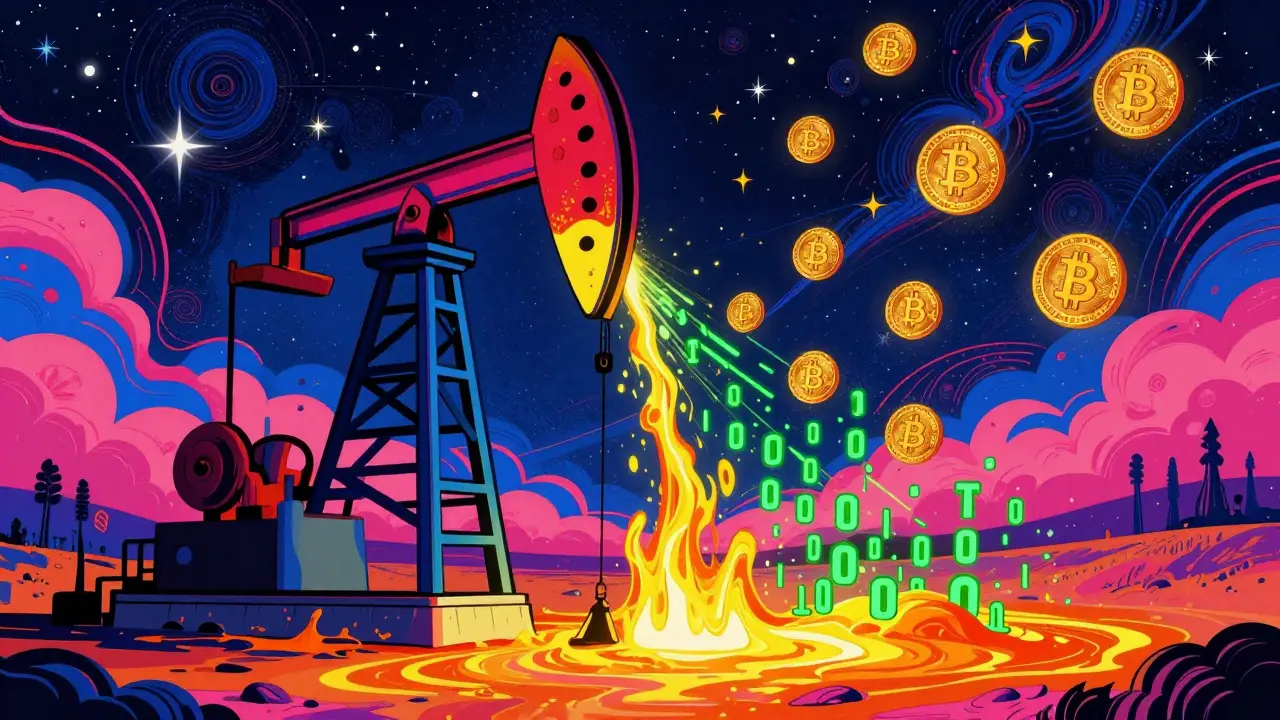
Imagine a country cut off from the global banking system, unable to sell its oil for dollars or euros. Now imagine that same country turning on massive industrial fans and letting them run 24/7, not to cool factories, but to generate digital gold. This is exactly what has happened in Iran. Since the United States withdrew from the nuclear deal (JCPOA) in 2018, Tehran has transformed its energy surplus into a sophisticated financial weapon. By harnessing cheap electricity to mine Bitcoin, a decentralized digital currency that operates without central bank control, Iran has built a parallel economy designed to slip past international restrictions.
This isn't just about hobbyists running computers in their basements. It is a state-level strategy involving military entities, government licenses, and billions of dollars in transactions. As of mid-2025, this approach has become one of the most adaptive sanctions-evasion networks in history. But how does it work? Who is really behind it? And what are the risks for the rest of the world?
The Core Strategy: Turning Energy into Foreign Currency
The logic behind Iran's mining push is simple economics mixed with geopolitical necessity. When traditional export routes for oil are blocked by sanctions, you need another way to get hard currency. Bitcoin provides that exit ramp. Instead of selling oil directly to foreign buyers who might face secondary sanctions, Iran mines Bitcoin using its abundant natural gas reserves. The resulting coins can then be moved across borders instantly, converted into other cryptocurrencies, or used to pay for imports like technology and medicine.
Data from blockchain analytics firm Elliptic shows that approximately 4.5% of all global Bitcoin mining operations occur within Iran. This may sound small, but in absolute terms, it generates hundreds of millions of dollars annually. To put the scale into perspective, the electricity consumed by these miners requires the equivalent of about 10 million barrels of crude oil each year to generate. That volume represents roughly 4% of Iran’s total oil exports back in 2020. Essentially, Iran is burning oil-not to transport goods-but to compute hashes on the blockchain.
The strategy evolved significantly around 2020. Initially, Iran followed China’s early model: legalizing mining but banning cryptocurrency as a payment method. However, facing deeper economic isolation, the regime shifted gears. They legalized crypto payments for imports and began issuing comprehensive mining licenses. By 2024, $4.18 billion worth of cryptocurrencies had flowed out of Iran, marking a 70% increase from the previous year. This surge demonstrates that the strategy is working-at least for those controlling the infrastructure.
Who Controls the Miners? The Role of the IRGC
If you think Iranian Bitcoin mining is driven by private entrepreneurs, think again. The real power lies with the Islamic Revolutionary Guard Corps (IRGC), the elite branch of Iran's armed forces responsible for protecting the Islamic Republic. Under direct orders from Supreme Leader Ali Khamenei, the IRGC viewed Bitcoin generation as compensation for lost access to US dollar transactions. Between 2019 and 2020, their entry into the sector accelerated dramatically.
These operations are not hidden in shadows; they are embedded in the state structure. The most prominent example is a 175-megawatt Bitcoin farm in Rafsanjan, Kerman province. This facility was established as a joint venture between IRGC-linked enterprises and Chinese investors. Why Chinese investors? Because they were attracted by Iran’s rock-bottom electricity tariffs. These state-affiliated mining operations often sit on military bases or within facilities controlled by powerful religious foundations like Astan Quds Razavi. Investigative reports describe this network as a "crypto cartel" that systematically exploits national electricity resources.
In 2022 alone, the regime issued licenses for more than 10,000 mining farms. They also permitted approximately 90 cryptocurrency exchanges to operate domestically. This created a parallel financial ecosystem. While ordinary citizens struggle with inflation and blackouts, these licensed entities enjoy political protection. Many ignore electricity bills entirely or access effectively free energy through political connections. The result? A highly centralized mining operation that contradicts the very decentralization principles Bitcoin was built on.
| Country | Global Hash Rate Share | Primary Motivation | Electricity Cost Advantage |
|---|---|---|---|
| United States | ~35% | Commercial Profit | Moderate ($0.03-$0.08/kWh) |
| Kazakhstan | ~18% | Energy Surplus Monetization | High (Hydro/Nuclear) |
| Russia | ~11% | Sanctions Evasion & Revenue | Very High (State Subsidies) |
| Iran | ~4.5% | Sanctions Circumvention | Extreme (Near Zero via Subsidy) |
Technical Infrastructure and Hardware Challenges
Running a mining empire under sanctions sounds easy if you have free power, but the technical reality is messy. Iran relies heavily on Chinese-manufactured ASIC miners. Since direct imports are restricted, hardware often arrives through gray market suppliers or intermediaries in neighboring countries. This creates a bottleneck. You can’t just order new machines online; you need smuggling networks.
The infrastructure itself is concentrated in special economic zones. Facilities in Bushehr and Khuzestan provinces, expanded throughout 2025, leverage surplus electricity from natural gas power plants. Some even use renewable energy installations to greenwash their operations. The goal is to maximize hash rate output while minimizing operational costs. Iranian miners receive payments directly in Bitcoin, which can then be converted to stablecoins or used for international transactions. This creates a decentralized foreign exchange mechanism that bypasses SWIFT and traditional banking systems entirely.
However, there are significant downsides. Limited access to cutting-edge hardware means Iranian miners often lag behind efficiency leaders in the US. Internet connectivity issues also plague mining pool connections, leading to stale shares and reduced profitability. Furthermore, maintaining equipment under sanctions pressure requires constant ingenuity. Parts break, firmware updates are hard to get, and cooling systems fail in the desert heat. Despite these hurdles, the sheer volume of subsidized energy keeps the lights-and the fans-on.
The Dark Fleet and Crypto: A Combined Evasion Network
Bitcoin mining is only one piece of the puzzle. As of mid-2025, Iran operates one of the world’s most adaptive sanctions-evasion networks. This includes over 320 tankers in its "dark fleet"-ships that turn off their transponders, change flags, and transfer oil ship-to-ship to hide their origins. Cryptocurrency operations run alongside this physical shadow trade.
Recent investigations revealed that Iranian firms, including entities affiliated with the IRGC, processed $8 billion worth of transactions through the Binance exchange since 2018. In August, Iran executed its first official import order using cryptocurrency, totaling $10 million. This milestone marked a shift from informal evasion to state-sanctioned adoption. The regime has also signed bilateral cryptocurrency cooperation agreements with Russia and negotiated deals with countries like Austria, Germany, and South Africa for crypto-based financial transactions.
This combination of physical and digital evasion makes enforcement incredibly difficult. Traditional sanctions target banks and shipping lanes. But when value moves through blockchain addresses obscured by mixers and proxy services, tracking becomes a game of cat and mouse. Forensic blockchain analysts from Chainalysis and TRM Labs note that Beijing’s "teapot" refineries, UAE/Hong Kong free-zone shell companies, and TRON-based stablecoin systems now account for the majority of Iran-linked cryptocurrency flows.
Domestic Impact: Blackouts and Public Anger
While the state profits, ordinary Iranians pay the price. The energy sector is already strained, and adding massive mining loads exacerbates the crisis. During summer peaks, nationwide blackouts become common. Mining facilities, protected by political connections, continue running while hospitals, schools, and homes lose power. This disparity fuels public anger.
User experiences vary widely. On Persian-language Telegram channels, some praise increased access to Bitcoin services. Others criticize the impact on electricity supply and internet stability. Smaller-scale independent miners report that while profits exist due to subsidized electricity, equipment access remains challenging. Meanwhile, human rights organizations highlight that cryptocurrency mining revenues benefit regime entities rather than alleviating citizen welfare. The disconnect between state-level sanctions evasion and daily survival is stark.

Risks for the Global Financial System
Why should anyone outside Iran care? Because systemic risk spreads. Elliptic’s research team emphasizes that the 4.5% Iranian share of global Bitcoin mining creates exposure for international financial institutions. Any Bitcoin transaction has a corresponding probability of involving Iranian miners in the fee payment process. If a bank or exchange inadvertently processes funds linked to these miners, they face potential sanctions violations.
Intelligence analysts warn that Iranian cryptocurrency operations directly fund IRGC missile programs and support for proxy organizations including Hezbollah and the Houthis. This makes enforcement a national security priority, not just a compliance checkbox. Geopolitical analysts assess Iran’s cryptocurrency strategy as part of a broader "sanctions-evasion machine" that adapts continuously to enforcement actions through reflagged vessels, renamed companies, and new wallet clusters.
Furthermore, academic researchers argue that Iran’s success demonstrates the diminishing returns of financial sanctions in an era of digital currencies. If one country can build a resilient, state-backed crypto economy despite heavy penalties, others may follow. Venezuela tried with the Petro, but failed due to lack of international acceptance. North Korea uses hacking. Iran’s model-legitimate mining combined with illicit flows-is arguably more sustainable and harder to shut down.
Future Trajectory: Will It Last?
The future looks like more of the same, but with higher stakes. Government officials plan to increase cryptocurrency mining capacity by 50% over the next two years. They are also developing domestic exchange infrastructure to reduce reliance on international platforms. Long-term viability depends on continued government subsidies and resolving domestic grid constraints. Periodic shutdowns during extreme heatwaves show the limits of this approach.
Technological trends favor more energy-efficient algorithms and renewable integration. This could erode Iran’s competitive advantage based on cheap fossil fuel electricity. Additionally, improved blockchain analytics capabilities may create new opportunities for enforcement. Multilateral forums are discussing enhanced coordination on cryptocurrency sanctions, though achieving consensus remains challenging given diverse national interests.
If diplomatic outcomes change-such as a renewed nuclear deal-the incentive for evasion would drop. But current trends suggest continued expansion regardless. Iran has invested too much infrastructure and political capital to abandon the strategy now. For the rest of the world, the challenge is clear: how do you sanction a protocol that has no central authority to pressure?
Is Bitcoin mining legal in Iran?
Yes, Bitcoin mining is legal in Iran and heavily regulated by the government. The Central Bank of Iran issues licenses for mining operations, and thousands of farms operate legally. However, using cryptocurrency as a payment method for general commerce was banned until recently, though exceptions exist for specific state-approved imports.
Who owns the majority of Bitcoin miners in Iran?
The majority of large-scale mining operations are owned or controlled by the Islamic Revolutionary Guard Corps (IRGC) and affiliated religious foundations like Astan Quds Razavi. Private individuals can obtain licenses, but the most profitable facilities with subsidized energy are typically state-affiliated.
How does Iran move mined Bitcoin out of the country?
Iran uses a combination of methods, including peer-to-peer exchanges, offshore shell companies in jurisdictions like the UAE and Hong Kong, and partnerships with international exchanges. They also utilize "teapot" refineries in China and stablecoin systems on networks like TRON to obscure the origin of funds before converting them to fiat or other assets.
Does Iranian Bitcoin mining cause power outages?
Yes, significantly. Mining facilities consume vast amounts of electricity, often prioritized over civilian needs. During peak demand periods, especially in summer, this contributes to widespread blackouts for residential and industrial users, causing public outrage and economic disruption.
Can international banks track Iranian-mined Bitcoin?
Blockchain analytics firms like Elliptic, Chainalysis, and TRM Labs can identify patterns associated with Iranian mining pools and wallets. However, because Bitcoin is pseudonymous and can be mixed or moved through multiple hops, definitive attribution is difficult. Banks must rely on heuristics and risk scores rather than absolute certainty.
Tawny Holmes
July 11, 2026 AT 05:57The IRGC isn't just mining; they're monetizing the grid's inefficiency. It is a textbook example of state capture.
Jessie Smith
July 12, 2026 AT 06:19one must consider the ontological implications of burning fossil fuels to validate a ledger that exists nowhere. it is a profound absurdity, really. the elite in tehran are not merely evading sanctions; they are participating in a grand cosmic joke about value itself. while the masses suffer blackouts, the guard corps sits atop a mountain of digital nothingness, pretending it is gold. this is the height of pretentious geopolitical theater. we watch them burn oil to compute hashes, and we wonder if our own financial systems are any less illusory. perhaps the real sanction is on our ability to see through the charade. i find it amusingly tragic.
Drew M
July 14, 2026 AT 01:29This is absolutely wild! 🤯 The sheer audacity of turning a national energy crisis into a crypto empire is mind-blowing. 😱 I mean, who even thinks of this? It’s like something out of a spy novel but with more ASIC miners. 💻⚡️ The IRGC is basically playing 4D chess with the global economy while everyone else is stuck on checkers. ♟️🌍 And let’s not forget the environmental irony-burning gas to mine 'green' tech? 🌿💨 Just fascinating stuff. Can’t wait to see how this plays out next year! 🚀
Deep Rahman
July 14, 2026 AT 11:35When we look at the situation in Iran, we have to think about what money really means to people who are struggling every day to keep the lights on in their homes because the government decided to use all that power for computers instead. It makes me think that maybe the idea of wealth is very different for someone in Tehran compared to someone in New York or London, and when you take electricity away from families so that generals can make bitcoin, it changes the whole meaning of fairness and justice in society because no one should have to choose between heating their house and having power for their fridge just because politicians want to play games with digital coins that might disappear tomorrow.
Melissa Beckwith
July 16, 2026 AT 03:20I have been following the blockchain analytics reports from Elliptic and Chainalysis for several years now, and the data clearly indicates that the Iranian network is becoming increasingly sophisticated in its obfuscation techniques, utilizing mixers and proxy services to launder funds through jurisdictions with lax regulatory oversight, which suggests that traditional compliance measures are insufficient without deeper integration of heuristic analysis tools that can detect anomalous transaction patterns associated with known IRGC-linked wallets, thereby requiring a more proactive approach from international financial institutions to mitigate the risk of secondary sanctions violations.
Josephine Finlayson
July 16, 2026 AT 13:40It is important to remember that behind these complex financial maneuvers, there are real people suffering. We should hope for a resolution that brings peace and stability to the region. Perhaps dialogue could help address the underlying issues rather than relying solely on sanctions. Let us remain hopeful for a better future for all involved parties.
Tuan Nguyen
July 17, 2026 AT 20:12The article fails to adequately address the technical inefficiencies inherent in Iran’s aging hardware infrastructure. While the subsidized energy provides a cost advantage, the lack of access to cutting-edge ASICs means their hash rate per watt is significantly lower than competitors in the US or Kazakhstan. This creates a fragile economic model dependent entirely on political subsidies rather than operational efficiency. Furthermore, the reliance on gray market imports introduces supply chain vulnerabilities that could easily be exploited by enforcement agencies. It is a blunt instrument masquerading as sophistication.
Hazel Fruitman
July 18, 2026 AT 18:41its so wrong that they are stealing power from hospitals and schools. the people deserve better then this corrupt system. i cant believe they get away with it. its unjust and evil.
Autumn Story
July 20, 2026 AT 09:13I really appreciate how detailed this post is! It helps us understand the complexity of the situation. I hope that one day, things will improve for the citizens of Iran. Let's keep supporting transparency and ethical practices in finance. Thank you for sharing this information!!