
Remember the rush of hunting for free crypto? If you were active in the blockchain gaming space around late 2021 or early 2022, you likely stumbled upon Hero Arena. This DOTA-inspired metaverse RPG promised big things, and its airdrop campaigns were a major draw for players looking to earn while they played. But what exactly happened with those rewards? Did anyone actually get paid? And where does the project stand now?
We’re digging into the nitty-gritty of the Hero Arena airdrop. We’ll look at who qualified, how much was distributed, and why the token price has taken a massive hit since those early days. Whether you missed out back then or are just curious about the lifecycle of GameFi projects, this breakdown gives you the cold, hard facts without the hype.
What Was the Hero Arena Airdrop All About?
Hero Arena is a blockchain-based MMORPG built on Binance Smart Chain and Polygon. It lets players recruit heroes, train them, and battle using NFTs. The project launched its Token Generation Event (TGE) on October 21, 2021, raising $1.25 million from backers like AU21 Capital and x21 Digital. To kickstart community growth, the team launched several airdrop campaigns. These weren’t just random giveaways; they were strategic moves to reward early adopters and social media promoters.
The main campaign offered a hefty prize pool. Here’s the breakdown:
- Total Pool: 300,000 HERA tokens.
- Winners: 1,000 lucky participants.
- Reward per Winner: 300 HERA tokens each.
- Referral Bonus: Top 50 referrers could earn up to 5,000 HERA tokens individually.
It sounds generous, right? But context matters. At the time, HERA had a reference price hovering around $1.10 during some exchange campaigns. So, 300 HERA wasn’t chump change-it was potentially over $300 worth of tokens for doing a few retweets and joining a Telegram group.
How Did Users Qualify for the Airdrop?
If you were trying to snag those free tokens, you had to jump through specific hoops. The process relied heavily on social proof and wallet verification. Most campaigns used platforms like Gleam.io to track participation. Here’s what you typically needed to do:
- Follow on Twitter: You had to follow @HeroArena_Hera and often retweet pinned announcements.
- Join Telegram: Membership in both the official Channel and Group was mandatory.
- Connect Wallet: You needed to submit a valid BEP-20 compatible wallet address. This ensured tokens went straight to your MetaMask or Trust Wallet.
- Complete Tasks: Some tasks involved inviting friends or engaging with content. Referrals were key-more invites meant higher chances of hitting that top 50 leaderboard.
One critical detail many users overlooked: security. Because these were decentralized applications (dApps), users were responsible for their own keys. Scams abound in the crypto world, and fake "claim" sites popped up frequently. Always verify the URL before connecting your wallet.
The MEXC Exchange Campaign: A Different Beast
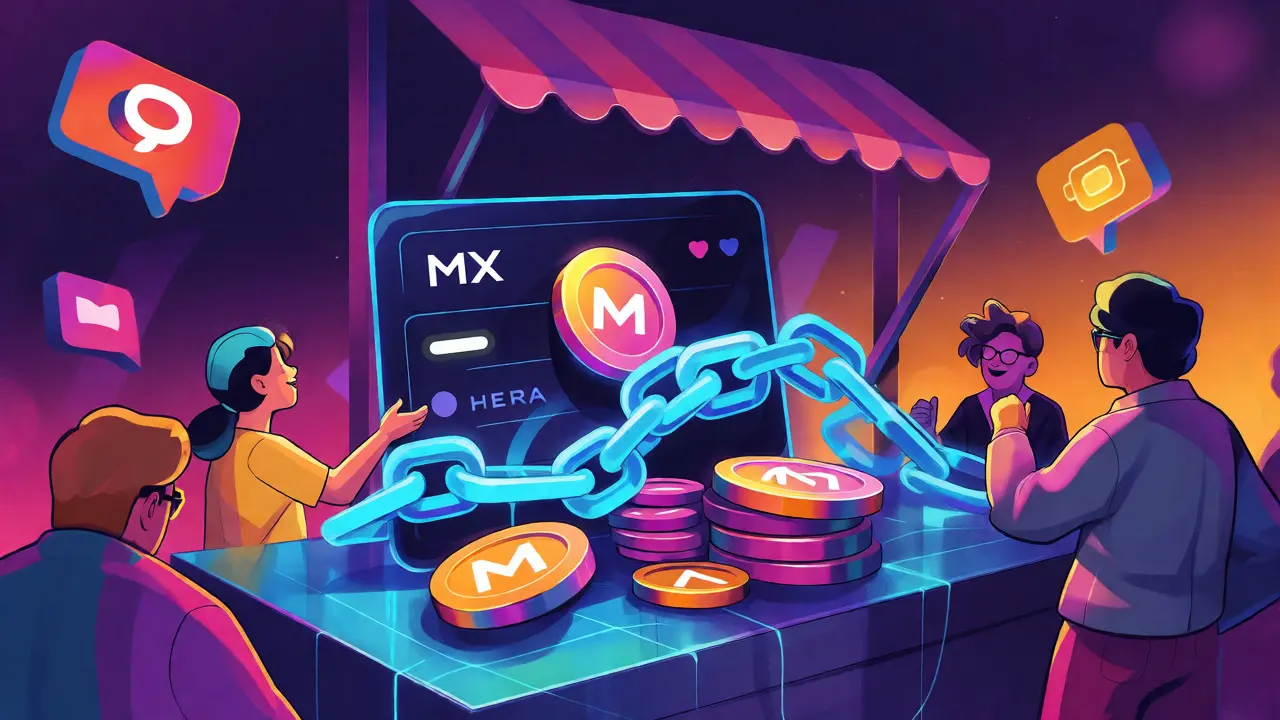
Beyond the standard social media airdrops, Hero Arena partnered with exchanges. One notable event was the MEXC Kickstarter session. This wasn’t just about tweeting; it involved actual capital commitment.
| Campaign Type | Reward Pool | Requirement | Status |
|---|---|---|---|
| Main Social Airdrop | 300,000 HERA | Social tasks + Wallet submission | Concluded |
| MEXC Kickstarter | 40,000 HERA | Voting with MX Tokens | Concluded |
| Referral Leaderboard | Up to 5,000 HERA | Top 50 referrers | Concluded |
For the MEXC campaign, users had to lock up or vote using MX tokens. Over 20 million MX tokens were contributed by the community to support HERA’s listing efforts. This showed strong initial interest, but as we’ll see later, market dynamics shifted drastically.
Tokenomics: Why Did HERA Drop So Hard?
Here’s the painful part. During the MEXC campaign, HERA traded near $1.10. Fast forward to recent data, and the price sits around $0.000158. That’s a drop of over 99%. What happened?
Several factors contributed to this devaluation:
- Supply Shock: The max supply is 100 million HERA. Initially, only 30% was unlocked at TGE. As vesting periods ended (some lasting 10 months), more tokens flooded the market.
- Limited Utility Adoption: While the game allows staking and trading, player retention metrics weren’t publicly robust enough to sustain demand against sell pressure.
- Market Cycles: The broader crypto bear market of 2022-2023 crushed small-cap altcoins, especially in the GameFi sector.
Current trading volume is low-around $2,400 daily. This suggests liquidity has dried up significantly compared to the launch phase. If you held onto those airdropped tokens hoping for a moonshot, you might have watched your portfolio shrink dramatically.
Is There Still an Active Airdrop?
Short answer: No. The primary airdrop campaigns have concluded. The project has moved past the initial user acquisition phase. Today, acquiring HERA or Hero NFTs happens through standard marketplace purchases or secondary markets like PancakeSwap.
Does this mean no future rewards? Not necessarily. Many blockchain games introduce seasonal events or new token burns that could incentivize activity. However, there’s no confirmed schedule for new large-scale airdrops. Keep an eye on their official Twitter and Discord for announcements, but don’t expect the same scale of free distribution as in 2021.
Should You Invest in Hero Arena Now?
This depends entirely on your risk tolerance. Hero Arena offers a unique blend of MOBA mechanics and RPG progression. If you enjoy the gameplay loop, buying a Hero NFT to start playing might be fun. But purely as an investment vehicle, the risks are high.
Consider these points before diving in:
- NFT Ownership Required: You need at least one Hero NFT to play. These can be bought with HERA tokens.
- Dual-Chain Support: The game runs on BSC and Polygon. Choose based on your gas fee preferences.
- Institutional Backing: Investors like Magnus Capital and ExNetwork Capital provide some credibility, but they haven’t prevented price erosion.
Always do your own research (DYOR). Check the current floor price of Hero NFTs and compare it to potential earnings. In many Play-to-Earn models, the cost of entry outweighs short-term rewards unless you’re highly skilled or dedicated.
Frequently Asked Questions
Did everyone who participated in the Hero Arena airdrop receive tokens?
No. The main campaign selected 1,000 winners from all eligible participants. If you completed the tasks but weren't among the winners, you didn't receive the base reward. Referral bonuses were limited to the top 50 referrers.
What is the current value of HERA tokens?
As of recent data, HERA trades at approximately $0.000158. This is a significant decline from its earlier reference prices near $1.10 during exchange campaigns.
Can I still claim old airdrop rewards?
Most major airdrop campaigns have closed. Claims usually had deadlines. If you missed the window, the tokens likely returned to the treasury or were redistributed. Check your wallet history for any pending transactions, but assume the window is shut.
Which blockchains does Hero Arena use?
Hero Arena operates on both Binance Smart Chain (BEP-20) and Polygon networks. This allows players to choose between lower transaction fees on Polygon or the established liquidity pools on BSC.
Do I need money to start playing Hero Arena?
Yes, generally. You must own at least one Hero NFT to participate in gameplay. These NFTs are purchased on the marketplace using HERA tokens, which you can buy on exchanges.
Final Thoughts: Lessons from the HERO Era
The Hero Arena story is a classic case study in crypto gaming. Early hype drove massive engagement and token value. But sustainability requires more than just free handouts. For players today, the focus should shift from chasing airdrops to evaluating long-term gameplay value. If the fun factor holds up, the ecosystem might recover. If not, it remains a cautionary tale about timing and utility.