
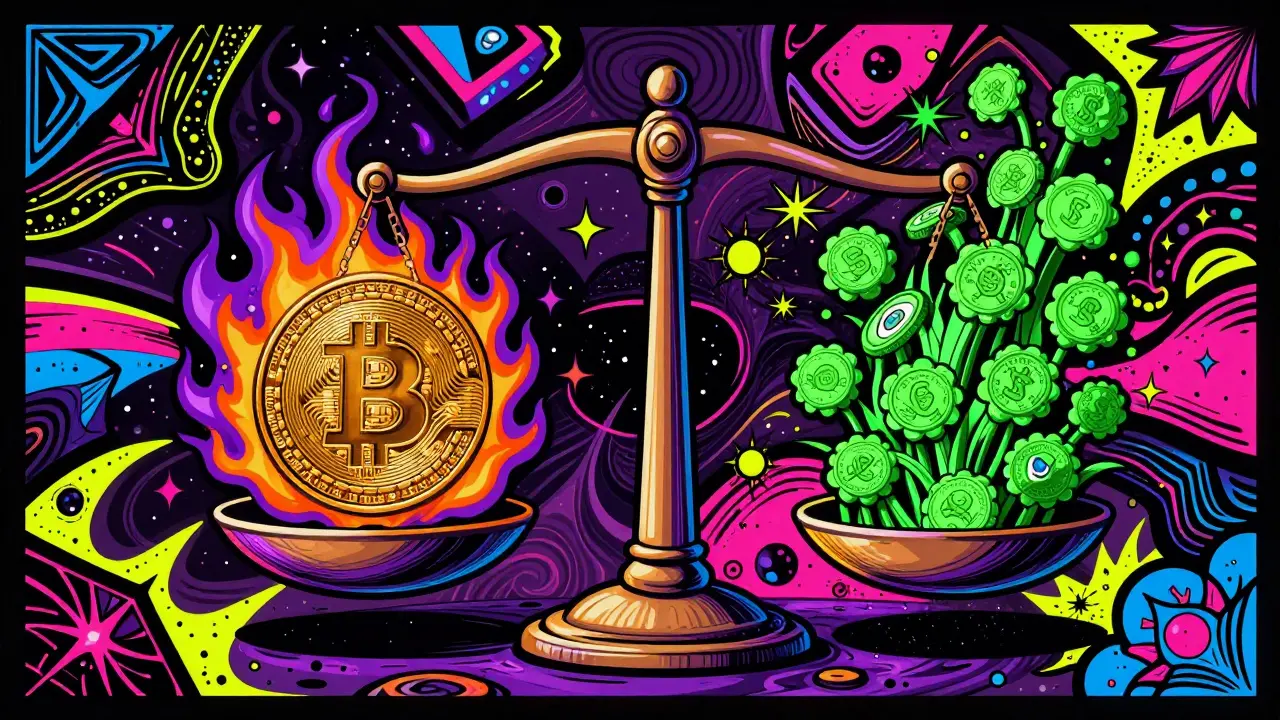
You’ve probably noticed that some cryptocurrencies seem to get more expensive over time, while others feel like they’re constantly losing value. It’s not just market hype or bad luck. The difference often comes down to a single, technical choice made by the creators of the token: how many coins exist, and whether that number changes.
In the world of blockchain, this is the battle between deflationary and inflationary tokens. One model tries to create scarcity to drive up price, while the other pumps out new coins to encourage spending. Understanding which model you’re holding-and why it matters-can save you from costly mistakes in your portfolio.
The Core Difference: Scarcity vs. Abundance
At its simplest, the distinction is about supply. Think of it like real estate versus rental income. A deflationary token is like land in a prime city center: there’s only so much of it, and as more people want it, the price goes up. An inflationary token is more like a dividend stock or a salary: new units are created regularly, rewarding holders but diluting the value of each individual unit if demand doesn’t keep pace.
This fundamental design choice dictates everything else about the token’s behavior, from how investors treat it to how merchants use it.
How Deflationary Tokens Work (The "Digital Gold" Model)
Deflationary tokens are designed to become harder to obtain as time passes. There are two main ways projects achieve this:
- Hard Caps: The most common method. The code simply says, "No more than X tokens will ever exist." Once those tokens are mined or minted, that’s it. Bitcoin is the classic example here, with a strict limit of 21 million coins.
- Burning Mechanisms: Some tokens have no hard cap but implement a "burn" function. Every time you make a transaction, a small percentage of the fee is sent to an unspendable address, effectively destroying it. This reduces the circulating supply slightly with every trade.
The psychological effect is powerful. If you know a token’s supply is shrinking or capped, you’re less likely to sell it. You hold onto it, hoping its value rises because it’s becoming rarer. This creates a "store of value" narrative. Investors buy these tokens not to spend them on coffee, but to park their wealth, similar to buying gold bars.
However, this hoarding behavior can be a double-edged sword. If everyone holds and nobody spends, the token becomes useless as a medium of exchange. Liquidity dries up, and transactions can become slow and expensive because users are unwilling to part with their scarce assets.
How Inflationary Tokens Work (The "Utility & Reward" Model)
Inflationary tokens do the opposite. They constantly create new coins. Where do these new coins come from? Usually, they are paid out as rewards to the people keeping the network running.
- Mining Rewards: In Proof-of-Work systems, miners solve complex puzzles to secure the network. In return, they receive newly minted tokens.
- Staking Rewards: In Proof-of-Stake systems, validators lock up their existing tokens to secure the network. They earn interest in the form of new tokens.
Why would anyone want inflation? Because it funds the ecosystem. Without new token issuance, who pays the developers? Who compensates the nodes securing the data? Inflationary models ensure there is always a fresh stream of rewards to attract participants.
Additionally, inflation discourages hoarding. If you know your tokens are being diluted by new supply, you might be more inclined to spend them or stake them for yield rather than letting them sit idle in a wallet. This promotes circulation and utility. Dogecoin is a famous example of an inflationary token with no maximum supply cap, designed specifically for tipping and small transactions.
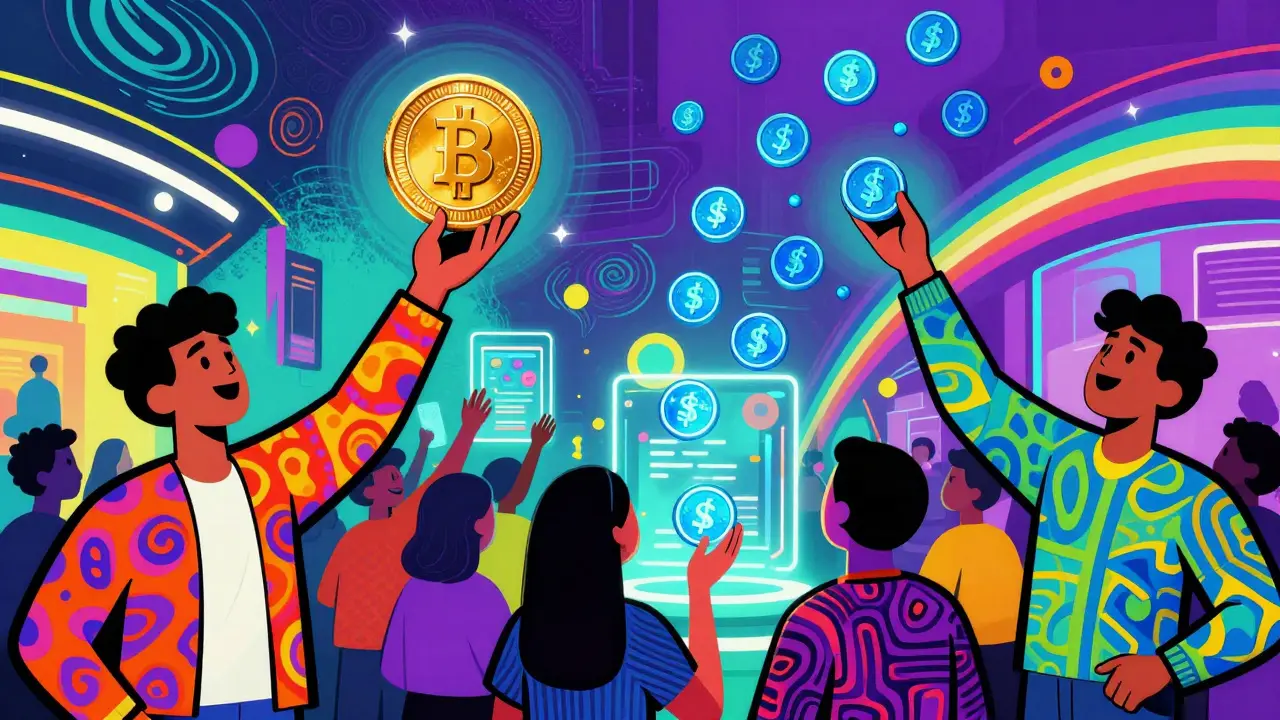
Key Differences at a Glance
| Feature | Deflationary Tokens | Inflationary Tokens |
|---|---|---|
| Supply Cap | Fixed maximum or decreasing | Unlimited or increasing |
| Primary Goal | Store of Value / Investment | Medium of Exchange / Utility |
| User Behavior | Holding (HODLing) | Spending / Staking |
| Price Volatility | Higher (scarcity-driven) | Lower (supply dampens spikes) |
| Best For | Long-term wealth preservation | Daily transactions & DeFi rewards |
| Risk | Liquidity crunches | Dilution of value |
The Hybrid Approach: Can You Have Both?
By 2026, the line between these two models has blurred significantly. Many major blockchains now use hybrid mechanisms to balance the benefits of both worlds. The most prominent example is Ethereum.
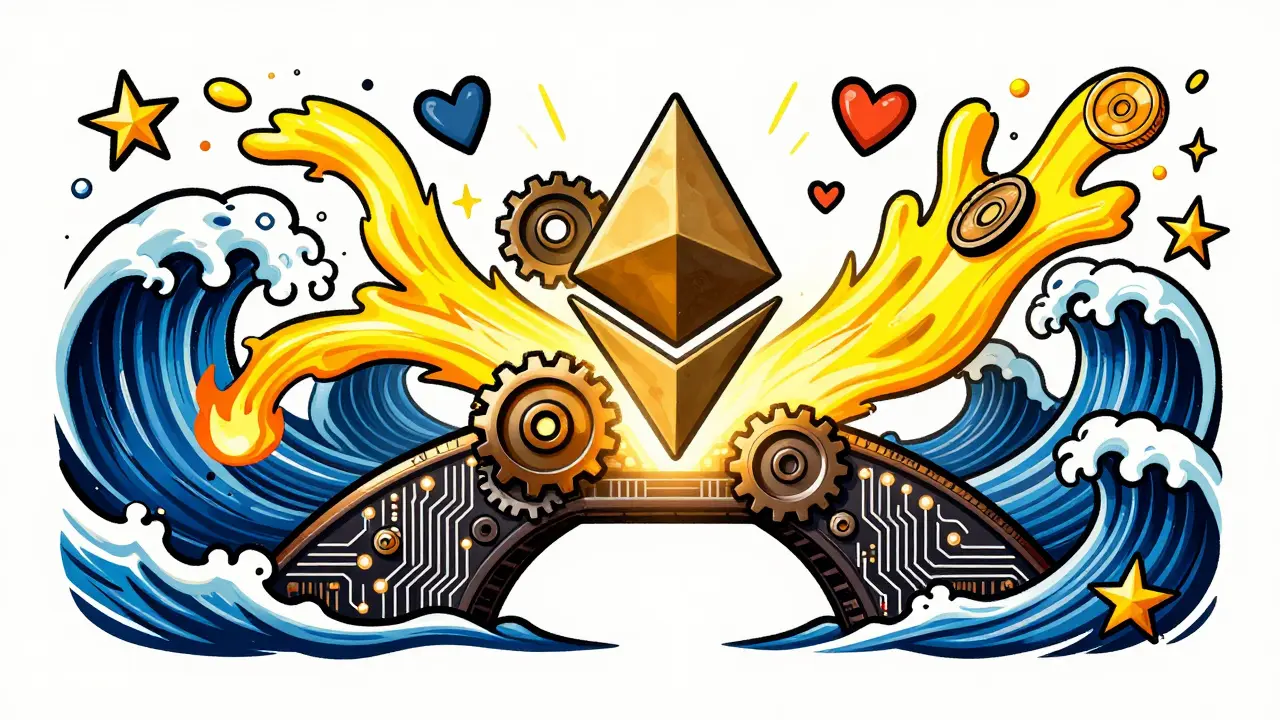
Ethereum transitioned from Proof-of-Work to Proof-of-Stake, which introduced inflationary staking rewards. However, it also implemented EIP-1559, a protocol change that burns a portion of transaction fees. Here’s how it works in practice:
- Low Network Activity: Fewer transactions mean fewer fees burned. New staking rewards exceed the burn rate. The supply increases slightly (inflationary).
- High Network Activity: High demand leads to high transaction fees. More ETH is burned than is issued as staking rewards. The net supply decreases (deflationary).
This dynamic adjustment allows Ethereum to act as a store of value during bull markets while maintaining enough incentive for validators to keep the network secure during quieter periods. Other Layer-1 blockchains are experimenting with similar variable emission schedules, adjusting inflation rates based on governance votes or on-chain metrics.
Which Model Is Better for You?
There is no single "winner" in the deflationary vs inflationary debate. The right choice depends entirely on what you want the token to do for you.
If you are looking for long-term investment and protection against fiat currency devaluation, deflationary tokens like Bitcoin tend to perform better. Their scarcity narrative appeals to institutional investors and treasury departments looking for non-correlated assets. The risk here is that the asset may become too expensive or illiquid for practical use.
If you are interested in active participation, such as providing liquidity in decentralized exchanges (DEXs) or earning yield through staking, inflationary tokens are often superior. The continuous issuance provides the raw material for APY (Annual Percentage Yield). Without new token creation, yields would drop to near zero once the initial supply is distributed.
Consider your timeline. Are you buying to hold for ten years? Lean toward deflationary. Are you buying to use in a specific app or farm rewards next month? Look at inflationary utility tokens.
Pitfalls to Avoid
Even with a clear understanding of the models, traps exist. Be wary of "fake" deflationary tokens that promise massive burns but lack genuine utility. If a token burns supply but no one wants to use it, the price won’t rise; it will just vanish into obscurity. Conversely, beware of hyper-inflationary tokens with no utility. If a project mints billions of tokens without a corresponding increase in user activity, the value per token will approach zero regardless of the technology behind it.
Always check the tokenomics dashboard before investing. Look for the "Max Supply" field. Is it fixed? Is it infinite? What is the current inflation rate? These numbers tell you more about the project’s future than any marketing whitepaper ever could.
Is Bitcoin deflationary or inflationary?
Bitcoin is fundamentally deflationary due to its hard cap of 21 million coins. However, it currently has a slight inflationary rate because new blocks are still being mined. This inflation rate halves approximately every four years (an event known as the "halving"). By 2140, when all 21 million BTC are mined, Bitcoin will become strictly deflationary as lost coins are never recovered, reducing the circulating supply further.
Can an inflationary token go to zero?
Yes. If the rate of new token issuance consistently outpaces demand, the value of each individual token dilutes. In extreme cases, such as with meme coins that have unlimited supply and no utility, the price can crash to near zero as early investors sell off their holdings to exit the market.
What is "token burning"?
Token burning is the process of permanently removing tokens from circulation. This is done by sending tokens to a "burn address," a public key that no one controls. Once tokens are there, they cannot be spent, transferred, or retrieved. This reduces the total supply, which can theoretically increase the value of remaining tokens if demand stays constant.
Why do some projects choose inflationary models?
Inflationary models are chosen to incentivize network security and growth. New tokens are used to pay miners or stakers, ensuring the blockchain remains secure. They are also used to reward early adopters, liquidity providers, and developers, creating a vibrant ecosystem where participants are motivated to contribute resources.
Does deflation mean the price always goes up?
Not necessarily. While reduced supply creates upward pressure on price, demand is equally important. If a deflationary token loses popularity, faces regulatory bans, or is replaced by a better technology, the price can fall despite the shrinking supply. Scarcity alone does not guarantee value; utility and adoption are critical drivers.
Matthew Malone
June 23, 2026 AT 23:24Look, the whole "digital gold" narrative is just a fancy way of saying we're hoarding air. Bitcoin's deflationary model works great if you believe in magic scarcity, but let's be real about the utility here. It's slow, it's expensive, and it's mostly used by people who think they're smarter than the Fed. Meanwhile, inflationary tokens actually do something useful by keeping liquidity moving. But sure, keep telling yourself that holding a jpeg of a coin makes you rich while the rest of us are trying to build actual economies.
Dr Lynea LaVoy
June 25, 2026 AT 02:14I appreciate this breakdown because it really helps clarify why my portfolio feels so chaotic lately. It’s easy to get overwhelmed when everyone is shouting about which token is the next big thing, but understanding the underlying mechanics changes how you look at your holdings. I’ve been leaning towards staking rewards because the idea of earning yield feels more tangible than just hoping the price goes up due to scarcity. It gives me a sense of active participation rather than passive waiting. Does anyone else feel like the hybrid models like Ethereum are becoming the new standard? It seems like the industry is naturally evolving towards balance rather than sticking to rigid extremes.
aaliyah zahid
June 27, 2026 AT 01:41Sarcasm aside, isn't it funny how we treat crypto like it's some high-stakes poker game instead of just code? The article says inflationary tokens discourage hoarding, which is true, but it also means you have to constantly work for your money. With deflationary assets, you just sit there and wait. It’s the difference between being an employee and being a landlord. One requires effort, the other requires patience. Most people don’t have the patience, so they chase the quick yields, only to realize later that the house always wins. 🙄
Erik Kirana
June 27, 2026 AT 12:11Oh, brilliant analysis. Truly groundbreaking stuff. I bet no one has ever thought about supply dynamics before. 😒 The fact that you need a whole article to explain that "less supply equals higher price" tells me everything I need to know about the audience here. It’s basic economics 101, folks. If you can’t grasp that scarcity drives value, maybe you shouldn’t be touching digital assets at all. But sure, let’s pretend this is complex financial theory when it’s really just marketing fluff designed to make you buy into their specific tokenomics. Typical. 👎
dan kaffeman
June 28, 2026 AT 18:20You’re all missing the bigger picture. This entire debate is irrelevant if you don’t understand who controls the narrative. Deflationary tokens are designed for the elite who want to preserve wealth, while inflationary tokens are for the masses who need to keep working. It’s a class divide disguised as technical design. I’ve seen too many projects burn tokens just to pump the chart for insiders. Don’t fall for the hype. Real value comes from control, not from arbitrary caps. Wake up.
Meg Gran
June 29, 2026 AT 16:48honestly i think ppl overthink this. its just math. if u hold too much nothing happens. if u spend too much u lose value. its a balance. but most ppl are greedy so they just hodl until they die. then what? the coins go to their kids who dont know how to use them. sounds like a disaster waiting to happen. why cant we just make a token that disappears after 1 year? force people to use it or lose it. radical right? but maybe thats the only way to stop the hoarding culture. 🤷♀️
Alexander DeVries
June 30, 2026 AT 21:21Let’s channel this energy into productive strategies. Instead of arguing over which model is superior, consider how each fits your personal financial goals. If you are seeking stability, deflationary assets offer a hedge against fiat devaluation. If you are looking for growth through ecosystem participation, inflationary tokens provide the necessary incentives. The key is diversification. Do not put all your eggs in one basket. Assess your risk tolerance and time horizon. Are you investing for retirement or for next month’s expenses? Clarity on these points will guide your decisions far better than following trends.
Mark Corpuz
July 2, 2026 AT 13:34The distinction between store-of-value and medium-of-exchange is critical, yet often overlooked by retail investors. While Bitcoin exemplifies the former, its limited throughput renders it impractical for daily transactions. Conversely, inflationary models facilitate liquidity but introduce dilution risks that must be carefully managed. A sophisticated portfolio should account for both paradigms, recognizing that neither is inherently superior without context. The hybrid approach adopted by Ethereum demonstrates a pragmatic evolution, balancing security incentives with monetary policy adjustments based on network demand.
Steven Jacobowitz
July 4, 2026 AT 07:17Wait, so if I stake my tokens, I am getting paid to secure the network? That sounds like a job. But why does the value drop if everyone stakes? It’s confusing. The jargon is heavy here. Tokenomics, APY, burn rate... it’s like learning a new language. I just want to know if my money will grow. If the supply goes up, does my slice get smaller? Even if I earn interest, if the pie grows faster than my slice, am I still losing out? This needs simpler explanations for people who aren’t economists.
Yogendra Dwivedi
July 4, 2026 AT 10:09This is a very insightful discussion. I find the concept of dynamic emission schedules particularly interesting. It allows the protocol to adapt to market conditions, which is crucial for long-term sustainability. In my experience, rigid models often fail when unexpected events occur. Flexibility is key. I encourage everyone to read the whitepapers carefully and understand the governance mechanisms behind these decisions. Knowledge is power in this space.