
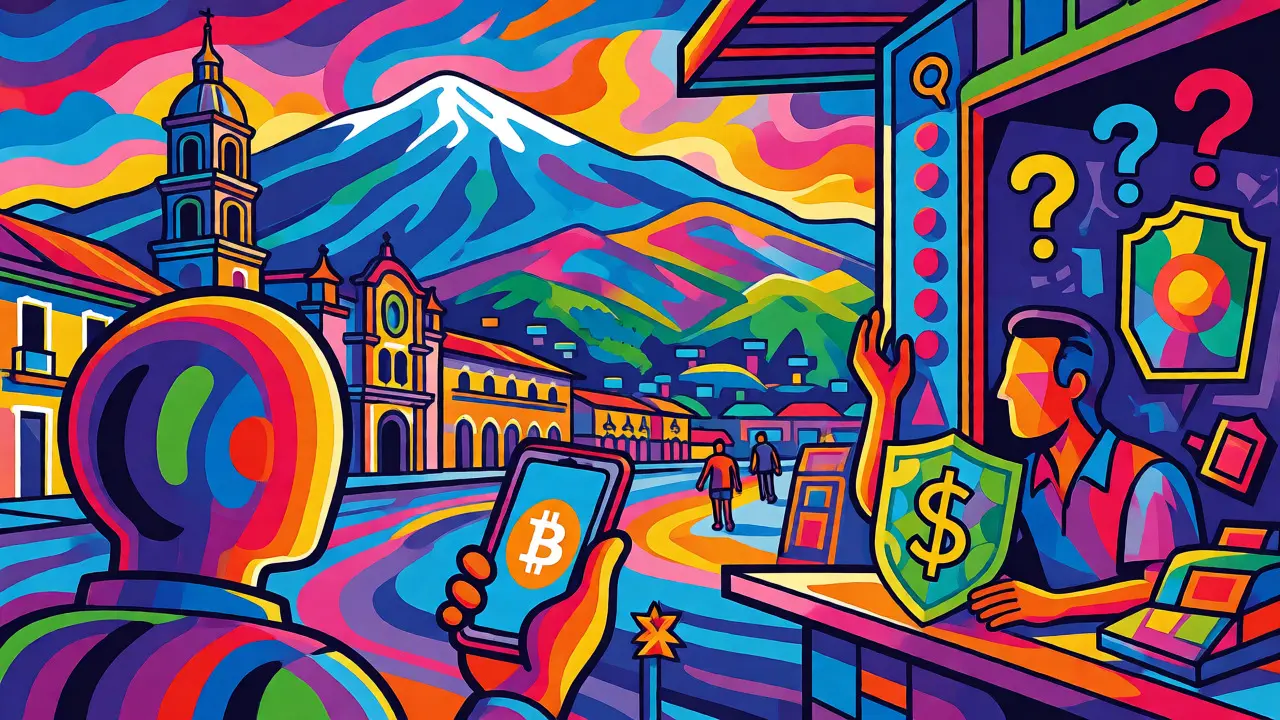
Imagine trying to buy a coffee with Bitcoin in Quito. You pull out your phone, open your wallet, and realize the shop owner looks at you like you just spoke Martian. That’s the reality for most people in Ecuador. While the rest of Latin America is rushing to regulate digital assets, Ecuador has hit the pause button-and then locked the door.
If you’re an expat, a local entrepreneur, or just someone curious about moving money without banks, you need to understand the unique legal landscape here. It’s not that crypto is illegal to own. It’s that it’s practically invisible to the official financial system. This guide breaks down exactly what you can and cannot do, why the rules are so strict, and how locals actually navigate this gray area.
The Core Rule: No Legal Tender Status
Let’s cut straight to the chase. In Ecuador, cryptocurrencies are not legal tender. Period. The Central Bank of Ecuador (BCE) made this crystal clear in August 2024. Under Article 94 of the Organic Monetary and Financial Code, only the US dollar counts as official currency. Since Ecuador abandoned its own currency, the Sucre, and fully dollarized back in 2000, the government treats any other form of money with extreme suspicion.
This isn’t just a suggestion; it’s hard law. The BCE stated explicitly that digital assets are "not an authorized means of payment." So, if you try to pay your rent in Ethereum, your landlord can legally refuse it. If they accept it, they’re operating outside the standard consumer protection frameworks. There is no safety net. If you send Bitcoin to the wrong address, there’s no bank hotline to call. You’re on your own.
Why Is Ecuador So Restrictive?
You might wonder why a country with such high inflation rates in its neighbors would stick so rigidly to the dollar. The answer lies in monetary sovereignty. For Ecuador, the US dollar isn’t just money; it’s the anchor of economic stability. The government fears that allowing private cryptocurrencies could destabilize this anchor.
BCE Governor Diego Martinez has voiced concerns that crypto threatens this stability, especially given the country’s limited financial infrastructure. He argues that in a dollarized economy, introducing volatile assets creates unnecessary risk. Critics, however, point out that this rigidity hurts the unbanked population. With only about 50% of adults having bank accounts, many Ecuadorians are excluded from traditional finance. By blocking innovative solutions like stablecoins, the state may be inadvertently keeping these people underbanked.
There’s also the fear of capital flight. In late 2023, Ecuador saw over $1 billion in unexplained capital outflows. Regulators worry that easy access to crypto makes it too simple to move wealth offshore, bypassing local economic checks.
Can You Actually Buy Crypto in Ecuador?
Yes, but it’s tricky. Buying and holding crypto is not illegal. You won’t go to jail for owning Bitcoin. However, the banking system makes it incredibly difficult to get in and out.
- Bank Blocks: Most local banks block transfers to major exchanges like Binance or Coinbase. They flag these transactions as high-risk or unauthorized payments. Some users report their accounts being frozen temporarily while investigations occur.
- No Local Exchanges: There are no licensed domestic cryptocurrency exchanges. You have to use international platforms.
- P2P is King: Because direct bank transfers often fail, Peer-to-Peer (P2P) trading is the dominant method. Platforms like Mercado Bitcoin or Binance P2P allow you to trade directly with other humans. You send USD via bank transfer or cash deposit to another person, and they release the crypto to your wallet.
This workaround adds friction. You’ll likely pay a premium-often 8-12% above global market prices-to compensate traders for the hassle and risk. Liquidity is lower, meaning large trades take longer to fill.
Taxes: The Silent Cost
Just because the Central Bank doesn’t recognize crypto doesn’t mean the taxman forgets about it. The Internal Revenue Service (SRI) treats cryptocurrency gains as income. If you sell your Bitcoin for a profit, that profit is taxable.
| Taxpayer Type | Tax Rate on Realized Gains | Notes |
|---|---|---|
| Individuals | Up to 35% | Progressive rates based on total annual income. |
| Corporations | 25% | Standard corporate tax rate applies to profits. |
You must report these gains when filing your annual tax return. Failure to do so can lead to penalties, even if the Central Bank ignores the asset itself. Keep detailed records of every transaction, including dates, amounts, and exchange rates used. The SRI audits increasingly focus on digital asset declarations.
Mining: Not Banned, But Impractical
Is mining banned? Technically, no. But economically, it’s nearly impossible to scale. Ecuador’s electricity costs are high compared to regional averages, hovering around $0.145 per kWh. Plus, the power grid in the Andes can be unreliable, with frequent outages disrupting operations.
Add in the 35% import duty on computing equipment, and you see why large-scale mining farms haven’t taken root. Most activity consists of small residential setups, mostly hobbyists in Quito’s suburbs. The total hash rate contribution from Ecuador is negligible on a global scale. Unless you have subsidized industrial power, mining is rarely profitable here.

The Rise of Stablecoins and Remittances
Here is where things get interesting. While Bitcoin gets the headlines, stablecoins (like USDT) are quietly solving real problems. Ecuador receives billions in remittances annually from citizens working abroad. Traditional wire services charge hefty fees-averaging 6.3%. Stablecoins offer a cheaper alternative.
Many families now receive USDT from relatives in Spain or the US. The recipient converts it to cash through informal OTC desks or P2P networks. This bypasses the slow and expensive SWIFT network. Despite the regulatory gray area, this use case drives much of the actual adoption. It’s not about speculation; it’s about survival and efficiency.
Future Outlook: Will Things Change?
Pressure is mounting. Fintech startups argue that strict rules stifle innovation. A recent survey showed that nearly 78% of local fintech companies would launch crypto services if a clear framework existed. Meanwhile, neighboring countries like Paraguay and Mexico are creating regulated environments, attracting investment that Ecuador misses out on.
The Central Bank is exploring its own Central Bank Digital Currency (CBDC), pegged to the dollar. This suggests they want digital payments, just not decentralized ones. Analysts predict potential regulatory shifts by 2026, driven by remittance businesses and political pressure. Until then, expect the status quo to hold. The government prefers control over chaos, even if that control limits growth.
Is Bitcoin legal in Ecuador?
Yes, buying, selling, and holding Bitcoin is legal. However, it is not recognized as legal tender, meaning businesses are not required to accept it, and banks often restrict transactions related to it.
Do I pay taxes on crypto in Ecuador?
Yes. Realized gains from cryptocurrency sales are considered income and are subject to progressive tax rates up to 35% for individuals and 25% for corporations.
Can I use my credit card to buy crypto in Ecuador?
It is difficult. Many local banks block transactions to cryptocurrency exchanges. Peer-to-peer (P2P) trading using bank transfers or cash is the most common and reliable method.
Are there local cryptocurrency exchanges in Ecuador?
No, there are no domestically licensed cryptocurrency exchanges. Users rely on international platforms like Binance or Mercado Bitcoin, primarily utilizing their P2P features.
Why does Ecuador ban crypto payments?
Ecuador is a dollarized economy. The government aims to protect the stability of the US dollar as the sole legal tender and prevent monetary instability caused by volatile digital assets.