
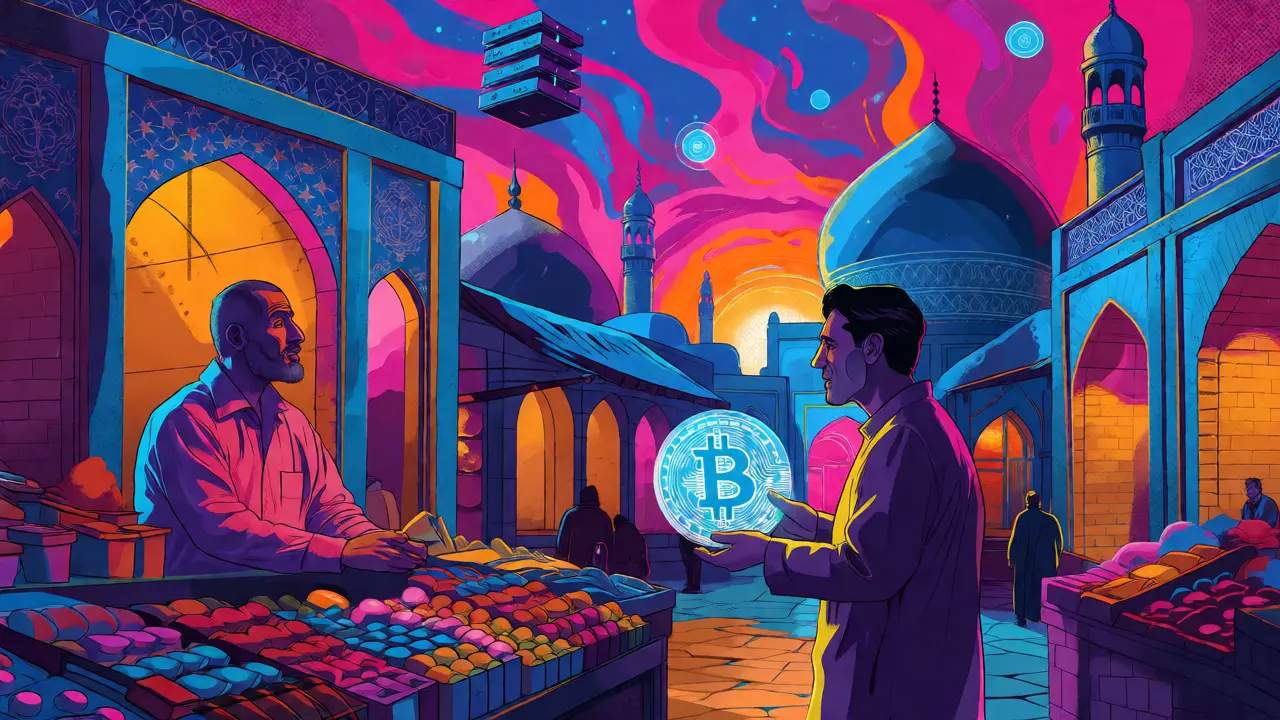
Imagine trying to buy a loaf of bread with Bitcoin in Tehran. Sounds simple, right? But in Iran, the answer isn't a clear yes or no. It is more like a complicated dance between government control, economic survival, and technological innovation. If you are wondering are crypto payments allowed in Iran, the short answer is: it depends on who you ask and how they pay.
As of late 2025, the situation remains murky. The Central Bank of Iran (CBI) has tightened its grip significantly. While mining is legal, using crypto for everyday purchases faces heavy restrictions. This article breaks down exactly what you can and cannot do with digital assets in the Islamic Republic, why the rules keep changing, and what this means for traders and businesses operating there.
The Current Regulatory Landscape
Iran’s approach to cryptocurrency is not black and white. It exists in a gray zone designed to balance two conflicting needs. On one hand, the country wants to bypass international sanctions. On the other, it fears losing control over its national currency, the rial.
In January 2025, President Masoud Pezeshkian issued a directive that changed the game. He designated the Central Bank of Iran as the sole authority regulating the crypto market. This move centralized power. Previously, multiple agencies had overlapping jurisdictions. Now, the CBI holds all the cards. They have direct access to data from every platform involved in crypto activities. Individuals, companies, and brokers must obtain licenses to operate legally.
This centralization aims to curb speculation. The rial has suffered massive depreciation due to sanctions and inflation. Authorities worry that unregulated crypto trading accelerates this decline. By controlling the flow of money, they hope to stabilize the economy. However, this control comes at the cost of freedom for users.
Mining vs. Trading: A Clear Distinction
It is crucial to separate mining from trading when discussing legality. These two activities face very different rules.
Cryptocurrency mining is legal in Iran under strict government regulation. Since 2019, miners have been able to operate openly if they follow specific guidelines. They need licenses from the Ministry of Industry, Mine and Trade. They must use approved hardware and adhere to government-set electricity tariffs.
Why does Iran allow mining? Energy revenue. Iran has some of the lowest electricity costs globally. Mining generates significant income for the state. Licensed miners must sell their mined assets directly to the Central Bank. This ensures the government captures the value generated by these energy-intensive operations.
However, illegal mining persists. Unauthorized rigs strain the electrical grid, leading to rolling blackouts. In December 2024, authorities blamed illegal mining for power shortages across several regions. They launched crackdowns, discovering large-scale underground operations. So, while mining is legal on paper, many operators still work in the shadows to avoid high tariffs and regulatory burdens.
| Activity | Legal Status | Key Restrictions |
|---|---|---|
| Mining | Legal | Licensed only; must sell to CBI; high energy tariffs |
| Trading/Exchange | Restricted | Licensed platforms only; mandatory KYC; API surveillance |
| Payments for Goods | Effectively Banned | Direct P2P payments discouraged; limited merchant adoption |
| Advertising | Banned | No online or offline promotion allowed |
The Payment Gateway Crackdown
If you try to pay for something with crypto today, you will hit a wall. In late 2024, the Central Bank blocked most Iranian websites from processing crypto-to-rial conversions. They wanted to stop speculative flows. By early 2025, they began unblocking exchanges, but with a catch. Platforms must use the government’s own API system.
This API gives authorities full visibility into user data. Every transaction is tracked. There is no anonymity left in domestic trades. Exchanges like Nobitex operate under this intense scrutiny. They serve as the primary gatekeepers. You cannot just swap your Bitcoin for rials anywhere. You must go through licensed channels that report back to the CBI.
For merchants, accepting crypto directly is rare. Most prefer stablecoins or traditional banking methods. The volatility of Bitcoin makes it risky for daily commerce. Plus, the legal uncertainty discourages widespread adoption. While you might find tech-savvy cafes in Tehran accepting crypto, it is not the norm. The infrastructure for seamless crypto payments simply does not exist yet.
Sanctions Evasion and International Pressure
Why does Iran care so much about crypto? Sanctions. When SWIFT transactions are blocked, digital currencies offer a lifeline. Iran uses crypto to facilitate international trade, particularly for oil exports. This allows them to bypass the US dollar dominance.
But this strategy draws attention. International compliance firms monitor Iranian wallets closely. In July 2025, Tether froze 42 addresses linked to Iranian entities. This was the largest freeze of its kind. Many of these addresses had exposure to Nobitex. Such actions highlight the risks of using crypto for cross-border payments. Your funds could be frozen without warning if they touch sanctioned entities.
The Islamic Revolutionary Guard Corps (IRGC) plays a role here too. Their involvement in crypto activities raises red flags for global regulators. This complicates matters for ordinary Iranians who want to participate in the global market. Using foreign exchanges often requires VPNs, adding another layer of complexity and risk.

The Rise of the Digital Rial
While private crypto faces hurdles, the state is building its own digital currency. Iran is developing a Central Bank Digital Currency (CBDC) called "Rial Currency." Unlike Bitcoin, this digital rial cannot be mined. Its supply is controlled entirely by the Central Bank.
A pilot program launched on Kish Island aims to test this technology. The goal is to reduce dependency on physical cash and the US dollar. For citizens, this might mean easier electronic payments. But remember, it is centralized. The government can track every transaction. It offers efficiency but sacrifices privacy.
Experts suggest the digital rial could eventually replace some functions of traditional banking. It positions Iran to modernize its financial system while maintaining strict monetary policy. For now, it remains a niche project, but it signals where the future might lead.
Market Realities and User Behavior
Despite restrictions, demand for crypto in Iran remains high. Between January and July 2025, the country recorded $3.7 billion in crypto flows. That is a slight decline from previous years, likely due to tighter controls. Yet, millions of Iranians still trade daily.
Many turn to unofficial markets to hedge against inflation. When the rial loses value, people seek safer assets. Gold and dollars are traditional choices, but crypto offers speed and accessibility. Younger generations, in particular, embrace digital assets. They navigate around restrictions using peer-to-peer networks and offshore exchanges.
Advertising bans further complicate public awareness. You won’t see billboards promoting Bitcoin in Tehran. This limits mainstream education about blockchain benefits. Instead, knowledge spreads through word-of-mouth and social media groups. This grassroots adoption contrasts sharply with top-down regulatory pressure.
Is it illegal to hold Bitcoin in Iran?
No, holding Bitcoin is not illegal. Iranians can own cryptocurrencies. However, buying and selling them must occur through licensed platforms that comply with Central Bank regulations. Holding assets privately is generally tolerated, but converting them to rials involves strict oversight.
Can I use crypto to buy groceries in Tehran?
It is difficult. Direct peer-to-peer payments for goods are effectively banned or heavily restricted. Most merchants do not accept crypto directly due to legal uncertainties and volatility. You would typically need to convert crypto to rials via a licensed exchange first, then use local payment methods.
Why did Iran ban crypto advertising?
The government imposed a nationwide ban on crypto advertising in February 2025 to limit public exposure and curb speculative trading. They aim to prevent hype-driven investments that could destabilize the local economy and encourage excessive risk-taking among citizens.
What happens if I mine Bitcoin illegally?
Illegal mining carries risks including equipment confiscation, fines, and potential judicial action. Authorities actively crack down on unauthorized rigs because they strain the electrical grid and evade taxes. Licensed miners enjoy protection but face higher operational costs.
Is the digital rial available to everyone?
Not yet. The digital rial is currently in a pilot phase, primarily tested on Kish Island. Widespread rollout to the general population is planned but depends on technical infrastructure and regulatory finalization. It represents the state's preferred digital currency model.