

When the Taliban took control of Afghanistan in August 2021, the country’s banking system collapsed overnight. International sanctions froze billions in assets. Banks shut down. ATMs ran dry. For millions of Afghans, there was no way to send or receive money - not from family abroad, not to pay for food, not even to buy medicine. But one tool kept working: cryptocurrency.
Bitcoin, USDT, and other digital coins became a lifeline. Remittances from relatives in the U.S., Europe, and the Gulf poured in through peer-to-peer crypto trades. Women ran small businesses using crypto to pay suppliers. NGOs delivered food aid in USDT to remote villages where cash couldn’t reach. Afghanistan jumped to 20th place globally in cryptocurrency adoption in 2021, with over $962 million in on-chain transactions in just one year. For many, crypto wasn’t a gamble - it was survival.
Then came the ban.
In June 2022, the Taliban’s central bank declared all cryptocurrency trading illegal. No warning. No grace period. Just a decree: digital currencies violate Islamic law. The reason? They called it fraud. Gambling. Uncertainty. But the real fear was control. Crypto moved money outside the state’s reach. And in a country where the government had no access to global finance, that was dangerous.
Herat: The Frontline of the Crackdown
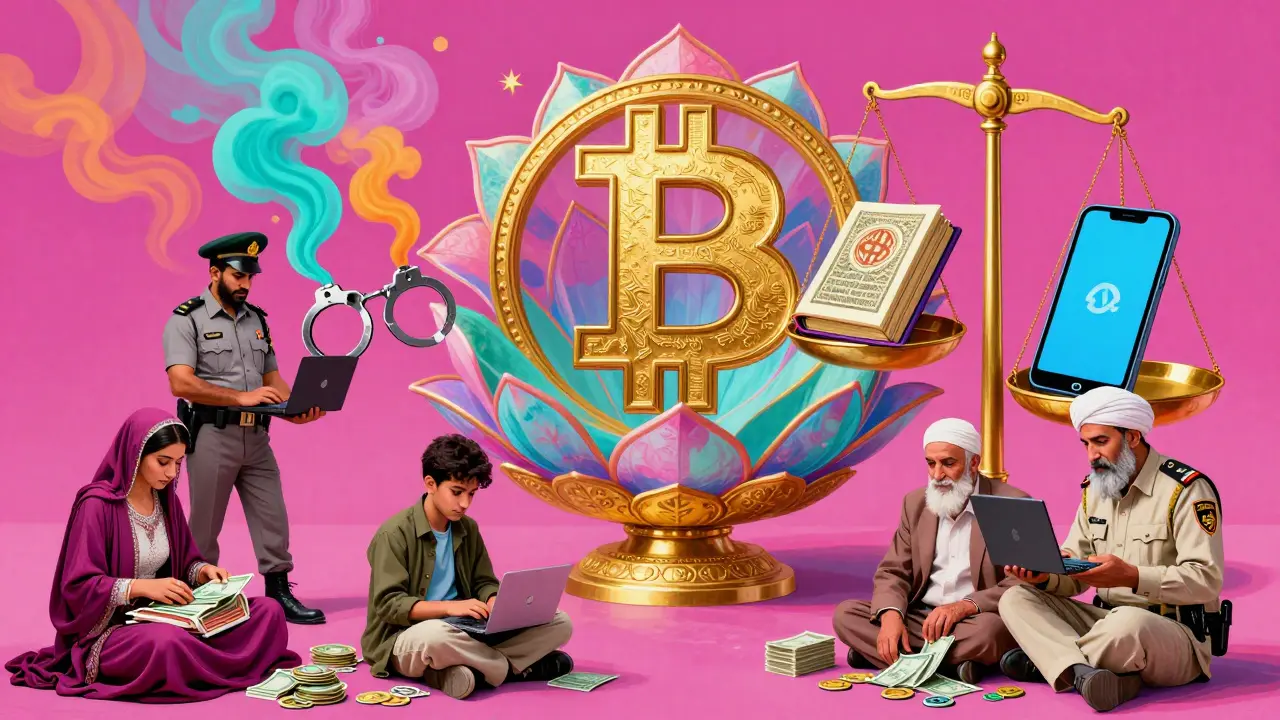
The crackdown hit hardest in Herat - Afghanistan’s third-largest city and a major trade hub near Iran. By August 2022, over 20 crypto businesses had been shut down. Police raided offices, confiscated computers, and arrested traders. Sayed Shah Sa’adat, head of Herat’s counter-crime unit, publicly confirmed the operations. "Digital currency trading has caused a lot of problems and is scamming people," he told Ariana News. "Therefore, they should be closed."
But who were these "scammers"? Most were ordinary people - a father who traded Bitcoin to get his son’s insulin from Pakistan, a seamstress who paid her workers in USDT because banks wouldn’t process her payments, a student who used crypto to receive tuition money from his uncle in Canada.
By May 2023, arrests turned into jail time. Eight traders were locked up in Herat’s central prison for 28 days. Another 13 were detained, most later released on bail. The punishment? Up to six months in prison. No trial. No lawyer. Just detention.
Some reports say authorities seized the crypto holdings of those arrested. Others say digital wallets were left untouched - the money still there, but now locked behind passwords no one could crack. Either way, the message was clear: if you use crypto, you risk everything.
The Human Cost
One trader told Coinspeaker he used to earn 1-2% margins on USDT trades. "Now I can’t afford to feed my family," he said. Another, a father of three, described how his brother in New York sent him $200 every month in Bitcoin. "There’s no other way," he said. "The banks are gone. The government doesn’t help. Without crypto, we starve."
The numbers don’t lie. By 2023, over 97% of Afghans lived below the poverty line. UNICEF warned that more than a million children were at risk of severe malnutrition. And yet, the very tool that kept families alive - crypto - was now a crime.
Even NGOs that used crypto to distribute aid were forced to stop. The Women’s Entrepreneurship Day Organization (WEDO) had funded 100,000 women with weekly food payments in USDT. It was efficient, traceable, and immune to corruption. But after the ban, they had to shut it down. No one could risk being arrested for helping people eat.
Why Did the Taliban Ban Crypto?
The Taliban claims crypto is un-Islamic. They say it’s gambling because prices swing. They say it’s fraudulent because no one controls it. But that’s not the full story.
Islamic finance scholars are divided. Some argue Bitcoin is just a tool - like cash. Others say it’s too speculative. But none of them said it should be banned outright. The Taliban’s stance wasn’t born from theology - it was born from fear.
After the 2021 takeover, the world cut Afghanistan off. No international aid. No banking access. No SWIFT. No foreign currency. The country was drowning. And crypto was the only raft left.
The Taliban didn’t want people using crypto to bypass them. They didn’t want money flowing in and out without their knowledge. They didn’t want citizens building parallel financial systems. So they crushed it - not because it was evil, but because it was free.
There’s also a darker layer. TRM Labs’ 2025 report shows that groups like ISKP - the Islamic State’s branch in Afghanistan - have used crypto to fund attacks. A UK man was sentenced in December 2024 for sending £16,000 to ISKP via Bitcoin. A March 2024 attack in Moscow was partly financed with crypto. The Taliban’s crackdown isn’t just about control - it’s also about appearing legitimate to the world. By "fighting crypto crime," they hope to gain international sympathy.
But here’s the truth: they’re not targeting terrorists. They’re targeting grandmothers.

The Paradox of Control
The Taliban’s ban created a cruel paradox. The more they cut off Afghanistan from the global economy, the more people needed crypto. The more they banned it, the more people found ways around it.
Today, crypto hasn’t disappeared - it’s gone underground. People trade in back alleys. Through encrypted apps. Using cash-in-hand swaps. No exchanges. No usernames. No records. Just trust, speed, and silence.
But that’s even more dangerous. No protections. No dispute resolution. No way to recover stolen funds. Scams are rampant. People lose life savings in seconds.
And still, they risk it.
Because the alternative is worse.
What Happens Now?
The Taliban’s enforcement has not stopped crypto - it’s made it more chaotic, more risky, and more desperate. There’s no data on how much crypto is still moving in Afghanistan. But the fact that people continue to trade - despite prison sentences - tells you everything.
International observers like Chainalysis and TRM Labs warn that this crackdown will only push activity into darker corners. More fraud. More violence. More suffering.
And the people who suffer most? The same ones who had nothing to begin with.
The world watches. But no one acts.
There’s no sanctions relief. No humanitarian financial channel. No exception for families trying to survive.
Just silence. And more arrests.
Why did the Taliban ban cryptocurrency in Afghanistan?
The Taliban banned cryptocurrency in June 2022, claiming it violated Islamic law by promoting gambling and uncertainty (gharar). But the real reasons were political and economic: crypto allowed money to flow outside government control, bypassing sanctions and state oversight. With banks frozen and international aid cut, the Taliban feared losing authority over financial flows - especially as ordinary citizens relied on crypto to survive.
How many people have been arrested for using crypto in Afghanistan?
At least 21 people were arrested in Herat province alone between August 2022 and May 2023, with eight jailed for 28 days. Authorities reported shutting down over 20 crypto businesses. Exact nationwide numbers are unknown because arrests are rarely documented publicly. Most detainees were released on bail, but some faced up to six months in prison.
Did the Taliban seize people’s cryptocurrency?
There’s no consistent policy. Some detainees reported their digital wallets were not confiscated - the assets remained untouched but inaccessible. Other reports confirm authorities seized crypto holdings during raids. The lack of transparency suggests enforcement is arbitrary, not systematic. This uncertainty makes it even harder for people to know if they’re safe.
Was cryptocurrency used for humanitarian aid in Afghanistan?
Yes. Before the ban, organizations like WEDO used USDT to send weekly food payments to over 100,000 Afghan women. NGOs also used crypto to bypass broken banking systems and deliver aid directly to remote areas. These programs were efficient, traceable, and corruption-free. All were shut down after the Taliban’s crackdown.
Is cryptocurrency still used in Afghanistan today?
Yes - but underground. Crypto trading has shifted to peer-to-peer cash swaps, encrypted apps, and hidden meetups. No exchanges remain open. No public platforms exist. People risk arrest to trade Bitcoin or USDT for cash, often at dangerous rates. The volume is much lower than in 2021, but the need remains - and so does the danger.
Chelsea Boonstra
March 11, 2026 AT 18:33Julie Tomek
March 11, 2026 AT 23:47PIYUSH KOTANGALE
March 13, 2026 AT 03:15Zephora Zonum
March 13, 2026 AT 19:16vasantharaj Rajagopal
March 14, 2026 AT 22:42ann neumann
March 16, 2026 AT 12:42William Montgomery
March 18, 2026 AT 10:16Mara Alves Mariano
March 20, 2026 AT 06:36