
If you're looking for a guide on how to "sneak" into a crypto exchange in Bolivia or hide your transactions from the government, you might be operating on old information. For a decade, Bolivia was the place to avoid if you liked digital assets. The government didn't just discourage them; they slammed the door shut. But the game changed completely on June 26, 2024. The ban isn't just "leaking"-it's officially gone.
The End of the Great Crypto Ban
For years, the Central Bank of Bolivia (BCB) acted as the ultimate gatekeeper. Starting in 2014, the bank prohibited almost every activity related to digital currencies. They claimed this was to protect the national economy, and for a while, it worked. Banks were strictly forbidden from processing any crypto-related transfers, leaving locals to rely on risky peer-to-peer deals or expensive offshore workarounds.
Everything flipped with Resolution No. 82/2024. The government realized that a severe dollar crisis was choking the economy, and they needed a pressure valve. Suddenly, cryptocurrency wasn't the enemy; it was a tool for financial growth. This wasn't a slow transition-it was a total pivot. Since that decision, crypto usage in the country has surged by over 500% in just one year. People who spent ten years hiding their wallets are now openly trading.
How Access Works Now
Now that the legal walls have come down, the process of accessing exchanges is becoming streamlined. You no longer need to use a VPN to pretend you're in another country or find a "middleman" to move your funds. The focus has shifted from survival to regulation. The government is now focused on Virtual Asset Service Providers (VASPs), which are the formal entities-like exchanges and custodians-that let users buy and sell coins.
In April 2025, the government released Resolution no. 019/2025, which officially recognized these providers. Shortly after, in May 2025, Supreme Decree No. 5384 gave the industry a full legal backbone. If you're using an exchange today, you're doing so under a framework that requires these platforms to have specific licenses, which actually makes the process safer than the "underground" days.
| Period | Legal Status | Key Action | User Experience |
|---|---|---|---|
| 2014 - June 2024 | Strictly Banned | BCB Prohibitions | Underground P2P, high risk |
| June 2024 - 2025 | Legalized | Resolution 82/2024 | Rapid adoption, open trading |
| May 2025 - Present | Regulated | Supreme Decree 5384 | Licensed VASPs, legal safety |

The Rise of Stablecoins as a Safety Net
While Bitcoin gets the headlines, the real story in Bolivia is about Stablecoins. When your local currency is volatile and US dollars are hard to find, a coin pegged to the dollar becomes a lifeline. The BCB has leaned into this, starting to use USD-pegged assets for cross-border payments and remittances in early 2025.
This shift has turned crypto exchanges into more than just gambling dens for speculators; they've become digital vaults. For the average Bolivian, holding a stablecoin is now a legitimate way to protect their purchasing power. The government's strategy is pragmatic: they aren't necessarily trying to make the whole world "decentralized," but they are using blockchain tech to keep the economy moving when traditional banking fails.
Learning from the Neighbors
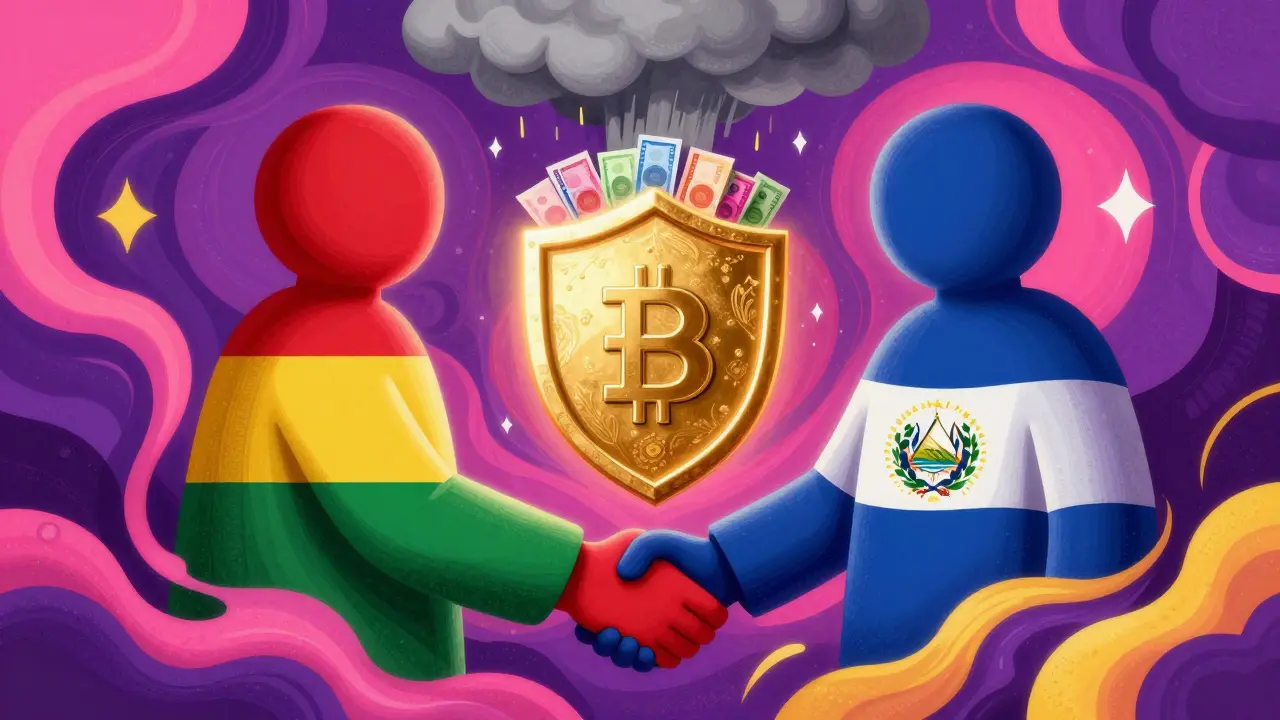
Bolivia didn't just wing this transition. They looked at El Salvador, the first country to make Bitcoin legal tender. Instead of guessing, the BCB signed a Memorandum of Understanding with El Salvador's National Commission for Digital Assets (CNAD). This isn't just a formal handshake; it's a deep-dive exchange of intelligence.
They are sharing data on blockchain analytics and how to spot the scams that usually follow a crypto boom. By collaborating with experts who have already dealt with the chaos of mass adoption, Bolivia is trying to avoid the "Wild West" phase and move straight into a professional, regulated market. This cooperation covers everything from risk analysis to staff training, ensuring that the people running the regulators actually know how a private key works.
Are There Still Restrictions?
It's not a total free-for-all. The government is still cautious about using crypto for massive state-level operations. For example, in May 2025, the state oil company, YPFB, tried to use crypto to pay for fuel imports. The government stepped in and blocked it. This shows that while crypto exchanges Bolivia and individual trading are welcomed, the state is still drawing a line when it comes to strategic national reserves and critical imports.
For the average user, this is a good sign. It means the government isn't blindly throwing the keys to the kingdom to digital assets. They are balancing innovation with a level of caution that prevents a total systemic collapse. The focus remains on transparency and consumer protection, especially as they draft new rules to stop the scams that often target new investors during a gold-rush phase.
Is cryptocurrency legal in Bolivia in 2026?
Yes, it is. The long-standing ban was lifted on June 26, 2024, via Resolution No. 82/2024. Since then, the government has moved from mere legalization to creating a full regulatory framework via Supreme Decree No. 5384.
Can I use a local bank to fund a crypto exchange?
Generally, yes. The previous prohibitions that stopped banks from processing crypto transactions have been overturned. However, individual banks may still have their own internal risk policies, so it is best to check with your specific provider regarding VASP transfers.
What are the best coins for users in Bolivia?
USD-pegged stablecoins are currently the most popular choice due to the country's history of currency volatility and the dollar crisis. They are widely used for remittances and as a store of value.
Do I need a license to trade crypto in Bolivia?
Individual traders do not need a license. However, if you are operating a business as a Virtual Asset Service Provider (VASP)-such as running your own exchange or custody service-you must comply with the licensing obligations set by Supreme Decree No. 5384.
Why did Bolivia change its mind about crypto?
The shift was primarily driven by economic necessity. A severe shortage of US dollars forced the government to seek alternative financial tools to facilitate trade and growth, making crypto a pragmatic solution to a national crisis.