

Imagine you write down your bank account balance in a notebook. Someone could sneak in later, erase the number, and change it to zero. That’s scary. Now imagine writing that same number into stone where no eraser can touch it, and everyone watching agrees on what the stone says before you even carve it. That’s essentially what immutable blockchain records do.
In today’s digital world, trust is fragile. We rely on banks, governments, and servers to keep our data accurate. But centralized systems have single points of failure. If someone hacks the server, the history changes. With Blockchain Technology, a system built on distributed networks instead of single servers, the game changes completely. This isn’t just about Bitcoin anymore; it’s about securing everything from land deeds to medical histories.
The core advantage here is simplicity through permanence. Once information lands on the chain, it stays there. You can add more info, but you cannot delete or alter what came before. Let’s break down exactly how this works and why businesses are rushing to adopt it.
How Immutability Works Under the Hood
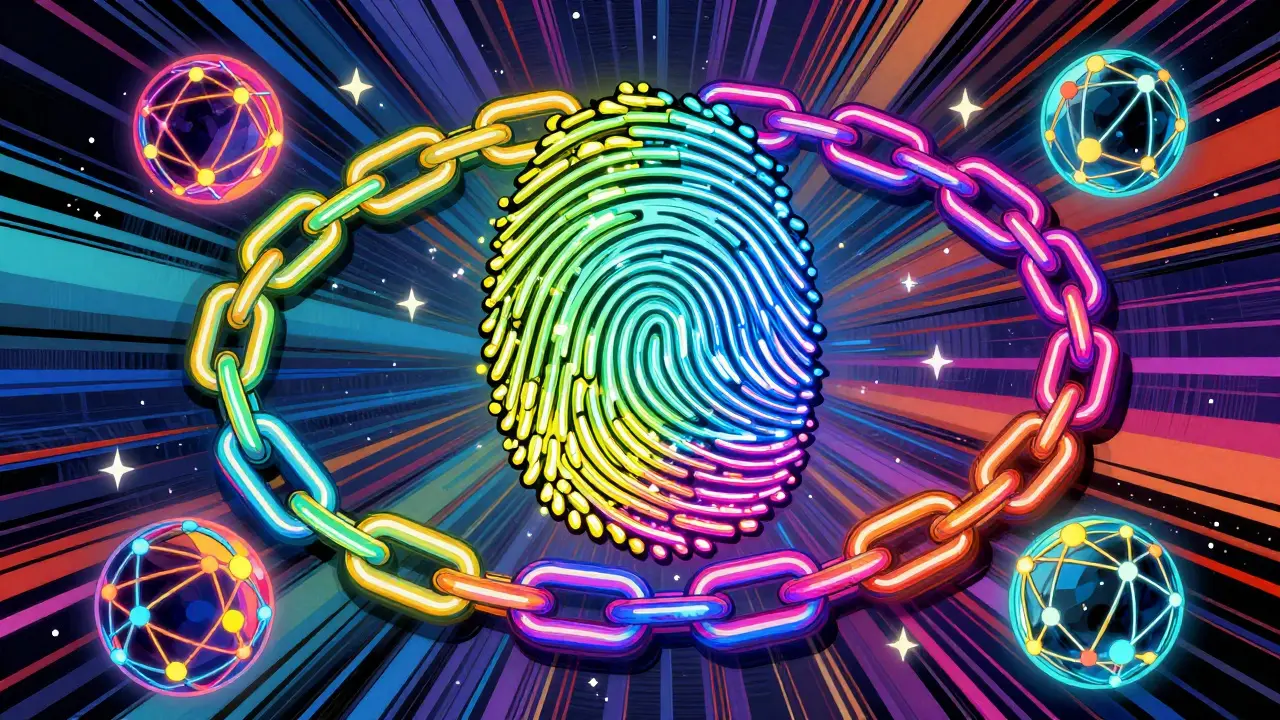
You don’t need to be a cryptographer to understand the magic. It starts with something called a hash. Think of a cryptographic hash like a fingerprint for data. If you feed any amount of text, numbers, or images into a specific formula known as SHA-256, it spits out a unique string of characters. Even changing a single letter in the original input creates a completely different fingerprint.
Secure Hashing Algorithm 256 converts data into a fixed-size 64-character string that acts as a digital signature.In a blockchain, every block of transactions gets its own hash. Crucially, that block also includes the hash of the block before it. They are chained together like paperclips holding pages. If a hacker tries to change a transaction in Block #5, the hash for Block #5 changes. But since Block #6 holds the old hash of Block #5, the link breaks immediately. The whole chain rejects the tampered block because the math doesn’t add up.
This relies on Distributed Ledger Technology. Instead of one computer holding the master copy, thousands of computers (nodes) hold the same copy across the globe. To fake a record, you’d need to hack more than half the computers simultaneously, which makes the effort practically impossible.
Building Unshakable Trust Without Middlemen
Most modern commerce depends on intermediaries. You need a bank to verify a payment. You need a lawyer to verify a contract. These parties charge fees and introduce delays. Immutable records remove the need for these go-betweens.
When a transaction is recorded on a public ledger, anyone with access can see it. It’s time-stamped and verified by the network. This transparency creates a "single source of truth." In supply chains, this is massive. Consider a bottle of wine imported from France. With traditional methods, you trust the paperwork provided by the importer. With blockchain, you can scan a QR code and see the entire journey from the vineyard to the shelf. The records prove authenticity because the chain confirms no one altered the location or ownership data at any step.
This shifts trust from an institution to mathematics. You aren’t trusting a person or a company; you are trusting the algorithm. That reduces friction and costs significantly.
Security and Fraud Prevention
Centralized databases are prime targets for hackers. One breach wipes out years of data. When companies suffer breaches, they face lawsuits and lost reputation. Immutable blockchain records act as armor against this.
The risk of retroactive fraud disappears. A common scam involves altering past financial records to hide losses. On a blockchain, that is impossible. If an auditor wants to check the books, they look at the chain. The history is unalterable. This deters internal fraud too. An employee can’t manipulate their timesheet or expense reports after the fact because the entry is locked in place.
Furthermore, the security architecture involves cryptography. Every participant has keys to unlock or sign transactions. Unauthorized access requires breaking encryption standards that would take supercomputers decades to crack. While not perfect-nothing is-but it raises the bar far higher than standard password protection.
| Comparison Metrics | |
|---|---|
| Data Control | Single Administrator / Company |
| Record Modification | Possible by Admin |
| Point of Failure | Central Server |
| Audit Verification | Requires Third Party |
| Immutability | Tamper-Evident via Logs |
| Tech Model | Client-Server Architecture |
Simplifying Auditing and Compliance
Compliance headaches are real for industries like healthcare and finance. Regulations require keeping specific data for years. Gathering evidence often means digging through messy spreadsheets or proprietary software logs that might be deleted accidentally.
With immutable ledgers, the audit trail is always available. Regulators can plug in directly to view transactions without waiting for companies to compile reports. This cuts auditing time from months to minutes. The cost savings are significant. Large corporations spend millions annually on compliance teams just to gather proof of legitimacy. Automating this verification through the chain shifts the burden from humans to machines.
In 2026, as privacy laws tighten globally, having data that cannot be silently changed protects organizations from accusations of falsifying records. If you can prove you didn’t touch the data because the network wouldn’t let you, you win the legal argument.
Industry Applications Today
We see these benefits playing out in several key sectors right now.
- Healthcare: Patient records move between doctors, labs, and insurance companies. Using blockchain, a patient owns their health file. Providers get permission to read it. The doctor sees the exact dosage history because it cannot be edited by a pharmacy or hospital later.
- Finance: Settlement layers use smart contracts to clear debts instantly. There is no need for days-long reconciliation periods between banks because the shared ledger updates both parties simultaneously.
- Real Estate: Property titles stored on-chain prevent fraudsters from selling the same house twice or forging deeds. Transfer of ownership is instantaneous upon payment verification.
These aren’t theoretical experiments. Major logistics firms already track shipping containers using distributed ledgers to prove goods haven't been swapped for counterfeits during transit.

Limitations and Challenges
It’s not all smooth sailing. Immutability has a downside: if you put wrong data on the chain, you can’t fix it easily. Mistakes become permanent history. Organizations need strict protocols before deploying data to the network. Some companies solve this by hashing a pointer to off-chain data rather than storing the raw sensitive info directly, but that introduces complexity.
Performance is another hurdle. Traditional databases handle thousands of transactions per second. Public blockchains often struggle with much lower throughput due to the time required for consensus among nodes. For a high-frequency trading firm, this latency might be unacceptable.
Additionally, energy consumption remains a topic of debate for certain consensus models. However, newer technologies like Proof of Stake have reduced this footprint drastically compared to earlier mining methods. Still, maintaining the network requires resources.
The Future of Data Permanence
Looking ahead toward the rest of 2026 and beyond, we expect hybrid models. Companies will likely combine private, fast blockchains for speed with public verification layers for trust. Integration with AI will allow automated monitoring of these records. Imagine AI bots scanning the immutable history to detect anomalies automatically, ensuring nothing slips through the cracks without human intervention.
As regulatory frameworks mature, we will see government recognition of blockchain-based deeds and identities. The ability to create permanent, verifiable records changes the fundamental definition of truth in the digital age.
Can you delete data from a blockchain?
Generally, no. The defining feature of a blockchain is immutability. Once a block is added and confirmed, you cannot edit or delete it. You can technically add a new block that references the old one, effectively marking it as invalid, but the original record remains part of the history.
What is SHA-256 and why is it used?
SHA-256 is a cryptographic hash function. It turns input data of any size into a fixed 256-bit string. It is used to create digital fingerprints for blocks, ensuring that any change in data results in a completely different hash, revealing tampering instantly.
Is a blockchain completely unhackable?
While extremely secure, the underlying protocol is robust, but vulnerabilities can exist in the code running on top of it (like smart contracts) or in how users manage their private keys. However, the core database structure itself is very difficult to compromise.
Why do auditors prefer blockchain records?
Because the data provides an unbroken audit trail. Auditors do not need to trust the company producing the data because the ledger proves the data hasn’t been altered since creation, saving time and verifying authenticity.
Does blockchain save storage space?
Actually, it often uses more. Because every node stores a copy of the ledger, data redundancy increases. However, the trade-off is higher security and reliability compared to compressed centralized files.
Lisa Miller
March 30, 2026 AT 11:27I really hope we see more adoption in healthcare soon. Having control over your own medical records sounds incredibly empowering for patients. It feels good to imagine a system where you dont need to beg hospitals for access. Technology moving this fast can sometimes feel overwhelming though. Just knowing there is a safer way forward keeps me optimistic about things. We definitely need these tools to protect our personal information better.
Michael Nadeau
March 30, 2026 AT 15:29It really makes you think about how we define truth in a digital context. For centuries society relied on physical institutions to hold the line against corruption and error. Now we see math acting as the gatekeeper instead of people. The concept of hashing data into a fixed string changes the entire landscape of verification. You do not need to know who created the file to verify its integrity.
This shift moves power away from the boardroom and spreads it across a network. People often fear complexity when they hear about cryptography in daily life. Yet the underlying logic is actually quite straightforward once you strip away the marketing hype. Trust becomes a property of the system rather than the individual managing it. We see similar patterns in history whenever new technology disrupts old hierarchies.
Banks resisted this change because their revenue models depend on friction and intermediation. Removing that friction creates resistance among established players in the industry. However the efficiency gains are too significant for the market to ignore completely. Auditors love this transparency because they stop chasing red herrings during compliance checks. Errors in data entry become permanent markers rather than hidden edits. That permanence forces organizations to be more careful before committing anything to the ledger.
It acts as a psychological deterrent against internal bad actors. Security architecture relies on mathematical proofs instead of passwords alone. The cost of attacking the network exceeds the potential reward almost universally. History will likely show this as a pivotal moment for record keeping standards. Future generations will wonder why we ever trusted central servers with our identities.
Samson Abraham
March 31, 2026 AT 14:16The distinction between tamper evident logs and true immutability matters significantly here. Traditional databases allow administrators to modify historical entries without leaving obvious traces. Distributed ledgers change the paradigm by making modifications immediately visible across the network. Security teams spend less time hunting ghosts when the chain stays intact. Compliance becomes a natural outcome of the protocol design rather than a manual process.
Zackary Hogeboom
April 1, 2026 AT 11:35This breakdown really helps clear up some confusion I had about hashing. It never clicked until someone explained the paperclip analogy properly. Knowing the math backs it up gives me way more confidence in the whole setup. I wish more people understood how this stuff actually works under the hood. Maybe then we could stop worrying about every headline that pops up online.
Raymond K
April 3, 2026 AT 04:46For sure tho healthcare needs this badly its crazy how messy records are rn. My cousin tried getting her files from three diff docetors and lost weeks waiting. Imma bet big on this tech saving us alot of stress down the line. Typos happen but the point stands secure dat forever is nice. Just hopin the bugs get worked out fast so we can move forward quick!
Lisa Walton
April 4, 2026 AT 11:22Everyone seems to forget that code is still written by humans.
Shaira Vargas
April 5, 2026 AT 08:05It honestly scares me to think about what happens if something goes wrong. Imagine losing your private key and locking yourself out of everything permanently. The stakes feel so much higher than just forgetting a password on social media. I worry my heart beats faster thinking about total loss of identity. We need backups for backups because life gets complicated unexpectedly.