
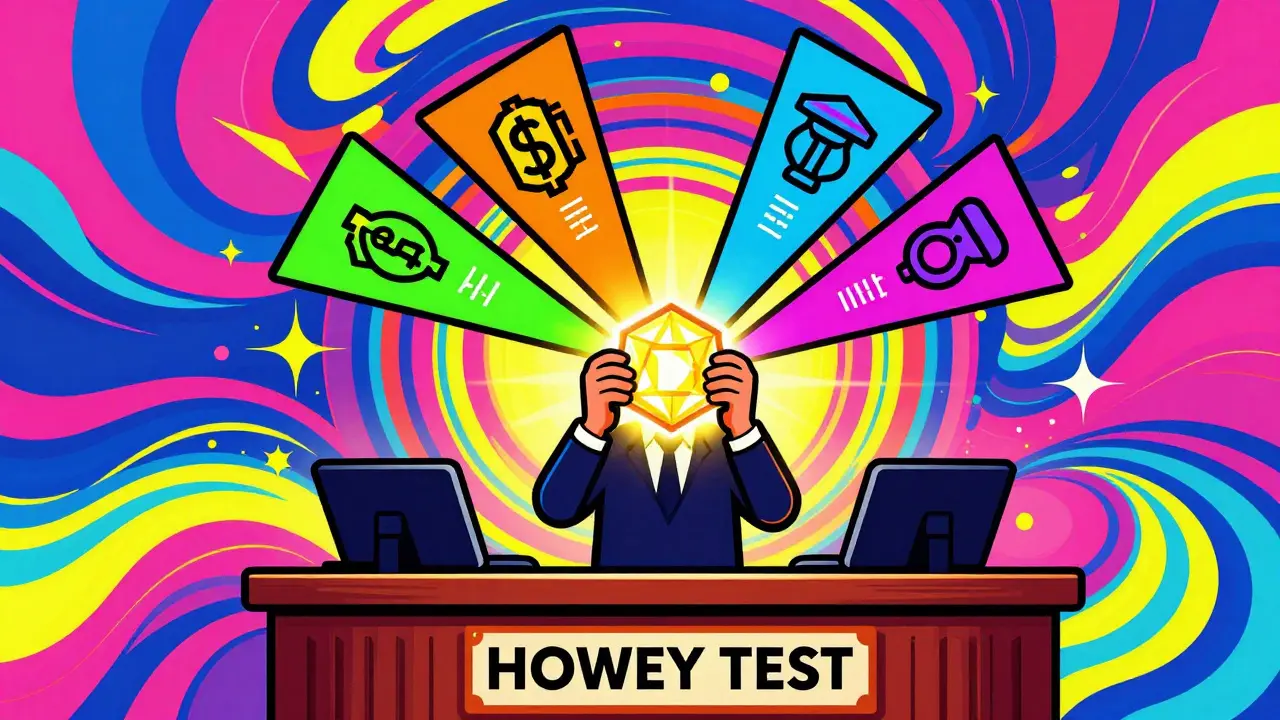
Imagine buying a token because you believe it will skyrocket in value. Now imagine the government telling you that transaction was actually an illegal stock trade. This isn't a hypothetical scenario for many investors today. The question of are cryptocurrencies securities is not just legal jargon; it determines whether your investment is protected, taxed differently, or potentially banned from trading on major platforms.
The answer isn't a simple yes or no. Bitcoin is generally treated as a commodity, like gold. Many newer tokens are treated as securities, like stocks. And some sit in a gray area that keeps lawyers busy and investors anxious. Understanding this distinction is crucial if you want to navigate the crypto market without getting burned by regulatory crackdowns.
The Gold Standard: The Howey Test
To figure out if a cryptocurrency is a security, regulators in the United States use a test created in 1946. It’s called the Howey Test, named after the Supreme Court case SEC v. W.J. Howey Co.. You might wonder why a test based on orange groves matters for blockchain technology. The reason is that the law focuses on economic reality, not the technology used.
For something to be considered an investment contract (and thus a security), four conditions must be met:
- Investment of Money: You put cash or another asset into the project.
- Common Enterprise: Your money is pooled with others or tied to the success of a central entity.
- Expectation of Profit: You buy the token hoping its value will go up.
- Efforts of Others: That profit depends primarily on the work of a promoter or third party, not your own efforts.
If a token meets all four criteria, the U.S. Securities and Exchange Commission (SEC) views it as a security. This means the issuer must register it, provide detailed financial disclosures, and follow strict rules. If they don’t, they can face massive fines or be forced to shut down.
Bitcoin and Ethereum: Commodities, Not Securities?
Not all crypto falls under the SEC’s watch. The Commodity Futures Trading Commission (CFTC) has consistently classified Bitcoin and Ethereum as commodities. Why the difference?
It comes down to decentralization. When Bitcoin launched in 2009, there was no central team managing it. Today, thousands of independent miners and developers maintain the network. No single group controls the price or the protocol. Because there are no "efforts of others" driving the value in a centralized way, it fails the fourth prong of the Howey Test.
Ethereum followed a similar path. Although it started with a more centralized development phase, it has become sufficiently decentralized over time. In September 2022, then-CFTC Chair Rostin Behnam and then-SEC Chair Gary Gensler jointly confirmed before the Senate Agriculture Committee that both Bitcoin and Ether are commodities. This status allows them to be traded freely on unregistered exchanges, unlike securities.
| Asset Type | Regulatory Body | Key Characteristic | Example |
|---|---|---|---|
| Commodity | CFTC | Decentralized, no central promoter | Bitcoin, Ethereum |
| Security | SEC | Centralized team drives value/profit | Many ICO tokens, Staking services |
| Payment Instrument | State Laws/Treasury | Pegged to fiat currency | USDC, USDT |
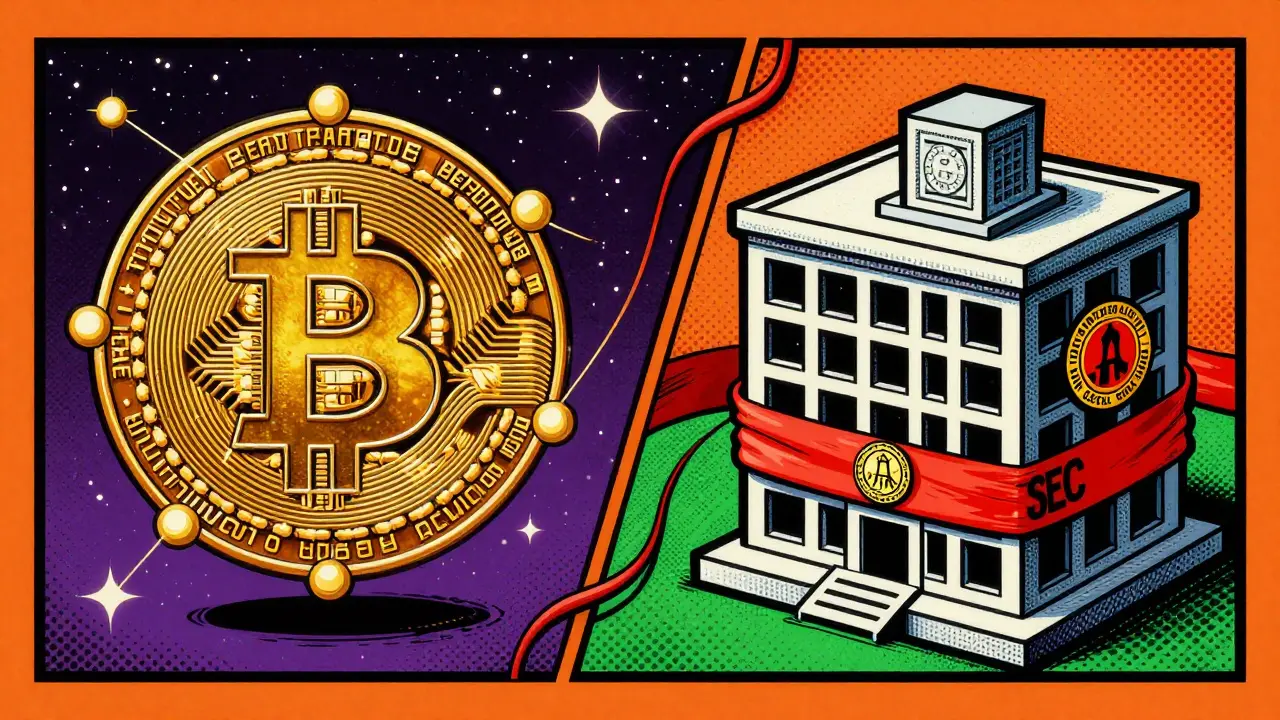
The Gray Area: Utility Tokens and DeFi
Most new tokens launch as "utility tokens." The argument is simple: you aren’t buying a share in a company; you’re buying access to a service. For example, you might buy a token to pay for gas fees on a specific blockchain or to vote on governance decisions in a Decentralized Autonomous Organization (DAO).
However, the SEC often looks past the label. If the marketing materials promise high returns, or if the token is designed to distribute profits to holders, it likely qualifies as a security regardless of its "utility" features. In 2017, the SEC ruled that The DAO tokens were securities because investors expected profits from the managerial efforts of the core team.
This creates a paradox for developers. William Hinman, former director of the SEC’s Corporation Finance Division, introduced the concept of "decentralize-and-morph." He suggested that a token could start as a security during its fundraising phase but eventually become a non-security commodity once the network becomes truly decentralized. The problem? There is no clear timeline or checklist for when this transformation happens. This uncertainty has led to significant compliance costs, with firms like Coinbase reporting over $100 million in quarterly regulatory expenses.
Stablecoins: A Different Beast
Stablecoins like USDC and USDT are generally not classified as securities. Instead, they are viewed as payment instruments. Their value is pegged to a stable asset, usually the U.S. dollar, so users don’t buy them expecting speculative profits. They are regulated under state money transmission laws and increasingly under federal frameworks like the Clarity for Payment Stablecoins Act passed in 2023.
However, algorithmic stablecoins, which rely on complex code rather than collateral to maintain their peg, face intense scrutiny. The collapse of TerraUSD in May 2022, which wiped out $40 billion in value in days, highlighted the risks. Regulators now view these structures with suspicion, fearing they operate like unregistered securities or banking products without proper safeguards.

Real-World Consequences: Enforcement Actions
The debate isn’t just academic. The consequences of misclassification are severe. Here are some recent examples that show how regulators apply these rules:
- Ripple Labs (XRP): In July 2023, a judge ruled that XRP sales on public exchanges were not securities offerings, but institutional sales were. This partial victory for Ripple remains in the remedies phase as of early 2026, serving as a critical precedent for the industry.
- Kik Interactive: Settled with the SEC in 2019 for $100,000 after failing to register its Kin token offering.
- Telegram (TON): Forced to return $1.2 billion to investors in 2020 after the SEC blocked the launch of its Telegram Open Network token, citing security violations.
- Binance: Faced a $1.8 billion settlement with the CFTC in March 2023 for unlawful derivatives trading, showing that even non-security aspects of crypto are heavily policed.
These cases send a clear message: if you cannot prove your token is fully decentralized and functional, assume it is a security until proven otherwise.
The Future: Clarity or Chaos?
As of June 2026, the landscape is shifting. The introduction of the Responsible Financial Innovation Act in the Senate aims to create clear criteria for classification, potentially ending the "regulatory guessing game." Meanwhile, the approval of spot Ethereum ETFs in March 2025 signaled a tacit acceptance of Ethereum’s commodity status by the SEC, despite ongoing litigation elsewhere.
For investors, the advice remains consistent: do your own research. Look at who controls the network. Are profits promised? Is there a central team making key decisions? If the answers point to centralization and profit expectations, treat that token with the same caution you would give to an unregistered stock.
Is Bitcoin considered a security?
No, Bitcoin is generally classified as a commodity by the CFTC. It is decentralized enough that no single group controls its value or operations, failing the "efforts of others" part of the Howey Test.
What is the Howey Test?
The Howey Test is a legal standard used by the SEC to determine if an asset is an investment contract (security). It checks for four factors: investment of money, common enterprise, expectation of profit, and reliance on the efforts of others.
Can a utility token be a security?
Yes. Even if a token is labeled as "utility," if investors buy it primarily for profit derived from a central team's work, the SEC may classify it as a security. The label does not override the economic reality.
Why does the classification matter for me?
If a token is a security, it must be registered. Trading unregistered securities can lead to exchange delistings, frozen funds, or legal action against issuers. For investors, it affects tax treatment and the level of investor protection available.
Is Ethereum a security or a commodity?
Ethereum is widely treated as a commodity, similar to Bitcoin. Both the CFTC and market participants view it as such, evidenced by the approval of spot Ethereum ETFs in 2025. However, staking services involving Ethereum have faced SEC scrutiny as potential securities offerings.
What happened in the Ripple vs. SEC case?
In July 2023, a judge ruled that XRP sales on public exchanges were not securities offerings, while institutional sales were. This partial ruling provided some clarity but left the final penalties and broader implications pending as of early 2026.
How do stablecoins fit into this?
Fiat-backed stablecoins like USDC and USDT are typically regulated as payment instruments under state and federal money transmission laws, not as securities. Algorithmic stablecoins face stricter scrutiny due to their structural risks.
Rob Morton
June 26, 2026 AT 18:34The Howey Test is essentially a philosophical framework for determining intent versus utility in economic transactions. It forces us to consider whether the value of an asset is intrinsic or derived from the labor of others. This distinction is crucial because it separates genuine innovation from mere speculation. We must ask ourselves if we are investing in technology or just betting on hype. The decentralization argument is strong but often flawed in practice. Many projects claim decentralization while maintaining tight control behind the scenes. This creates a paradox where the legal definition lags behind technological reality. We need a more nuanced approach that considers the actual usage patterns of the token. Is it being used as a medium of exchange or merely as a store of value? The answer determines its regulatory status. Until then, investors are left in a gray area that favors institutional players. This uncertainty stifles true innovation and rewards those who can afford expensive legal teams. We should support clearer guidelines that protect consumers without killing creativity. The current system is broken and needs reform.
Ryan Peters
June 27, 2026 AT 00:29Typical SEC overreach! They want to tax every digital transaction they can find. American innovation is being strangled by bureaucrats who don't understand blockchain.
Bitcoin is gold, period. Ethereum is becoming gold too. But these guys want to call everything a security so they can take their cut. It's socialist nonsense wrapped in legal jargon.
The Howey Test is outdated garbage from 1946. It doesn't apply to decentralized networks. If you're buying XRP or SOL, you're not relying on a central team. You're using a network. Period.
They blocked Telegram's TON because they couldn't control it. That's not regulation; that's censorship. And now they're trying to stifle DeFi because they can't tax it easily.
Real Americans know that freedom means free markets. Not government-approved investment contracts. Stop listening to these suits. Buy and hold. Let them try to regulate the internet. They'll fail. Again.
ross harris
June 28, 2026 AT 12:26The entire premise is a grotesque parody of financial logic. These tokens are not securities; they are digital phantoms dancing on the edge of a cliff. The SEC is a dinosaur trying to bite at shadows.
You see, the 'efforts of others' is a subjective nightmare. Who are 'others'? The miners? The developers? The community? It's all fluid. Like water. Or blood.
Bitcoin is a commodity because it has no master. It is wild. Unleashed. Ethereum is tamed, but still dangerous. Most altcoins are just casino chips with extra steps.
The Ripple case was a farce. A partial victory is still a defeat in the court of public opinion. They settled because they knew they were wrong. Deep down. In their cold, bureaucratic hearts.
Stablecoins are the real danger. They are pegged to the dollar, which is itself a fiction. So you have a fiction pegged to another fiction. Beautiful, isn't it?
Investors should run. Hide. Burn their wallets. Because when the music stops, everyone will be naked. And the regulators will be laughing. Oh, how they will laugh.
Routh Middaugh
June 29, 2026 AT 01:51I think this is a very interesting perspective; however, I believe there is much nuance to consider here.
The distinction between commodities and securities is not always clear-cut. For instance, Bitcoin is widely accepted as a commodity. Yet, Ethereum has faced scrutiny. Why? Because of staking.
Staking services can be viewed as offering profits based on the efforts of the platform. This is a key point. The Howey Test applies differently depending on how the token is sold.
We must also consider the global nature of crypto. Regulations in the US may not apply elsewhere. This creates arbitrage opportunities. But also risks.
I agree that clarity is needed. The Responsible Financial Innovation Act could help. But it might also stifle innovation. We need balance.
What do you think about the role of DAOs? Are they securities? Or something new entirely?
Carl Belgrave
June 30, 2026 AT 10:03Listen up, you clueless degenerates. The SEC is right. Every single one of these sh*tcoins is a security.
You think you're smart buying into some random meme coin? You're getting played. The insiders dump on you. Always.
Bitcoin is okay because it's old. But anything else? Trash. Garbage.
Ripple lost. Binance got fined. Telegram got shut down. Do you see a pattern? Yes, you do.
If you're holding any altcoin, you're either stupid or greedy. Probably both.
Stop pretending you understand blockchain. You don't. You just want to get rich quick.
The government knows what's best. Follow the rules. Register your tokens. Pay your taxes.
Otherwise, get ready for jail. Or worse, losing your life savings.
This isn't a democracy. It's a dictatorship of finance. And you're all subjects. Wake up!