

Most people searching for Andy BSC aren't looking for the next Bitcoin. They're likely holding a tiny amount of it, seeing it in their wallet, or wondering if this obscure token on the Binance Smart Chain is worth keeping. The short answer? It's a high-risk, low-liquidity asset with more questions than answers.
If you bought ANDY because you saw a meme or heard about an artist named Furie, you're not alone. But before you decide to sell, hold, or buy more, you need to understand what you're actually dealing with. This isn't a blue-chip investment like Ethereum or Solana. It's a micro-cap token with data that doesn't always match up across different tracking sites. Let's break down exactly what Andy BSC is, how it trades, and why the numbers look so messy.
What Exactly Is Andy BSC?
Andy BSC is a speculative cryptocurrency token operating on the Binance Smart Chain network. Also known as ANDY, it exists primarily as a digital asset with very low market value. Unlike major cryptocurrencies that have clear use cases-like paying for goods or securing a network-Andy BSC seems tied to artistic or imaginative themes. References point to a creator named Furie, suggesting the token might be linked to a creative project or fan community rather than a technical protocol.
Here’s the catch: there is no widely available whitepaper, no detailed roadmap, and no verified development team listed on major crypto platforms. This lack of documentation is a red flag for many investors. When a project doesn’t explain what it does, who built it, or where the money goes, you’re essentially betting on speculation. Is it a utility token? A meme coin? An NFT companion? The lines are blurry.
The Confusing Numbers: Price and Supply Discrepancies
If you check different websites for the price of ANDY, you’ll see wildly different figures. This isn’t a glitch; it’s a symptom of the token’s fragmented market presence. As of early 2026, here’s what various sources reported:
| Source | Price (USD) | Total Supply | Market Cap | 24h Volume |
|---|---|---|---|---|
| CoinMarketCap (Listing 1) | $0.00000000143 | 100 Trillion | $138.03K | $1,073.52 |
| CoinGecko | $0.000000136 | ~1 Billion (estimated) | ~$40K-$60K | $16,946.88 |
| LiveCoinWatch | $0.000000394 | 100 Billion | $39.67K | $985.67 |
Notice the supply column. One source says 100 Trillion tokens exist, another says 100 Billion, and a third implies around 1 Billion. This massive difference changes everything. If there are 100 Trillion tokens, each one is worth almost nothing. If there are only 1 Billion, the math shifts significantly. For most practical purposes, treat the supply as uncertain until you verify the contract address directly on the blockchain explorer.
Liquidity: Can You Actually Sell Your Coins?
This is the biggest risk with Andy BSC. Liquidity refers to how easily you can buy or sell an asset without moving the price too much. For ANDY, liquidity is extremely low. The primary place to trade it is PancakeSwap V3 on the BSC network, specifically in the ANDY/WBNB pair. On any given day, the trading volume might range from just $400 to $17,000.
Imagine you want to sell $500 worth of ANDY. On a liquid coin like Bitcoin, you’d do it instantly at the current market price. With ANDY, your sale could push the price down significantly because there aren’t enough buyers waiting in the queue. This is called slippage. In extreme cases, selling even a modest amount can drop the token price by 5% or more just from your own action. Always check the liquidity pool depth on PancakeSwap before making a large trade.
Performance History: A Rollercoaster Ride
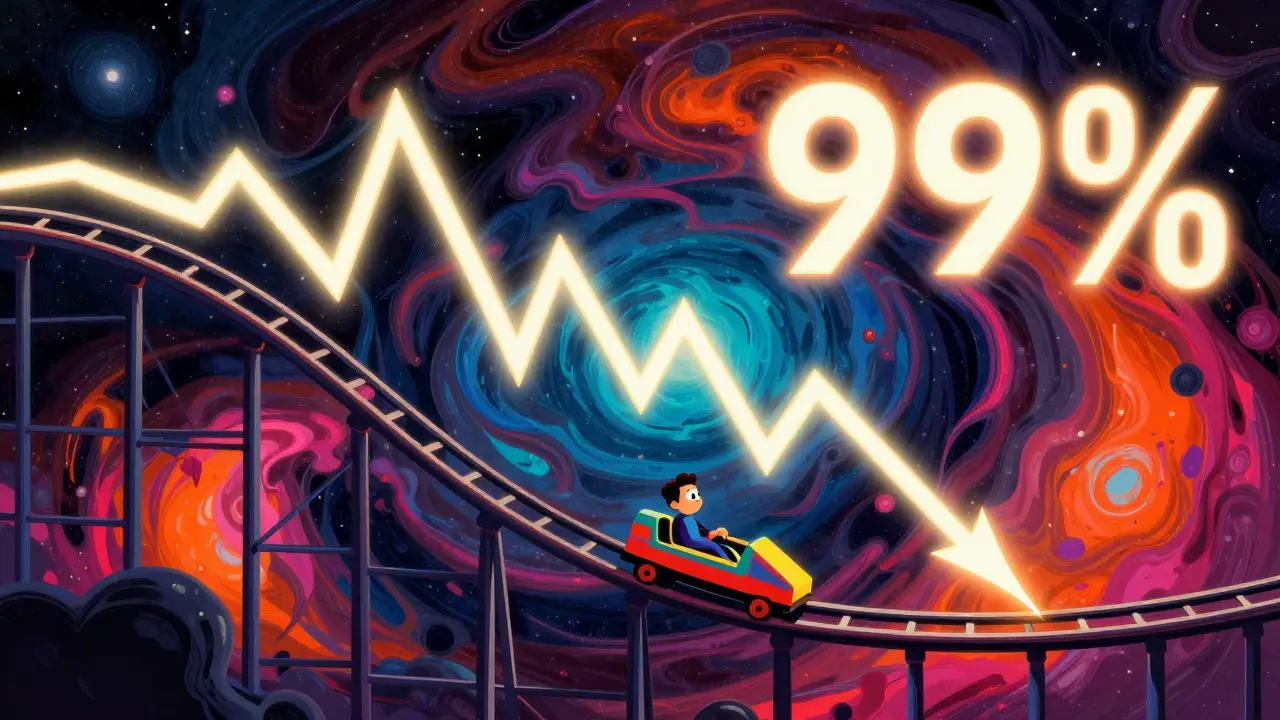
Historical data shows that ANDY has experienced extreme volatility. According to CoinGecko, the token is currently trading 99.20% below its all-time high. That means if you bought near the peak, you’ve lost nearly everything. However, it is trading 119.80% above its all-time low, which suggests it has bounced back slightly from its worst days.
Recent performance has been mixed. Some days show gains of 3-5%, while others show drops of nearly 60%. This unpredictability is typical for micro-cap tokens that lack steady institutional interest. There is no consistent trend to rely on. It moves based on small bursts of social media attention or minor speculative trades, not fundamental growth.
Why Does the Data Look So Messy?
You might wonder why reputable sites like CoinMarketCap and CoinGecko show such different numbers. There are two main reasons:
- Multiple Contracts: Sometimes, projects launch multiple versions of their token, or users create fake "copycat" tokens. If you’re looking at the wrong contract address, you’ll see completely different prices and supplies.
- Data Fragmentation: Because ANDY trades on few exchanges with low volume, automated trackers struggle to aggregate accurate data. Small differences in when they update can lead to significant discrepancies in calculated market caps.
To avoid confusion, always verify the official contract address from the project’s official social media channels or website. Cross-reference this address on a BSC block explorer like BscScan to see the real circulating supply and holder distribution.
Who Should Care About Andy BSC?
Let’s be honest: Andy BSC is not for everyone. It’s a niche asset with high risk and low reward potential for the average investor. Here’s who might find it relevant:
- Existing Holders: If you already own ANDY, you need to monitor liquidity carefully. Decide now whether you want to exit slowly over time or wait for a spike in volume.
- Speculators: If you enjoy high-risk gambling on micro-caps, ANDY fits the profile. But treat it like lottery tickets-money you can afford to lose entirely.
- Fans of the Art: If you support the work of the artist associated with the token, you might hold it for sentiment rather than financial gain.
For serious long-term investors, this token lacks the transparency, team verification, and adoption metrics usually required for confidence. There are no security audits documented, no active developer updates, and no clear path to mainstream adoption.
How to Trade ANDY Safely
If you decide to interact with Andy BSC, follow these steps to minimize risk:
- Verify the Contract: Go to the official project channel and copy the exact token contract address. Paste it into BscScan to confirm the name and logo match.
- Check Liquidity: Open PancakeSwap and look at the ANDY/WBNB pool. Ensure there is enough BNB in the pool to cover your trade size without excessive slippage.
- Use Limit Orders: Instead of market orders, use limit orders to control the price you get. This prevents you from accidentally buying at a spiked price or selling at a dumped price.
- Monitor Gas Fees: Since it’s on BSC, gas fees are low, but they still apply. Make sure you have enough BNB in your wallet to cover transaction costs.
- Diversify: Never put more than a small percentage of your portfolio into a single micro-cap token like ANDY.
Frequently Asked Questions
Is Andy BSC a good investment?
It is highly speculative. With a market cap under $150,000 and minimal trading volume, it carries extreme risk. It is not suitable for conservative investors. Only invest what you are willing to lose completely.
Where can I buy Andy BSC?
The primary venue is PancakeSwap V3 on the Binance Smart Chain. You will need a compatible wallet like MetaMask or Trust Wallet loaded with BNB to swap for ANDY. It is also listed on smaller exchanges like CoinEx and Poloniex, but volumes are lower there.
Why is the total supply different on different websites?
This is likely due to data aggregation errors or the existence of multiple token contracts. Always verify the specific contract address on a blockchain explorer like BscScan to get the accurate circulating supply for the token you intend to trade.
Does Andy BSC have a real-world use case?
There is no clearly defined utility beyond speculation. It appears connected to an artistic project by a creator named Furie, but no functional applications, payments, or governance rights are widely documented or used.
What happens if I try to sell a large amount of ANDY?
You will likely experience high slippage. Because the liquidity pool is small, a large sell order will consume available bids and push the price down sharply, meaning you will receive less value than the current market price suggests.