

Imagine plugging in your computer to mine Bitcoin, only for the power company to cut your line and police to seize your hardware. For Algerians who tried this in mid-2025, it wasn't a hypothetical nightmare-it was reality. On July 24, 2025, Algeria enacted Law No. 25-10, which is legislation that criminalizes all cryptocurrency-related activities including mining, trading, holding, and promotion. This isn't just a tax hike or a regulatory hurdle. It is a total prohibition.
The move shocked many because it went far beyond typical financial caution. While most countries worry about money laundering, Algeria’s government explicitly pointed to the national electricity grid, which is the infrastructure providing power to households and industries, currently facing severe strain from high demand and limited capacity. The core argument? Cryptocurrency mining eats up too much power, and Algeria simply doesn’t have enough spare juice to feed it.
Why Energy Is the Real Enemy of Crypto in Algeria
To understand why the government pulled the trigger on a total ban, you have to look at the lights in Algiers. During the summer months, when temperatures soar, air conditioning units across the country kick into overdrive. According to data from SONELGAZ, which is Algeria's national electricity provider responsible for generating and distributing power nationwide, the grid operates at about 70% capacity during normal times. But in peak summer? It hits 95-100%. That leaves almost no room for error.
Cryptocurrency mining, especially for coins like Bitcoin that use proof-of-work mechanisms, is incredibly hungry for electricity. Salah Eddine Taleb, the Governor of the Bank of Algeria, put it bluntly in July 2025: mining one Bitcoin consumes roughly 1,500 kWh. That’s enough power to run an average Algerian household for a whole month. When you multiply that by thousands of hidden miners running quietly in apartments and warehouses, the math becomes terrifying for grid operators.
Before the ban, SONELGAZ detected unauthorized mining operations siphoning off 15-20 megawatts of power during the 2024 summer peak. That might sound small, but during a blackout-prone heatwave, losing 1.5% of your total capacity to digital gold digging is unacceptable. The government decided they couldn't risk blackouts for speculative assets.
| Metric | Value / Detail |
|---|---|
| Grid Capacity (Summer Peak) | 95-100% utilization |
| Power per Bitcoin Mined | ~1,500 kWh (equivalent to 30 households/month) |
| Illegal Mining Load (2024 Peak) | 15-20 MW (approx. 1.5% of national capacity) |
| Subsidized Electricity Rate | $0.035 per kWh (vs global avg $0.14) |
There’s also the economic angle. Electricity in Algeria is heavily subsidized, costing residential users as little as $0.035 per kWh compared to the global average of $0.14. This made Algeria a magnet for miners looking to slash costs. By banning mining entirely, the government aims to stop this arbitrage and keep cheap power for citizens, not servers.
What Law No. 25-10 Actually Bans
If you thought you could just stop mining and start trading, think again. Law No. 25-10 is comprehensive to the point of being draconian. It defines crypto-assets broadly as 'property, income, funds or financial assets.' Under this law, the following are strictly prohibited:
- Mining: Any production of virtual currencies, whether on a laptop or an industrial farm.
- Trading: Buying or selling cryptocurrencies on exchanges.
- Holding: Simply having Bitcoin or Ethereum in your wallet is illegal.
- Promotion: Influencers, educators, or anyone talking positively about crypto can face charges.
- Using VPNs: To close loopholes, the law also bans Virtual Private Networks, making it harder to access foreign exchanges.
This scope is wider than most people realize. In Egypt, for instance, holding crypto isn't criminalized, though trading is restricted. In Tunisia, mining is permitted under specific licenses. Algeria has chosen the path of total exclusion. Even passive possession-a coin sitting in a cold wallet you forgot about-can land you in trouble.
The Price of Breaking the Rules
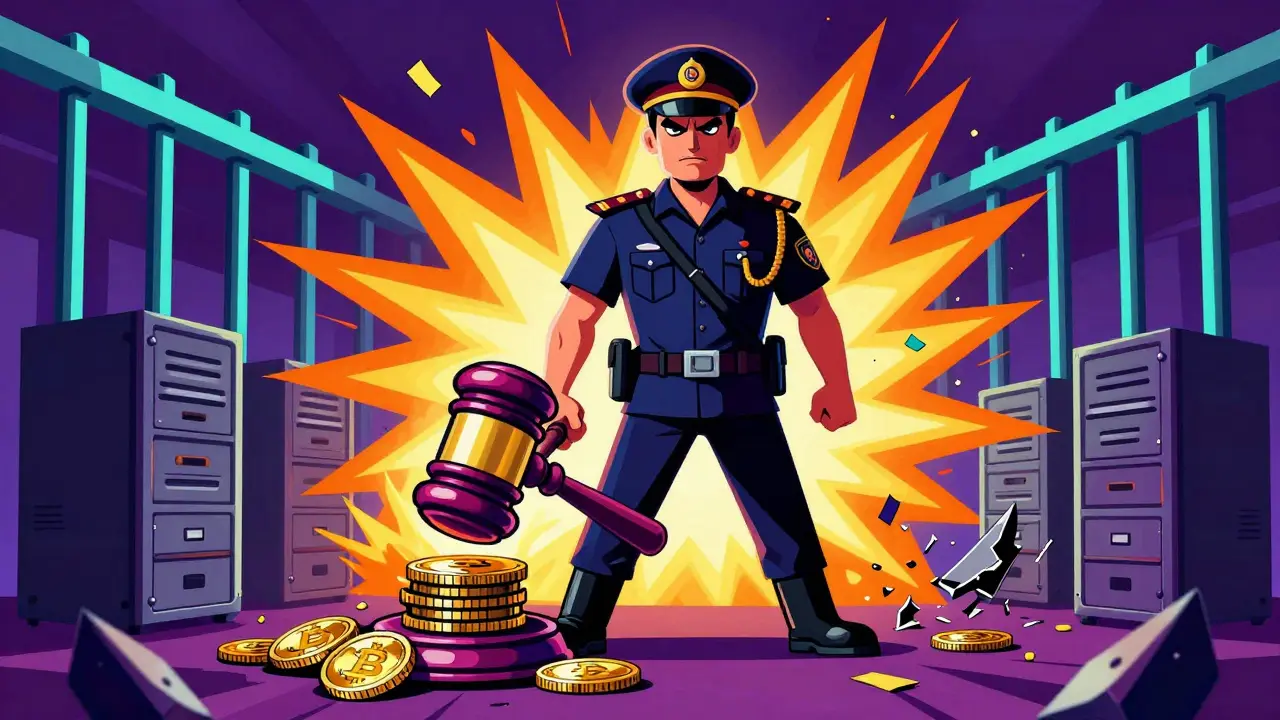
The penalties are designed to be deterrents. If caught violating Law No. 25-10, you’re looking at prison sentences ranging from two months to one year. The fines are steep, too: between 200,000 and 1,000,000 Algerian dinars (roughly $1,540 to $7,700 USD). If you’re a repeat offender, those fines double to 2,000,000 DZD ($14,700).
But the real fear isn't just the fine; it’s the seizure. Authorities have broad powers to confiscate equipment used for mining. There have been reports of university students in cities like Oran losing their entire setups after surprise inspections. For someone who invested thousands in GPUs and ASICs, that’s a devastating financial blow.
How Enforcement Works on the Ground
You might wonder how a government tracks down individual miners hiding in basements. The answer lies in data patterns. SONELGAZ and specialized cyber units within the National Gendarmerie monitor electricity usage closely. They look for anomalies-facilities or homes drawing 30-50% more power than similar structures nearby.
In industrial zones, where monitoring is sophisticated, enforcement has been particularly strict. Since June 2025, there have been numerous surprise inspections. User 'DZCryptoMiner' on Reddit shared that he shut down his 12-rig operation because the risk of jail time wasn't worth the $350 monthly income. He noted that inspectors were actively targeting areas with abnormal power spikes.
The government allocated 1.2 billion DZD ($9.2 million) in the 2025 budget specifically for enforcing these regulations. This includes training new cyber units to detect transactions and mining operations. It’s a significant investment, showing that this isn't a temporary crackdown but a long-term policy shift.
Algeria vs. The Rest of the MENA Region
While Algeria tightens its grip, its neighbors are doing the opposite. The Middle East and North Africa (MENA) region is seeing a boom in crypto regulation, not prohibition. The United Arab Emirates, Bahrain, and Saudi Arabia have built frameworks to attract crypto businesses. The UAE’s Virtual Assets Regulatory Authority processed 157 license applications by Q2 2025 alone.
According to the World Bank’s 2025 MENA Digital Economy Report, seven out of twelve MENA countries now have clear regulatory frameworks for cryptocurrencies. Algeria stands out as an outlier. Its stance is stricter even than Morocco’s, which previously jailed a French citizen for using Bitcoin to buy a Ferrari. Algeria’s unique distinction is explicitly citing energy consumption as a primary reason for the ban, a rationale rarely seen elsewhere.
This isolation comes at a cost. The Global Crypto Alliance notes that countries with clear legal frameworks see a 30% increase in crypto-related investments. Algeria is missing out on this wave. Furthermore, there’s a "brain drain" happening. Data from LinkedIn analyzed by Startup Researcher shows that 37% of Algerian blockchain developers moved to friendlier jurisdictions like Tunisia and Morocco between 2023 and 2025.
Expert Opinions: A Missed Opportunity?
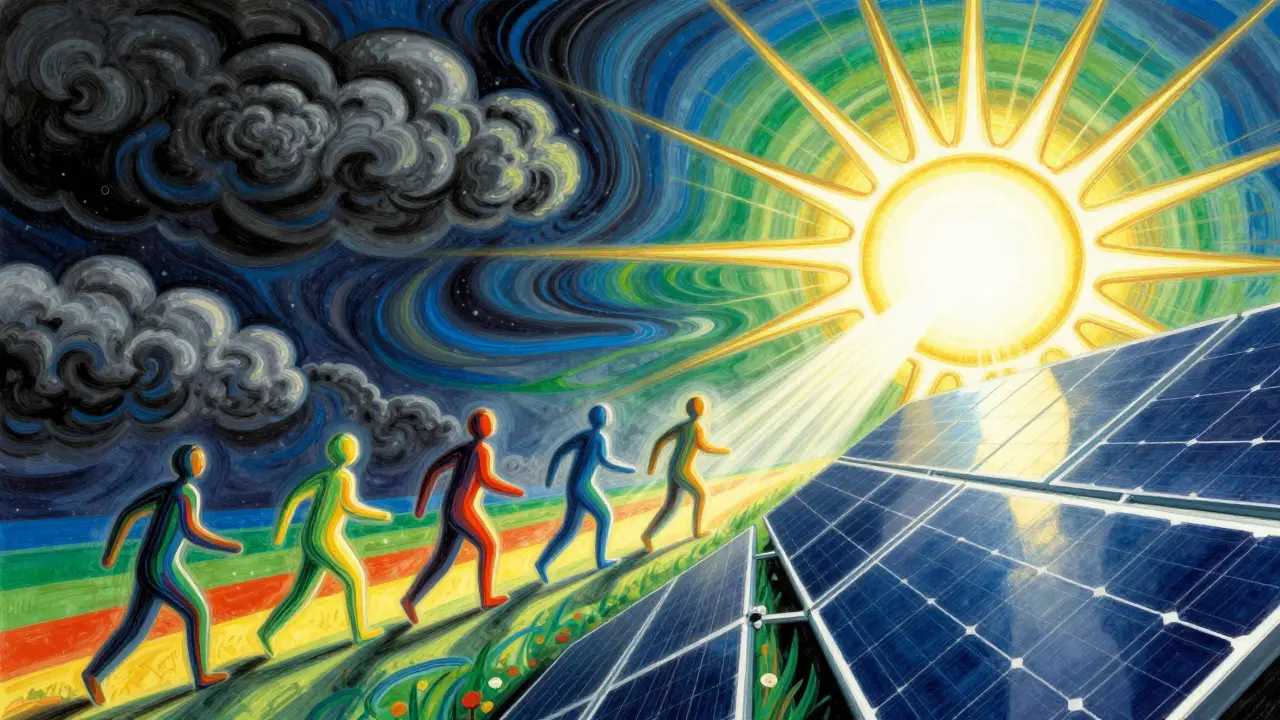
Not everyone agrees with the government’s approach. Dr. Leila Bencharif, a Professor of Financial Technology at Algiers University, argues that the ban is short-sighted. She points out that Algeria has massive solar energy potential-22GW identified in the 2024 National Renewable Energy Strategy. Instead of banning mining, she suggests channeling it toward renewable sources. Imagine powering crypto farms with excess solar energy that would otherwise go unused. That could turn a liability into an asset.
Dr. Bencharif’s team is reportedly working on a white paper proposing a regulated mining framework using excess solar capacity. This could be a pathway for future policy revision. Meanwhile, the International Monetary Fund (IMF) suggested in July 2025 that a targeted regulation of mining operations might better balance energy conservation with technological innovation than a blanket ban.
On the other side, traditional financial workers support the ban. A Bank of Algeria employee told Algerie Presse Service that the law protects ordinary citizens from speculative bubbles and fraud. However, social media sentiment tells a different story. A study of 1,200 posts found that only 28% expressed positive views, while 67% of negative comments focused on the lack of distinction between energy-intensive mining and lighter systems like proof-of-stake.
Will the Ban Last?
For now, don’t expect a reversal. Law No. 25-10 is firmly in place, and the government has signaled no immediate change. In fact, the simultaneous passage of Law No. 25-12 governing traditional mining activities suggests the state wants to steer tech talent toward conventional sectors rather than digital ones.
However, history shows that crypto bans are often temporary. The Global Crypto Alliance predicts that 68% of bans implemented between 2020 and 2025 will be partially or fully reversed within three years due to economic pressure. Whether Algeria follows this trend depends on how badly the energy crisis worsens and whether the proposed solar-mining hybrid model gains traction. Until then, the message from Algiers is clear: stay offline, or pay the price.
Is it legal to hold Bitcoin in Algeria?
No. Under Law No. 25-10, simply holding cryptocurrency is illegal. The law prohibits purchase, sale, use, and holding of virtual currencies. Passive possession can lead to fines and imprisonment.
Why did Algeria ban cryptocurrency mining specifically?
The primary reason cited is energy consumption. Mining strains the national electricity grid, which already operates near capacity during summer peaks. The government wants to prevent blackouts and ensure subsidized power remains available for households.
What are the penalties for crypto mining in Algeria?
Penalties include prison sentences of two months to one year and fines between 200,000 and 1,000,000 Algerian dinars. Repeat offenders face doubled fines. Authorities can also seize mining equipment.
Can I use a VPN to trade crypto in Algeria?
No. Law No. 25-10 explicitly bans the use of Virtual Private Networks (VPNs) to close loopholes that allowed access to foreign cryptocurrency services. Using a VPN for this purpose adds another layer of illegality.
How does Algeria's crypto ban compare to other MENA countries?
Algeria has one of the strictest bans in the region. While countries like the UAE, Bahrain, and Saudi Arabia have created regulatory frameworks to encourage crypto adoption, Algeria prohibits all activities. Even neighboring Tunisia allows licensed mining, whereas Algeria criminalizes it entirely.
Sylvia Mossman
June 6, 2026 AT 12:54Typical government overreach disguised as 'public safety'. They don't care about the grid, they care about control. You want to know why they banned it? Because they can't tax what they can't track. It's always been about money and power, never about electricity.
Dinesh Pattigilli
June 6, 2026 AT 23:26Ugh, another article written by people who clearly dont understand the nuance of macroeconomic policy in developing nations. The energy crisis is real and ignoring basic physics for crypto gains is stupid. Most of you here are just jealous because you cant afford to mine anyway so you cry about freedom while eating subsidized power like lemmings.
Lee Paige
June 8, 2026 AT 10:43This is exactly what happens when a nation loses its sovereignty to globalist financial interests. The IMF is pushing this narrative to keep Algeria weak and dependent on foreign tech. They want us using their digital slaves instead of building our own industry. Wake up sheeple. This isn't about energy, it's about keeping the population docile and disconnected from true economic independence. The grid strain is a lie manufactured by elites to justify seizing your assets.
Mark Corpuz
June 8, 2026 AT 11:49I think we need to look at this more objectively. While the ban seems harsh, the data regarding grid capacity during peak summer months is concerning. If the infrastructure cannot support the load, then some form of restriction is logically necessary to prevent widespread blackouts that would affect hospitals and essential services. Perhaps a regulated approach using renewable energy, as Dr. Bencharif suggests, would be a better middle ground than a total prohibition.
Alexis Abster
June 8, 2026 AT 19:25Oh my gosh, this is absolutely heartbreaking! Think of all those students who lost their hard-earned equipment! It’s not just about money; it’s about their dreams being crushed by cold, unfeeling bureaucrats who have no idea what they’re doing. I’m literally shaking with anger right now. How can they do this to young people trying to build a future? It’s a tragedy of epic proportions!
Dr Lynea LaVoy
June 9, 2026 AT 06:03It is important to remember the human element here. Many individuals invested significant savings into mining rigs based on legal precedents that existed prior to July 2025. The sudden shift to criminalizing mere possession creates a climate of fear that extends beyond economics. We must advocate for policies that protect citizens' property rights while addressing legitimate infrastructure concerns. A blanket ban punishes the individual rather than solving the systemic issue of energy distribution.
Steven Jacobowitz
June 10, 2026 AT 15:11Look at the numbers man! 1500 kWh per Bitcoin is insane! That is massive power draw. If you are running ASICs in a basement you are basically stealing from your neighbors. The government has to step in because the grid is failing. I don’t care about your 'financial freedom' if my AC stops working in 45 degree heat. This is simple math. Mining is too expensive for society to subsidize. Stop complaining and get a real job.
Brad Ranks
June 11, 2026 AT 02:18I heard from a guy in Oran who had his whole setup seized. He was crying like a baby. Not cool at all. But hey, maybe he should have seen it coming? The signs were there. Still, losing thousands of dollars in hardware overnight is brutal. Makes me wonder if my smart home devices are next on the chopping block for using too much juice. Scary times indeed.
Kelly Tenney
June 11, 2026 AT 09:48Let's try to stay positive and supportive of each other during these challenging times. It's clear that many people are feeling anxious about these changes. Remember that community is our strength. Let's focus on how we can help those affected and advocate for fairer regulations together. We can make a difference by staying informed and compassionate.
Yogendra Dwivedi
June 13, 2026 AT 01:23I wonder if there will be any exceptions for small-scale hobbyists or if the law applies strictly to everyone regardless of scale. It seems quite rigid. I hope the authorities consider a tiered system where low-power consumption setups are allowed, perhaps with a higher electricity rate to offset the grid impact. It would be good to see a balanced solution that doesn't completely stifle innovation but also respects the national energy limits.